Only two Indian manufacturers make the list, and that is the honest starting point. Most of what is sold as a caliper brand in India is a dealer importing someone else’s tool. The seven below are the ones actually worth your money, and they split cleanly: Mitutoyo and Fowler if the measurement has to be right; Insize and Aerospace if the budget decides; Kristeel and Baker if you want Indian manufacturing that competes internationally; Yuzuki if you want the quiet middle.
Before any of that, one correction worth having, because it is repeated everywhere, including in the older version of this page.
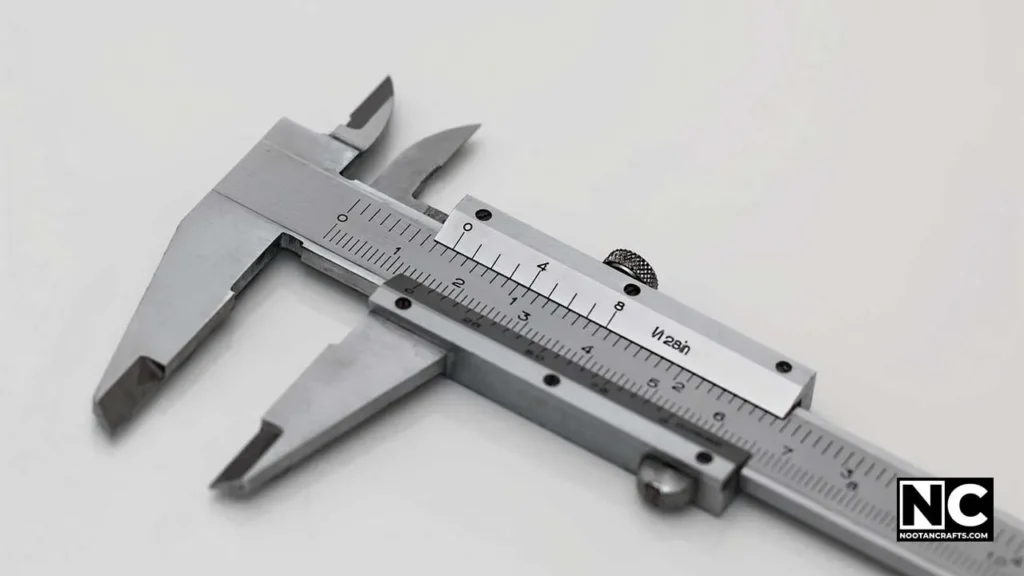
No caliper reads to 0.001 mm. That is micrometer territory. Mitutoyo’s flagship digital caliper, the 500-196-30, has a resolution of 0.01 mm and an accuracy of about ±0.02 mm — and it is one of the best calipers made by anyone. If a listing claims a caliper resolves a thousandth of a millimeter, it is either quoting a micrometer’s spec or it is wrong. Buy a micrometer when you need that; a caliper is the wrong instrument for it.
What’s Inside!
The Seven, at a Glance
| Brand | Made where | Buy it if |
|---|---|---|
| Mitutoyo | Japan | The measurement has to be right and you will keep the tool for twenty years |
| Insize | Imported, widely stocked in India | You want most of the quality for a fraction of the money. The default sensible buy |
| Yuzuki | Imported | You want consistency without paying for a name. Fewer features, sound basics |
| Kristeel | India | You want Indian manufacturing with a real export record, and local service |
| Baker | India | Heavy industrial use, and you value support you can actually reach |
| Fowler | USA | You want Mitutoyo-class digital tools and prefer the American alternative |
| Aerospace | Imported | Hobby and occasional use where the caliper must simply be honest, not exceptional |
Why Brand Matters More Here Than on Other Tools
With most tools, you can see the quality. A bad chisel will not hold an edge, a bad drill will bog down, and you find out on the first job. A bad caliper gives you a number, and the number looks exactly like a good caliper’s number. Nothing about the reading tells you it is wrong.
That is the whole argument for buying a known brand. You are not paying for a smoother slide or a nicer case. You are paying for jaws ground flat and parallel, a beam that stays straight, and a manufacturer who has verified the tool reads true across its range, not only at zero. Those are exactly the properties you cannot check in a shop, and exactly the ones a cheap caliper saves money on.
If you do not know how to read one yet, buy after reading rather than before — the least count decides which of these brands you even need. How to read a vernier caliper, with a worked example.
The Brands
1. Mitutoyo

The benchmark, and the one every other brand is measured against. What you notice first is not the accuracy — it is the feel. The slide has no play in it, the jaws close without rocking, and the same part measured five times gives you the same number five times. That repeatability is the thing you are actually buying.
Digital, dial, and manual across the range. The digital models use an absolute encoder, which means the caliper remembers its origin and does not need re-zeroing every time it wakes up. Expensive, and the only brand here where the price is truly the trade-off — but a Mitutoyo bought now is a tool your workshop still uses in twenty years.
Founded in 1934, and the maker of Japan’s first micrometer. The company has been in metrology and almost nothing else for ninety years.
2. Insize

The sensible answer for most people reading this. Insize sits close enough to the premium brands on the things that matter — jaw flatness, consistency across the range — while costing a fraction of them, and it is stocked everywhere in India, which matters more than people expect when you need a replacement battery or a spare.
Digital and manual both. You give up refinements for accuracy: the display is plainer, the case is thinner, and the slide isn’t as smooth as a Mitutoyo’s. None of that changes the reading. For a home workshop or a semi-professional, this is the one I would point most people to at first.
Founded in 1995, and now common in engineering colleges — which is a useful signal in itself. Institutions buy in bulk and replace on failure, so they notice tools that don’t last.
3. Yuzuki

The quiet one. Yuzuki has no reputation to trade on, which means the tool has to earn it on the bench — and by most Indian users’ accounts it does. Build quality is solid, readings are consistent, and nothing clever is going on.
What you get is the essentials done properly, without the extra functions on a Mitutoyo that most people never touch. For DIY and semi-professional work that is not a compromise, it is just a shorter feature list. Worth a look specifically if Insize is out of stock.
4. Kristeel

The first of the two genuine Indian manufacturers, with an export record to back it up. Kristeel makes precision instruments rather than assembling them, and the calipers are built for heavy use without loosening up.
The practical argument for Kristeel over an import is service. A caliper that gets knocked off a bench needs checking against a known standard, and that is far easier with a manufacturer who has people in the country. The company states it exports to more than sixty countries; that figure is Kristeel’s own, and I have not seen it independently audited, but the export presence itself is not in doubt.
5. Baker

The other Indian name, and the more industrial of the two. Baker’s reputation is built on tools that survive a shop floor—rugged rather than delicate —and are trusted in sectors where a wrong measurement is expensive.
Their dial calipers are the standout. A dial is easier to read quickly than a vernier scale, does not require batteries, and Baker makes them well. If you measure in a workshop rather than at a desk, this is the brand to look at.
Founded in 1941, among India’s first precision toolmakers.
6. Fowler

The American equivalent of Mitutoyo, and chosen for much the same reasons. Fowler’s digital calipers are their strength — large clear displays, sensible controls, and a slide that stays smooth after years of use.
The honest caveat for an Indian buyer is availability. Fowler is easy to get in the US and harder here, and a tool you cannot get serviced locally is worth less than its spec sheet suggests. If you can buy Mitutoyo instead at a similar price, that is usually the easier ownership.
In metrology since 1946, and one of the companies that pushed digital calipers into general use in the US.
7. Aerospace
The budget end, and included deliberately rather than as filler. Aerospace calipers do the basic job honestly: straightforward design, no features you did not ask for, and accuracy that holds up for hobby work and small shops.
Don’t expect the repeatability of the brands above. Measure a part five times with a budget caliper and the spread will be wider. For woodworking, where you are usually working to a tenth of a millimeter at most, that is irrelevant. For fitting metal parts, it is the whole problem.
Choosing Between Them
What are you measuring?
Metal fitting and engineering work is where the difference between these brands actually shows, because you are chasing hundredths and the tool’s repeatability becomes the limiting factor. Mitutoyo or Fowler earn their price there. Wood moves more with humidity than a budget caliper’s error, so for woodworking, Insize or Aerospace is not a compromise — it is the right amount of tool. Calipers for woodworking specifically.
Digital, dial or vernier?
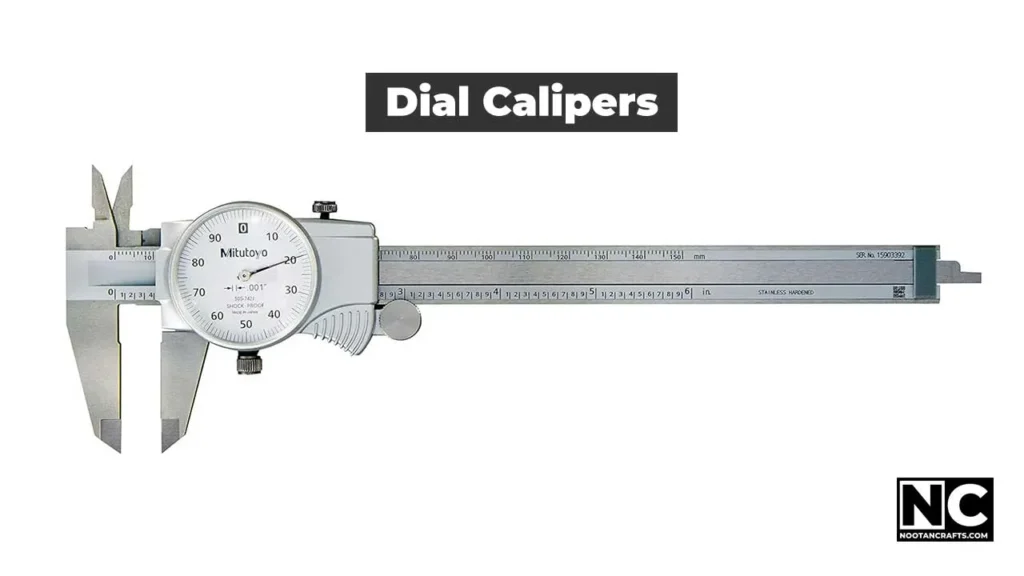
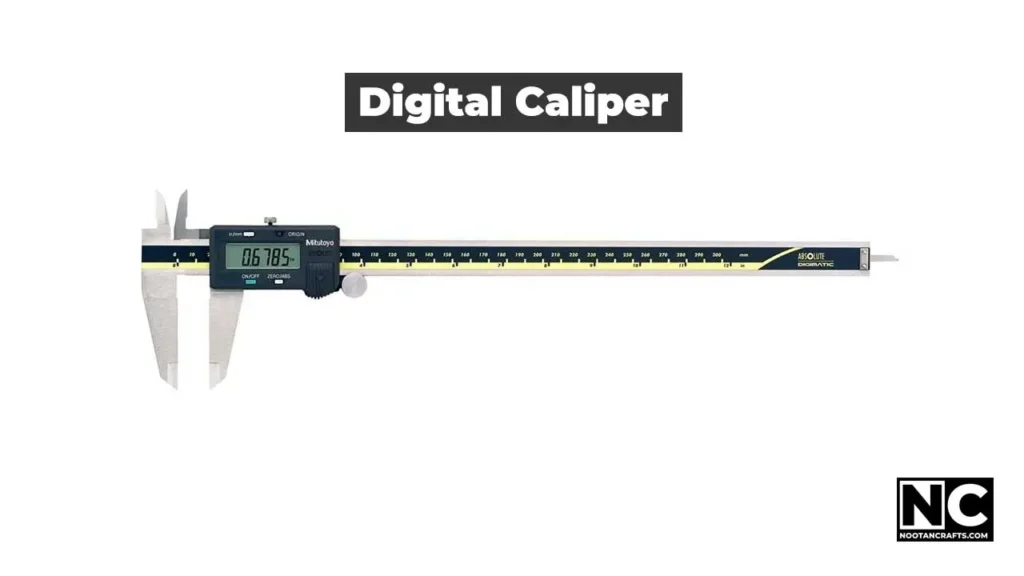
- Digital — Mitutoyo and Fowler are strongest here. Fastest to read, switches units, zeroes anywhere. Needs a battery, and will be flat on the morning you need it.
- Dial — Baker and Kristeel both make these well. Quick to read like a digital, no battery like a vernier. Grit in the rack is the failure mode.
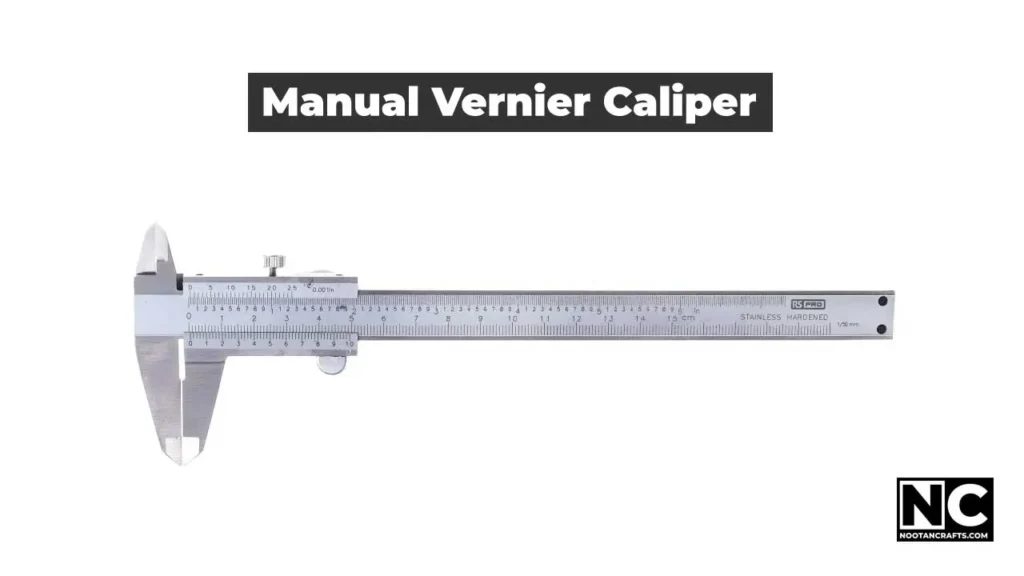
- Vernier — every brand here. Cheapest, most durable, and the only type that cannot fail in a way that still looks like it is working.
How often will you use it?
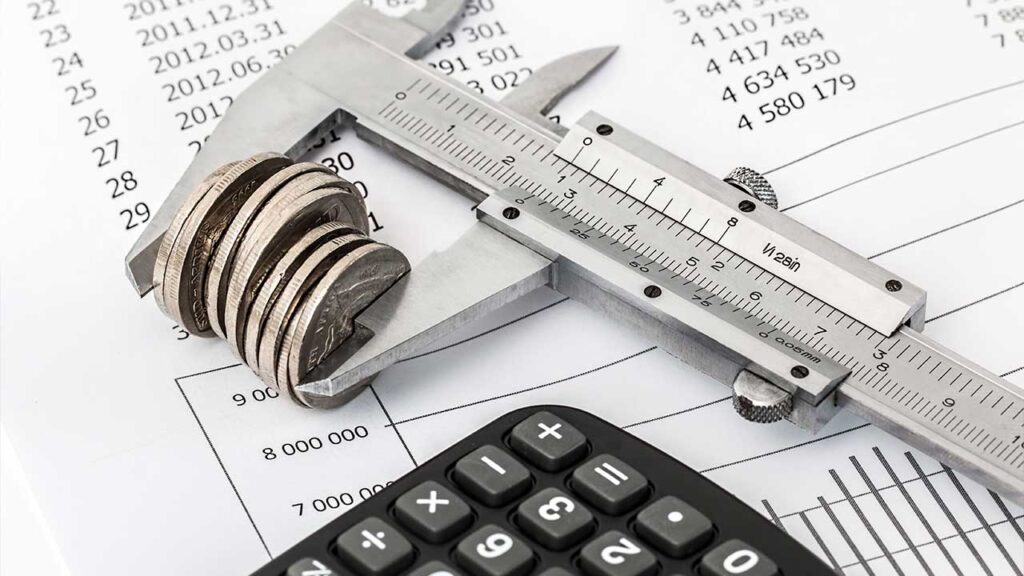
Daily measuring justifies Mitutoyo, Baker or Kristeel, because the cost per use collapses and because a tool used daily gets knocked, dropped and left out. Occasional use does not — a Yuzuki or Aerospace that spends most of its life in a drawer will still be accurate when you take it out, and the money is better spent elsewhere in the workshop.
Can you get it serviced?
The most underrated factor, and the one where the two Indian brands win outright. A dropped caliper needs checking against a standard, and Kristeel and Baker both have real support in India. Mitutoyo’s network here is good. Fowler’s is thin. That is worth more than a small difference on paper.
Current Prices



Last update on 2026-05-14 / Affiliate links / Images from Amazon Product Advertising API
The Rest of Measuring
Reading the one you buy
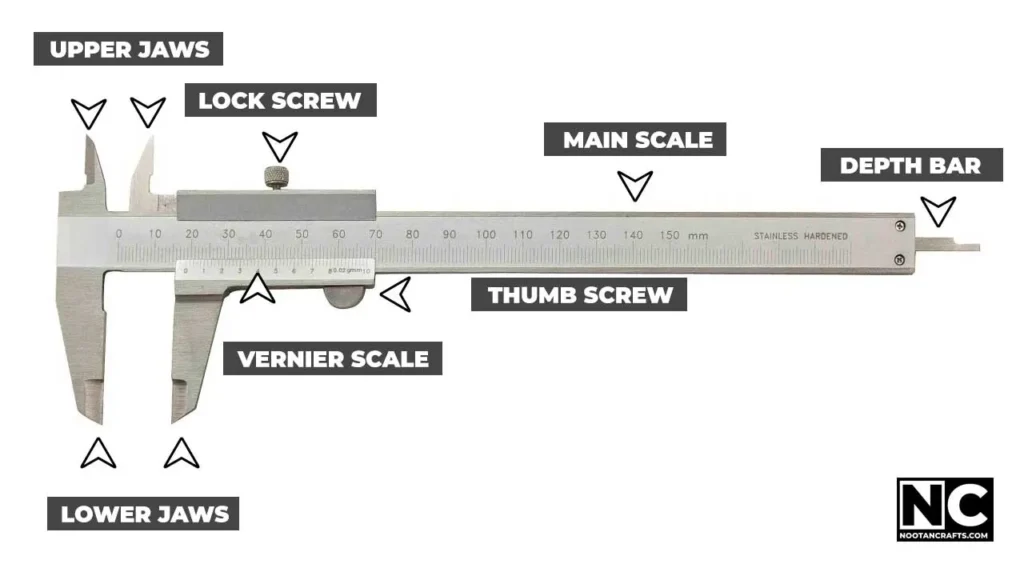
A vernier scale is not hard once someone shows you the trick: the sliding scale is deliberately made slightly smaller than the main one, so exactly one of its divisions can align at a time, and that one gives you the hundredths. Find the last main-scale line the vernier zero has passed, multiply the aligned division by the least count, and add them. The full method with a worked example.
If your work is wood, spend less
Wood moves with humidity by more than any caliper on this page can resolve, so precision finer than about 0.05 mm is being applied to a material that will not hold it. What matters instead is a depth gauge, a steel body, and a locking screw. Five calipers for woodworking, and what actually matters.
The other measuring tool worth owning
A caliper tells you about dimensions; a multimeter tells you whether a circuit is doing what it should. It is the one measuring instrument in a workshop that can hurt you, and the rule that matters is about the jaws rather than the dial. How to use a digital multimeter safely.
Common Questions
Which vernier caliper brand is the most precise?
Mitutoyo, but not by the margin people quote. Its flagship digital caliper resolves 0.01 mm and is accurate to roughly ±0.02 mm – and no caliper from any brand does meaningfully better, because that is close to the limit of the instrument type. What Mitutoyo actually gives you over a budget caliper is repeatability: the same part measured repeatedly gives the same number.
Are Kristeel and Baker reliable, being Indian brands?
Yes, and they are the two on this list that actually manufacture rather than import. Baker leans industrial and rugged, Kristeel has the wider export presence. Both have something no imported brand can match here, which is service you can actually reach when a tool needs checking.
Is Insize a good choice for a beginner?
It is the one I would suggest first for most people. It is close to the premium brands on the properties that affect the reading, costs a fraction as much, and is stocked widely enough that spares are not a problem.
Which brand is the best value?
Insize for anyone who will use it regularly, Aerospace if it will sit in a drawer between jobs. The gap between them shows up in repeatability rather than in a single measurement, so it only matters if you measure the same feature more than once.
Can I use any of these for woodworking?
Yes, and you can spend less than you think. Wood moves with humidity by more than a budget caliper’s error, so precision beyond about 0.05 mm is being spent on a material that will not hold it.
How do I keep it accurate?
Wipe the jaws after every use, check it zeroes before every session, and store it dry in its case. Check it against a known dimension every six months and immediately after any drop – zeroing only proves it is honest at zero, not across its range.
Know an Indian brand that belongs on this list? Tell me which and what you have measured with it — the two local names here were both added because someone pointed them out.


