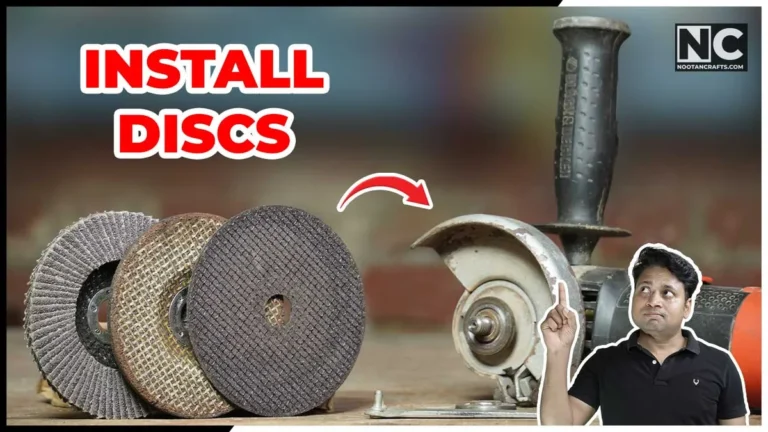
I painted an old balcony railing without removing all the rust. It looked fine for about three weeks, then little orange spots started pushing through the paint like pimples, and I had to redo the entire job. Take rust back to solid gray steel, wipe the surface clean, and prime it the same day. Paint does not bond to rust, and anything you seal underneath keeps corroding in the dark. Sandpaper for light rust, a wire brush for medium, a flap disc on an angle grinder for heavy — then clean, dry, prime, in that order, without leaving it overnight.
The part almost nobody tells you is that “rust removed” has an industry definition, and the level most DIY guides describe isn’t the one that makes paint last. More on that below, because it is the difference between my railing lasting three weeks and lasting years.
- Angle grinder with a flap disc
- Wire cup or wire wheel
- Sandpaper, 80 and 120 grit
- Stiff hand wire brush
- Face shield over safety glasses
- Heavy gloves
- White vinegar and a jar, for small parts
- Thinner or degreaser
- Clean rags
- Red oxide or metal primer
A wire brush throws individual bristles, and they travel far enough to reach your eye
I skipped goggles once and took a bristle straight in the eye. That is not bad luck, it is the documented failure mode of the tool: Norton warns that filaments break off in use and that serious injury is possible for the operator and for anyone else in the work area. The mechanism matters, because it tells you how to stop it: excessive pressure over-bends the filaments and builds heat, which is exactly what makes them snap. Let the tips do the cutting.
- Face shield over safety glasses, not instead of them
- Check the brush’s rated speed is at or above the grinder’s — never below
- Light pressure only; leaning on it breaks bristles faster and cuts slower
- Long sleeves and gloves, and keep bystanders out of the arc
What’s Inside!
- 1 – Removing the Rust, Step by Step
- 2 – How Clean Is Clean Enough: The Standard Nobody Quotes
- 3 – The Clock Starts the Moment the Rust Is Gone
- 4 – Why Paint Will Not Stick to Rust
- 5 – Where This Goes Wrong
- 6 – Vinegar, and Where It Beats a Grinder
- 7 – Chemical Rust Converters, and Why I Skip Them
- 8 – Tools I Reach For
- 9 – Rust Removal Questions People Actually Ask
- 10 – The One Thing Not to Get Wrong
Removing the Rust, Step by Step
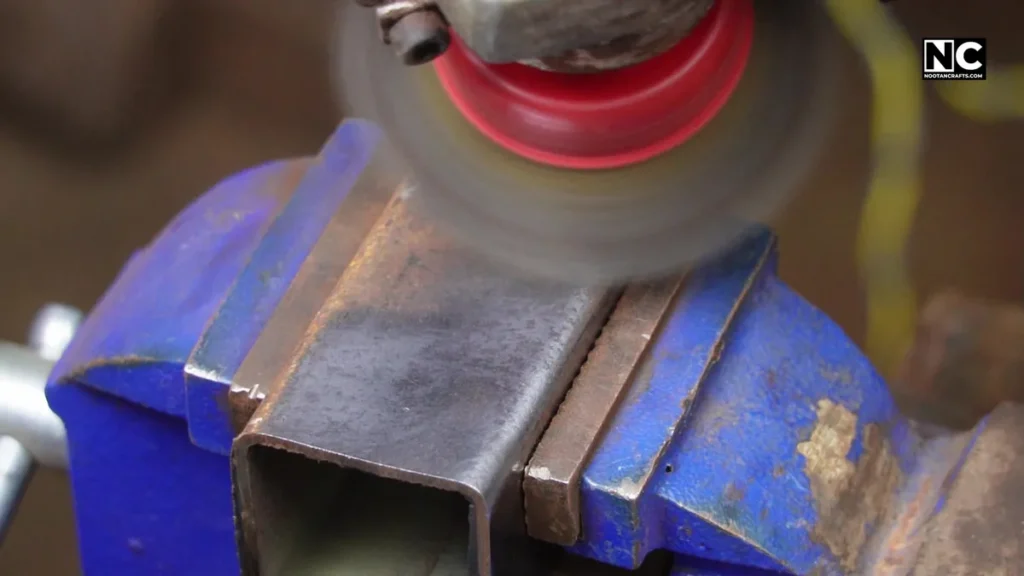
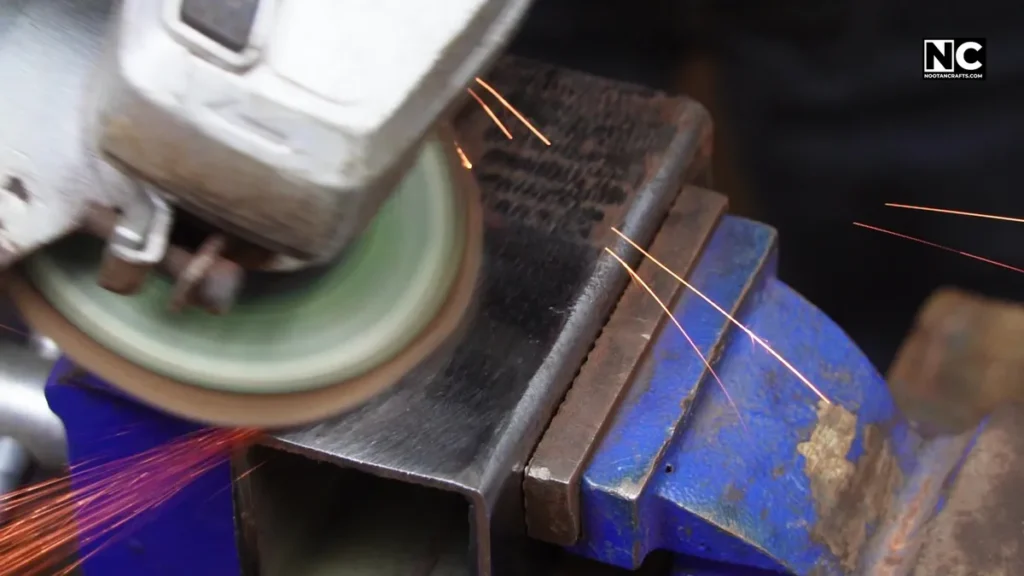
- Match the tool to the rustSandpaper for light surface rust, starting coarse and working finer. A stiff wire brush, by hand or on a drill, for medium. A flap disc on an angle grinder for heavy rust — it chews through corrosion like it owes you money.
- Knock off everything loose firstFlaky orange scale comes away with almost no effort. Clearing it early lets you see how much sound metal is actually left underneath, which is the thing that decides whether this piece is worth saving at all.
- Test what is left with a dull putty knifeThis is the standard’s own adherence test, not a rule of thumb. If rust or old paint lifts under a dull blade, it is loose and it has to go. If it does not lift, it counts as adherent — and the next step decides whether adherent is good enough for you.
- Keep going until you see solid gray steelNot just until the flakes are gone. Stopping at “no loose rust” leaves firmly attached rust in place, and that is where paint failures start. Work until the surface reads as uniform gray metal.
- Soak small parts instead of grinding themFor bolts, nuts and brackets, grinding is both overkill and impractical. Drop them in a jar of white vinegar overnight, then scrub with a wire brush. I worked this out when I was broke and had a pile of rusty screws I did not want to throw away.
- Rinse and dry soaked parts immediatelyThis is the step people skip. A vinegar bath leaves you with wet bare steel, which is the fastest-rusting surface there is. Rinse, dry completely, and move straight to primer.
- Wipe the surface with thinner or degreaserGrinding leaves dust and your hands leave oil. Both stop primer from bonding, and neither is visible once the surface is gray.
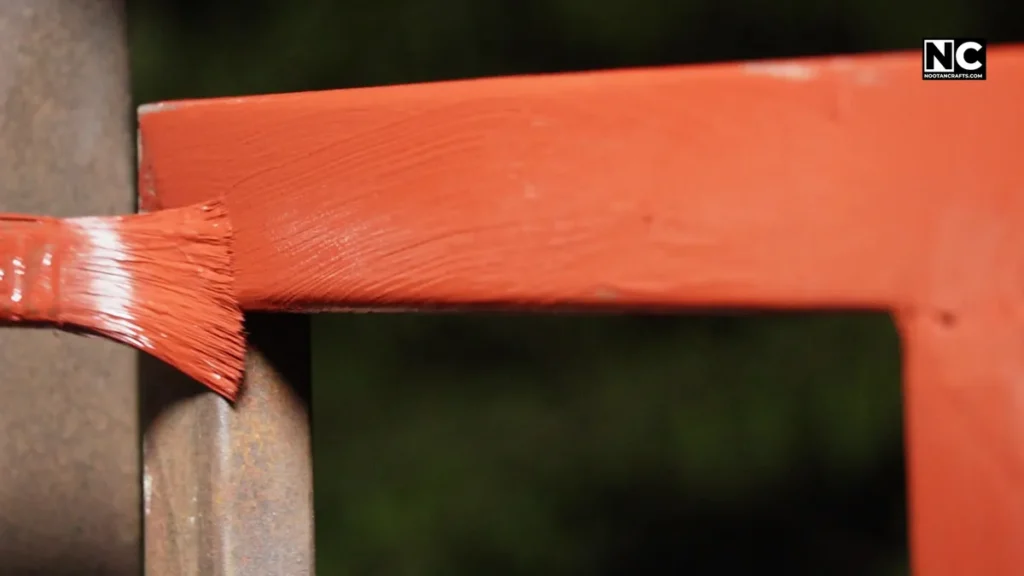
- Prime the same day, not tomorrowClean, wipe, prime, no exceptions. Red oxide primer for anything living outdoors. The next section explains exactly how short this window is.
How Clean Is Clean Enough: The Standard Nobody Quotes
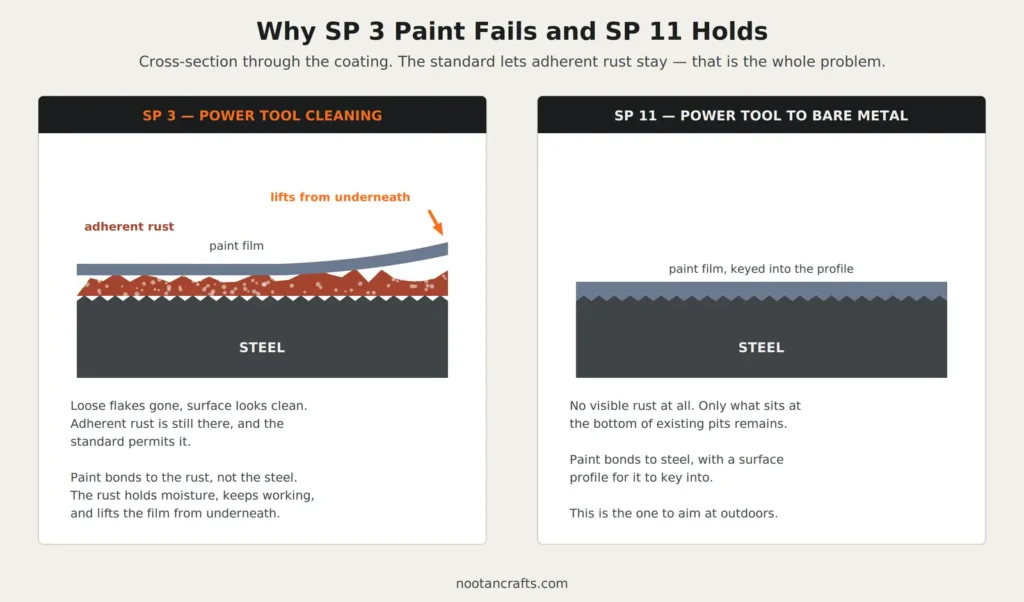
Surface preparation for painting steel has formal grades, and reading them once changes how you work. The useful discovery is that the two grades most DIY advice describes — hand tool and power tool cleaning — both explicitly permit firmly attached rust to stay on the metal.
| Grade | What it means | Rust left behind | Your version of it |
|---|---|---|---|
| SP 1 | Solvent cleaning | All of it — this only removes oil and grease | The thinner or degreaser wipe |
| SP 2 | Hand tool cleaning | Adherent rust may remain | Sandpaper and a hand wire brush |
| SP 3 | Power tool cleaning | Adherent rust may remain — same as SP 2 | Wire cup on a drill or grinder |
| SP 11 | Power tool cleaning to bare metal | None visible; only rust at the bottom of existing pits | Flap disc worked back to gray steel |
SSPC-SP 2 is defined as removing loose mill scale, loose rust and loose paint, with adherence judged by a dull putty knife, and SP 3 removes the same contaminants using power tools. SP 11 is the one that asks for a surface free of all visible rust, oxides and corrosion products, with a surface profile of at least one mil.
This is the whole reason my railing failed. I had done a decent SP 3 — every loose flake gone, surface looking clean — and the standard says that is a legitimate finish. But adherent rust was still there under the paint, still holding moisture, and three weeks later it came through. For anything outdoors that you do not want to repaint next season, aim at SP 11: keep going until there is no visible rust at all.
The Clock Starts the Moment the Rust Is Gone
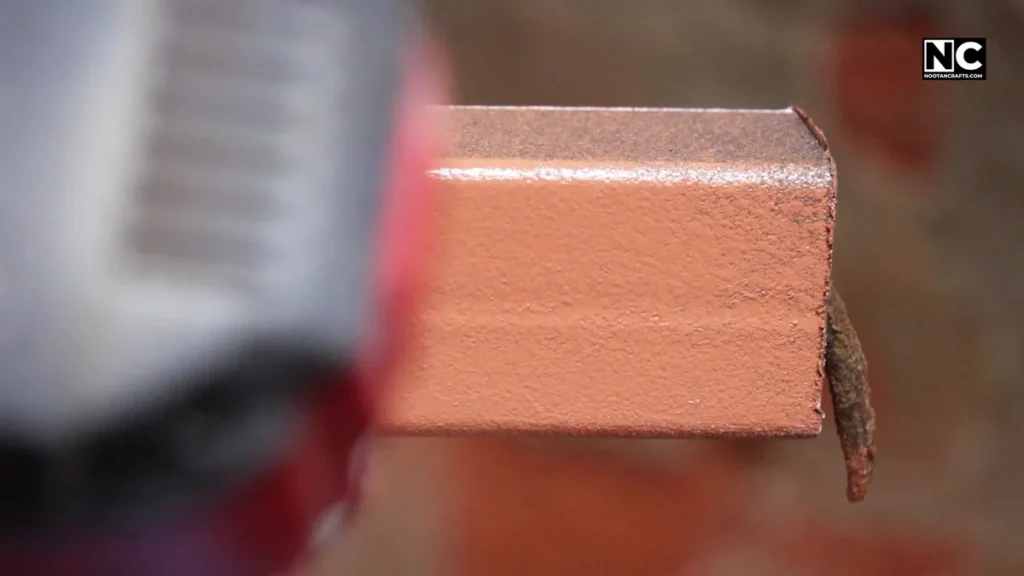
I once spent hours sanding a railing to what looked like perfection, then left it overnight without primer. The next morning it had orange freckles across the whole thing and the work was wasted. Bare steel starts oxidizing as soon as it is exposed, and the two things that decide how fast are humidity and how close the metal is to dew point.
Industrial coating practice puts real numbers on it. When steel sits within 3 °C (5 °F) of the air dew point, condensation forms on the surface and flash rust follows quickly, and above 85% relative humidity a freshly prepared wet surface can go from light to heavy flash rust in 30 to 60 minutes. That 30-minute figure describes surfaces cleaned by wet methods, so it applies directly to parts coming out of a vinegar bath — dry those the moment you rinse them. Dry grinding buys you longer, but the rule that follows is the same one coating specifications use: prime within the same working session.
Clean, wipe, prime. That sequence is not fussiness, it is the only part of this job with a deadline attached. If you need to settle what goes on top of the primer, the primer decision guide covers when a separate primer coat is load-bearing.
Why Paint Will Not Stick to Rust
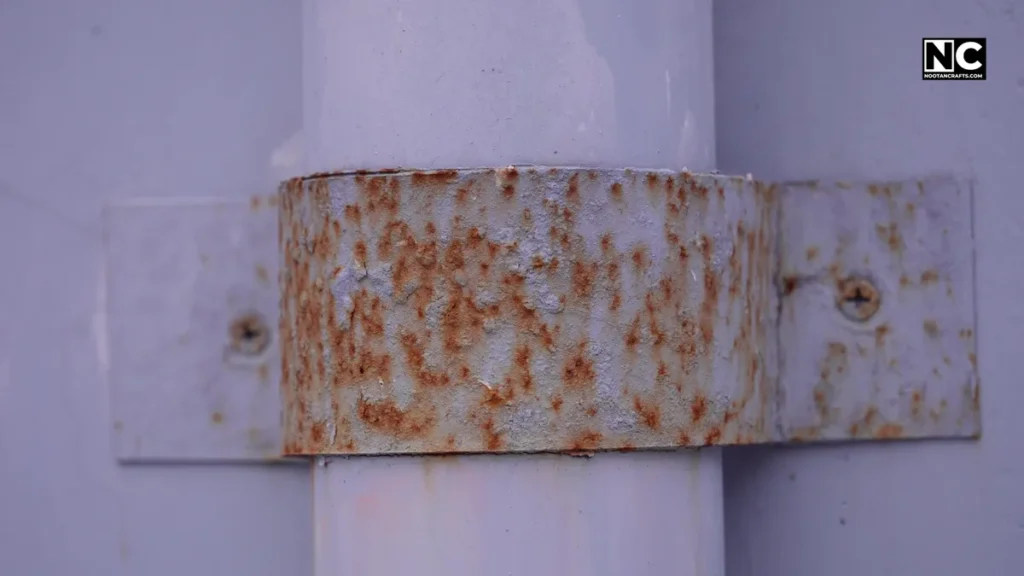
Paint needs a sound surface to grip. Rust is not a stain on the metal, it is a loose, porous layer sitting on top of it, so paint applied over rust is bonded to something that is itself barely attached. The film can only be as solid as what it is holding on to.
Worse, that porous layer holds moisture. Painting over it seals water against the steel rather than keeping water out, and corrosion carries on underneath where you cannot see it. Bubbling, peeling and flaking are what that looks like from the outside, usually weeks rather than years later. Rust behaves more like mold than like dirt: it does not sit still, it spreads.
Where This Goes Wrong
- Stopping at “no loose rust.” That is SP 3, and it leaves adherent rust behind. Fine for a shed bracket, not for a railing you want to stop repainting.
- Leaving bare metal overnight. The surface you cleaned yesterday is not the surface you are priming today.
- Skipping the solvent wipe. Grinding dust and skin oil are both invisible on gray steel and both stop primer bonding.
- Pulling parts out of the vinegar early. It is slow, and rushing it means scrubbing rust that had nearly let go.
- Not drying soaked parts at once. Wet bare steel is the single fastest surface to flash rust.
- Leaning on the wire brush. It cuts slower, wears out faster, and throws more bristles.
Vinegar, and Where It Beats a Grinder
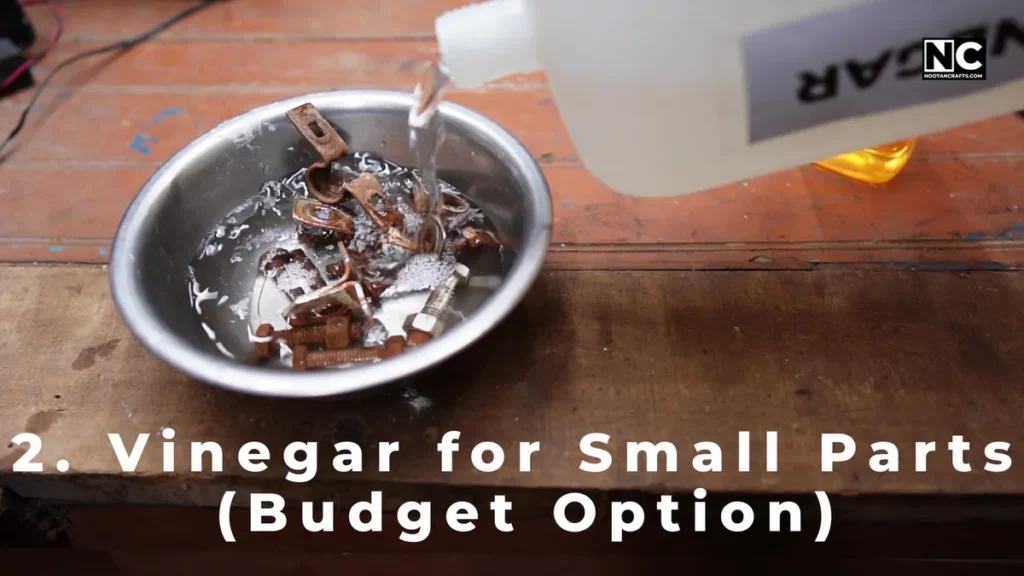
The first time I tried it I did not believe it would work, and the next morning the rust wiped off. For small parts it is unbeatable: cheap, no tools, and it reaches into threads and corners that no disc can touch. The acid dissolves the oxide rather than cutting it away, which is why it handles shapes that would be impossible to grind.
The catch is that it is slow and it leaves you with wet steel on a short clock. Soak overnight, scrub, rinse, dry completely, prime. Do not put a jar of bolts on to soak unless you have time to finish them the same day.
Chemical Rust Converters, and Why I Skip Them

Phosphoric acid products and rust converters work by turning iron oxide into a more stable compound rather than removing it. Plenty of people rely on them and they are fast on large surfaces. I do not use them, and the reason is honest rather than technical: with a converter you cannot see whether the reaction went to completion, and I would rather look at bare gray metal and know.
If you do use one, ventilate properly, wear gloves, and dispose of the leftovers rather than tipping them down a drain. Follow the product’s own instructions on how long to leave it and whether it needs rinsing, because that varies by formulation and getting it wrong leaves you priming over an unfinished reaction.
Tools I Reach For

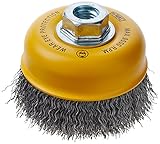


Last update on 2026-10-25 / Affiliate links / Images from Amazon Product Advertising API
If the grinder is new to you, the angle grinder guide covers guard position and disc ratings before you put a wire cup on one, and changing discs safely is worth reading first if you will be swapping between flap disc and wire cup.
Rust Removal Questions People Actually Ask

Can you paint over rust directly?
No. Paint does not bond to rust, it bonds to a loose porous layer that is itself barely attached, and it seals moisture against the steel. It will flake, and the rust will keep spreading underneath.
What is the fastest way to remove rust from metal?
Mechanical removal. A flap disc on an angle grinder for heavy rust, a wire cup for medium, sandpaper for light. Direct, visible progress, and you can see exactly when you have reached sound metal.
Does vinegar actually remove rust?
Yes, and it reaches threads and corners a disc cannot. It is best on small parts with light to medium rust, it takes an overnight soak, and it leaves wet bare steel that has to be dried and primed straight away.
Is primer enough to stop rust?
Primer protects bare metal from starting to rust. It does not stop rust that is already there, so it cannot be used as a shortcut around removal.
How clean does the metal actually need to be?
For anything outdoors, aim for no visible rust at all rather than just no loose rust. Removing only what is loose is a recognized preparation grade, but it permits firmly attached rust to stay, and that is where paint failures start.
What if I have no tools at all?
Vinegar, a baking soda paste, or lemon juice will handle small items. They are slow and they are not practical on a railing or a gate, but for a handful of rusty parts they work.
How long can I leave bare metal before priming?
Treat it as the same working session. Humidity and dew point drive how fast it flash rusts, and a wet-cleaned surface in humid air can go from light to heavy rust inside an hour.
The One Thing Not to Get Wrong
Do not stop at the flakes, and do not leave it bare overnight. Those two mistakes account for nearly every rust job that has to be redone, mine included, and neither costs anything to avoid — only the patience to keep working until the metal reads uniform gray, and the discipline to get primer on it before you put the tools away.