Use a brush for trim, edges, and detail work. Use a roller for walls, ceilings, and large flat surfaces. Use a spray gun for cabinets, furniture, and metalwork, where a flawless finish is worth the extra setup and cleanup.
None of the three is the best tool. Each one wins a different job, and the mistake people make is not picking the wrong tool; it is trying to make one tool do all three jobs.
If you can only buy one, buy a roller — and a brush with it. That is not a dodge. A roller handles the biggest area in any house for the least skill, and the brush that finishes its corners costs almost nothing beside it. Together they cover every job on this page except a flawless finish on cabinets, and that is the one job worth hiring out or waiting on. Buying a sprayer first is the expensive mistake, because its setup and cleanup can outlast the painting.
| Category | Winner | Why |
|---|---|---|
| Precision and detail work | Brush | Nothing else gives you that level of control on trim, corners, and edges |
| Speed on large flat areas | Roller | Covers a wall or ceiling far faster than a brush, and smoother than most people expect on the first try |
| Finish quality | Spray gun | No brush marks, no roller texture — the smoothest of the three when it is set up right |
| Cost | Brush and roller | Both are one-time, budget-friendly purchases; a sprayer costs more upfront and burns extra paint through overspray |
| Setup and cleanup | Brush | Rinse it and you are done; a roller needs a tray and reloading, a sprayer needs masking and a full flush |
| Beginner-friendliness | Roller | Hand it to someone who has never painted before and they will get a decent result within minutes |
My best recommendation
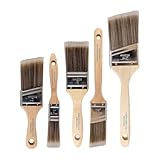

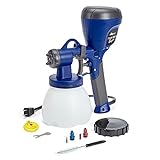

Last update on 2026-10-23 / Affiliate links / Images from Amazon Product Advertising API
What’s Inside!
- 1 – Paint Brush vs Roller vs Spray — Video
- 2 – All Three Tools, Side by Side
- 3 – Paint Brush — Precision and Control
- 4 – Roller — Speed with Simplicity
- 5 – Spray Gun — Professional Finish
- 6 – Setup and Cleanup Is the Deciding Factor Most People Ignore
- 7 – Where This Goes Wrong
- 8 – Paint Brush vs Roller vs Spray Questions People Actually Ask
- 9 – Match the Tool to the Job
Paint Brush vs Roller vs Spray — Video
All Three Tools, Side by Side
Here is the whole comparison in one place. Read down the column for the tool you own, or across the row for the thing you care about most.
| What you care about | Brush | Roller | Spray gun |
|---|---|---|---|
| Learning curve | Feels natural right away, but easy to overload | Easiest of the three. Almost no skill needed | Hardest. Flow rate and pass speed both have to be right |
| Cost to start | Lowest. One purchase, lasts several projects | Low. Frame plus sleeves and a tray | Highest, and it keeps costing paint through overspray |
| Paint wasted | Almost none | A little on the tray and sleeve | The most. Overspray is unavoidable |
| Coverage on a big flat wall | Slow and tiring | Fast and even | Fastest once it is running |
| Coverage in corners and on trim | The only one that does it properly | Cannot reach the last inch | Cannot target a tight edge cleanly |
| Finish left behind | Brush marks, which often look fine | Light stipple texture | Glass smooth, with no marks at all |
| Textured surfaces | Works with the right bristle | Best — a thick nap sleeve gets into texture | Struggles. Thick paint can clog the nozzle |
| Setup before you start | None. Open the can and go | A minute to load the tray | Assembly, thinning, and masking everything nearby |
| Cleanup after | A rinse | A few minutes squeezing out the sleeve | Full strip down and flush, every time |
| Best job for it | Trim, doors, edges, small furniture | Walls, ceilings, plywood panels, furniture tops | Cabinets, furniture, metal grilles and gates |
Read the setup and cleanup rows together before you buy a sprayer. On a small job, masking the room and flushing the gun afterward can take longer than painting it with a brush. A sprayer only pays for itself when the area is large, or when the finish has to look perfect up close. On anything smaller, you are doing an hour of work to save fifteen minutes.
Paint Brush — Precision and Control
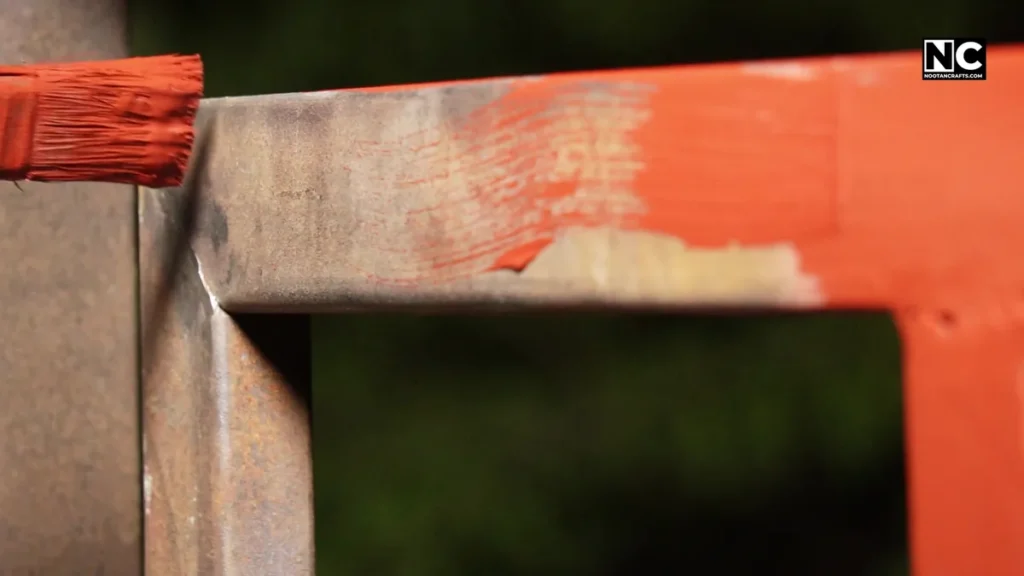
A brush is the tool for edges, trim, doors, and any fiddly bit of furniture where you need real control over where the paint goes. It is slow. A full gate or large panel with just a brush becomes a multi-day job and a sore wrist. But for detail work, nothing else comes close.
Load about a third of the bristles and work in short strokes. Overload the brush, and you will spend more time wiping drips than painting. This is the most common beginner mistake, and it’s why brushed work looks messy far more often than it needs to.
Roller — Speed with Simplicity
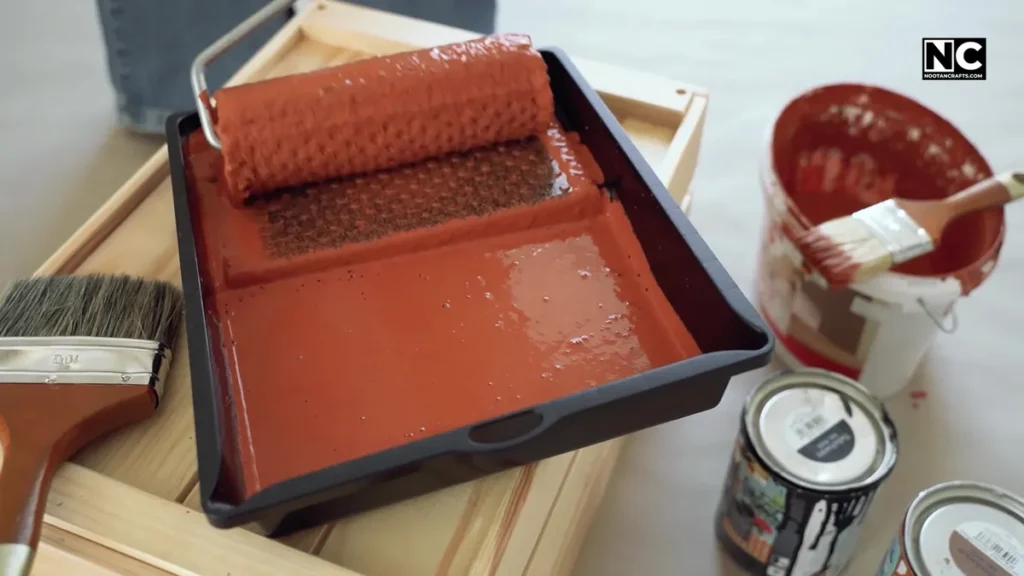
The roller is the workhorse for walls, ceilings, plywood panels, and furniture tops. Broad, even coverage with almost no learning curve. If you have never painted before, this is the tool to start with.
What makes it forgiving is the nap. The sleeve holds paint in thousands of fiber loops and releases it as the roller turns, so the load spreads itself out instead of depending on your hand. That is also why nap length matters more than the frame does: a short nap lays a thin film on smooth board, and a long one reaches down into texture a brush would bridge straight over.
Its weak spot is corners. You will still reach for a brush to finish the last inch near any edge. It also means more cleanup than a brush: a tray to manage, frequent reloading, and a sleeve that takes a few minutes to squeeze and rinse clean.
Spray Gun — Professional Finish
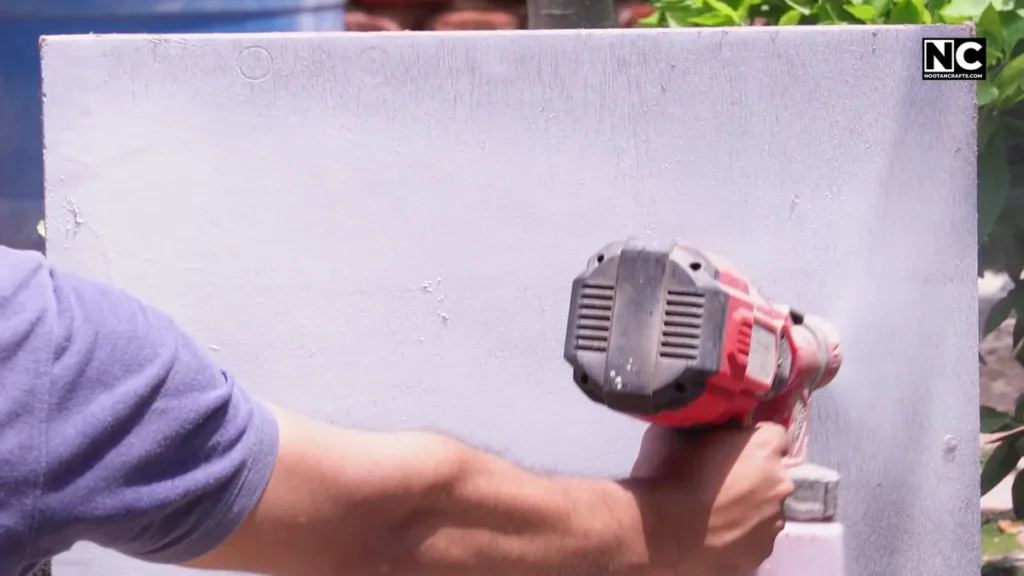
Set up correctly, a spray gun lays down a coat that a careful brush job cannot match. That is exactly why it is the right call for cabinets, furniture, and metal grilles.
The reason is that nothing touches the surface. A brush and a roller both drag paint across the work and leave a record of that drag — bristle lines, or the stipple a sleeve prints as it lifts off. A gun breaks the paint into droplets and lets them land, so the film levels under its own surface tension, with no tool mark at all. Everything hard about spraying follows from that same fact: droplets that small go wherever the air goes.
The catch is real. You have to mask everything nearby before you start, and afterward you scrub the nozzle, tube, and container clean. Skip the cleaning once, and the gun will fight you the next time. If you are new to one, the HVLP spray gun guide covers thinning, flow rate, and pattern, and there is a separate walkthrough on cleaning a spray gun properly.
Sprayed paint hangs in the air you breathe — a brush and roller do not
This is the one real difference in risk between the three tools, and it is easy to miss because you cannot see most of it. A brush and a roller move paint from the tin to the wall. A spray gun breaks that paint into a mist fine enough to drift, which is exactly why it lays down such an even coat. That same mist stays airborne for minutes and goes wherever you are standing. Overspray that lands on the floor is the part you notice; the part you inhale is the part that matters.
- A dust mask is not enough for solvent-based paint. A paper or cloth mask stops particles. It does nothing about vapor. Use a respirator with cartridges rated for organic vapors.
- Open the space up. Cross-ventilation, or spray outdoors. A closed room lets the mist build with nowhere to go.
- Wear eye protection. Atomized paint drifts back at you on any breeze, and it will find your eyes.
- Keep sparks and flames away. Solvent mist plus an ignition source is a real hazard, not a theoretical one. That includes pilot lights and space heaters.
- None of this applies to a brush or roller with water-based paint in a ventilated room. If a job does not need a sprayer, this is one more reason not to use one.
Setup and Cleanup Is the Deciding Factor Most People Ignore
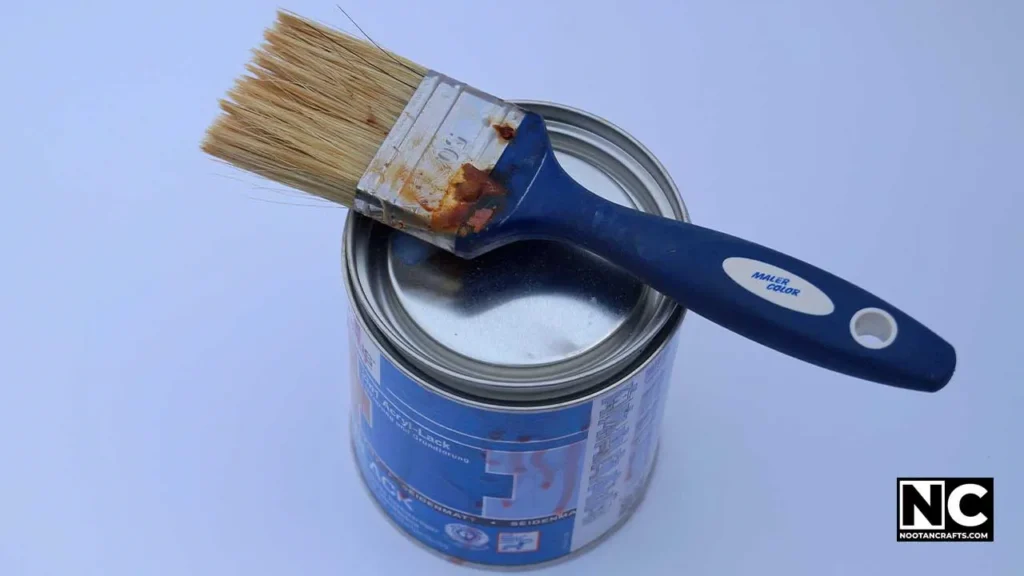
Everyone compares these tools on finish and speed. Almost nobody counts the time before and after the painting, and that is where the real difference sits.
With a brush, you open the can and start. When you finish, you rinse it. With a roller you add a tray and a few minutes of squeezing out the sleeve. With a sprayer, you assemble the gun, check the paint is thin enough, mask every surface you do not want painted, and then at the end you strip the gun down and flush the whole system.
Count that time honestly when you choose. On a door, the brush is finished before the sprayer is even masked. On a set of kitchen cabinets, the sprayer wins easily, and the finish is worth it.
Where This Goes Wrong
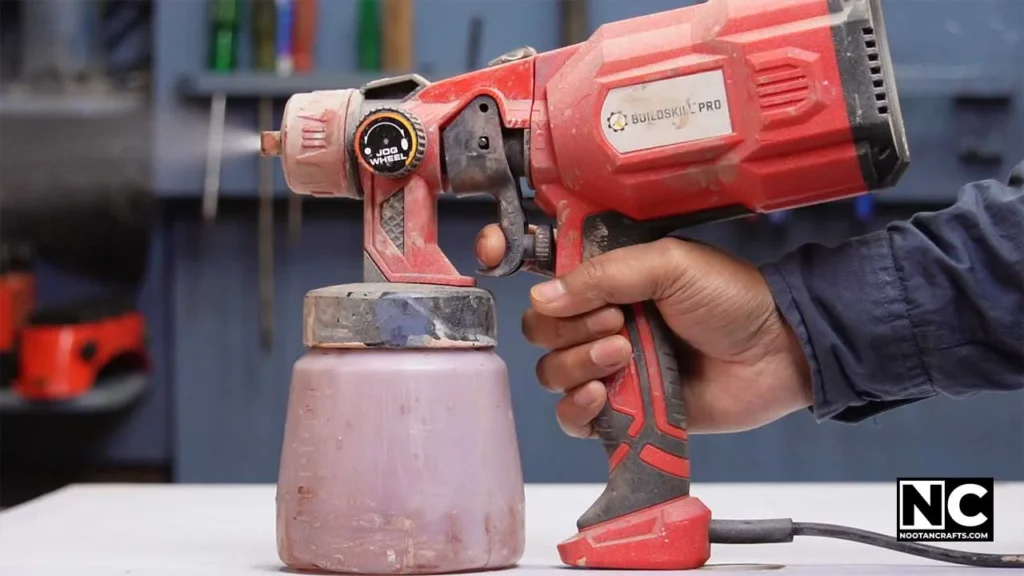
- Reaching for a sprayer on a tiny job. Masking and cleanup alone can take longer than the painting would have taken with a brush.
- Using a brush for an entire wall. It will get there eventually, but a roller does the same job in a fraction of the time.
- Expecting a roller to handle corners. It will not. Keep a brush on hand for the last inch near any edge.
- Overloading any of the three. An overloaded brush drips, an overloaded roller splatters, and an overfilled sprayer cup just means more overspray to clean up.
- Spraying paint that is too thick. The gun spits instead of misting, and you get an orange-peel surface. Thin it to what the gun’s manual asks for, and test on scrap first.
- Skipping primer because you are spraying. The tool that applies the topcoat has nothing to do with whether the surface needed priming.
Paint Brush vs Roller vs Spray Questions People Actually Ask
Which is cheaper: a brush, a roller, or a spray gun?
Brushes and rollers are both budget-friendly, one-time purchases. A spray gun costs more upfront and uses more paint through overspray, so it keeps costing you on every job.
Which gives the smoothest finish?
A spray gun, as long as it is prepped and used correctly. Done poorly, you will get runs and overspray instead, and a careful brush job would have looked better.
Do I need primer no matter which tool I use?
Yes, and the tool has nothing to do with it. Primer does two jobs the topcoat cannot: it bonds to a surface the paint would struggle to grip, and it seals porous material so the topcoat sits on it rather than soaking in unevenly. Bare wood, patched drywall, glossy surfaces and anything previously painted a much darker color all need it. Spraying does not change that, and a sprayed topcoat over an unprimed glossy surface peels exactly as readily as a brushed one.
Is spraying actually faster than rolling?
On a like-for-like area, yes. Add masking and cleanup and it often does not feel that way in practice. On anything smaller than a room, the roller usually finishes first.
Which tool wastes the most paint?
The spray gun. Overspray is a real and consistent loss compared with a brush or roller, and it is the reason a sprayer costs more per job even after you own it.
Can I use just one tool for a whole room?
You can, but you will feel it. A roller alone leaves the corners and trim unfinished. A brush alone will take days. Most rooms want a roller for the flat areas and a brush for the last inch, which is why the two are usually sold together.
Can a spray gun handle textured walls?
Not well. Thick paint can clog the nozzle, and the spray struggles to get into deep texture. A roller with a thick nap sleeve is the right tool for that surface.
Match the Tool to the Job
It reminds me of a doha by Rahim Ji:
“Rahiman dekhi baḍen ko, laghu na dijiye ḍāri.|
Jahā kām āve sūī, kahā kare talavāri||”
Meaning: Rahim says, having seen the great ones, do not despise the small. Where a needle is useful, what will a sword do?
The same goes for these three. None replaces the others, and none is the lesser tool. The sprayer is not better than the brush; it is better at a different job.
Brush for detail. Roller for coverage. Use the sprayer when the finish has to look flawless up close. Match the tool to the job instead of picking a favorite, and you will save yourself time, paint, and a good deal of frustration.