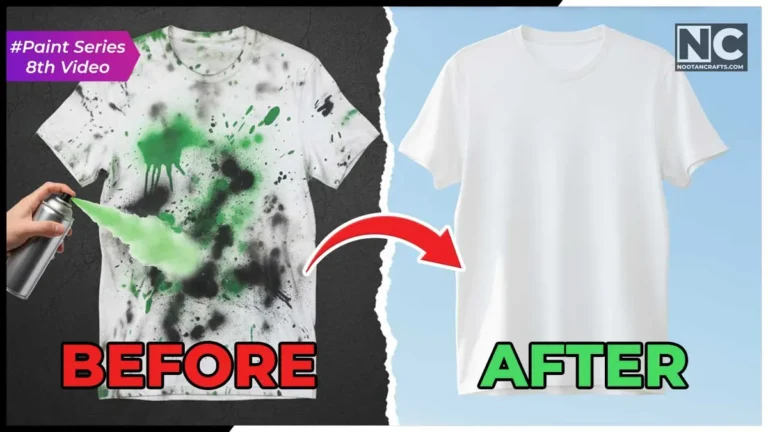
Get spray paint out of clothes by blotting (never rubbing) while it’s still wet, rinsing from the back of the fabric with cold water, then working in dish soap with an old toothbrush before washing on a cold cycle. Once it’s dry, scrape off the crust first, then treat what’s left with rubbing alcohol or acetone. The dryer is the one thing that turns a stain you could still fix into one you can’t — heat sets spray paint permanently.
One thing before you open any bottle, because most guides skip it. Which solvent you should use depends on the fabric, not the paint. Acetone lifts spray paint off cotton and denim without much trouble. On acetate—which many jacket and dress linings are made from—acetone doesn’t clean the fabric. It dissolves it.
So read the care label first. The strongest thing under your sink will take the paint off and take the garment with it.
What’s Inside!
- 1 – Check the Care Label Before You Open Anything
- 2 – Why Spray Paint Stains Are So Stubborn
- 3 – Wet or Dry: What You Can Still Save
- 4 – Remove Spray Paint from Clothes – My Video
- 5 – Check What Kind of Paint You're Dealing With
- 6 – Getting Wet Paint Out
- 7 – Getting Dried Paint Out
- 8 – When a Household Solvent Is Not Enough
- 9 – Where This Goes Wrong
- 10 – Spray Paint on Shoes, Carpet and Upholstery
- 11 – Spray Paint Stain Questions People Actually Ask
- 12 – The Two Things That Decide It
Check the Care Label Before You Open Anything
The Dry Cleaning and Laundry Institute is blunt about this: acetone readily dissolves acetate fibers, and many garment linings are made of acetate. It also pulls the color out of some fabric dyes. That is why “test on a hidden spot” is not quite enough advice on its own — on a lined jacket, the hidden spot usually is the lining, so you either ruin the lining to learn the lesson or you test the shell and get a pass that does not apply.
| Fabric | Safe to try | Keep away from it |
|---|---|---|
| Cotton, denim, canvas | Dish soap, rubbing alcohol, acetone | Nothing much. This is the fabric that takes the strongest treatment |
| Polyester | Dish soap, rubbing alcohol | Acetone can dull the finish and shift the dye. Test it, or stay with alcohol |
| Nylon | Dish soap, rubbing alcohol | Acetone, because the dyes bleed easily |
| Acetate, triacetate, and most linings | Dish soap and cold water only | Acetone. It dissolves the fiber. Nail polish remover too — that is mostly acetone |
| Wool, silk | Cool water, a drop of mild detergent, patience | Acetone, strong solvents, hot water, and anything alkaline |
| Spandex or elastane blends | Dish soap | Acetone and thinners. They break down the elastic and it never springs back |
| Leather and faux leather | Wipe it while wet, then a leather cleaner | Acetone and thinners. They strip the finish straight off |
| No label, or a blend you can’t identify | Dish soap, then rubbing alcohol | Acetone. Not worth the gamble on an unknown fiber |
If you do want to test, test properly. Take a cutting from a seam allowance or an inside hem — a part of the same fabric you are about to treat, not the lining next to it. Put a drop of solvent on it. If it softens, goes sticky, or leaves color on the cotton swab, that solvent is out.
Why Spray Paint Stains Are So Stubborn
Spray paint is built to bond fast and hard — that’s the whole point — and the solvents grip fabric fibers the same way they grip the surface you meant to paint. Oil-based spray paint gives you a narrow window, often less than 30 minutes, before it sets hard. Water-based and acrylic spray paints are more forgiving and behave closer to an ordinary stain.
There is a second reason it is worse than a normal spill. Spray paint arrives as a mist, so instead of sitting on top of the weave, it lands as thousands of separate droplets that go down between the fibers. That is also why the stain often looks like a faint shadow rather than a blob, and why rubbing it does so much damage — you are pressing all those droplets deeper.
Wet or Dry: What You Can Still Save
| Where you are | Realistic odds | Do this |
|---|---|---|
| Still wet, minutes old | Very good | Blot, rinse from the back, dish soap, cold wash |
| Touch dry, same day | Good, with two or three rounds | Scrape, then the right solvent for the fabric |
| Fully dry, days old | Fair on cotton, poor on synthetics | Scrape, solvent, repeat. Expect a shadow to remain |
| Been through a hot dryer | Poor | Worth one attempt with the right solvent, then accept it |
| Washed and dried more than once | Very poor | Think patch, dye job, or work clothes |
Nothing on this page is a guaranteed fix on dried oil-based paint. Anyone promising one has not tried it. What you can reasonably expect is to take a stain from obvious to faint, and on cotton, often all the way out.
Remove Spray Paint from Clothes – My Video
Check What Kind of Paint You’re Dealing With
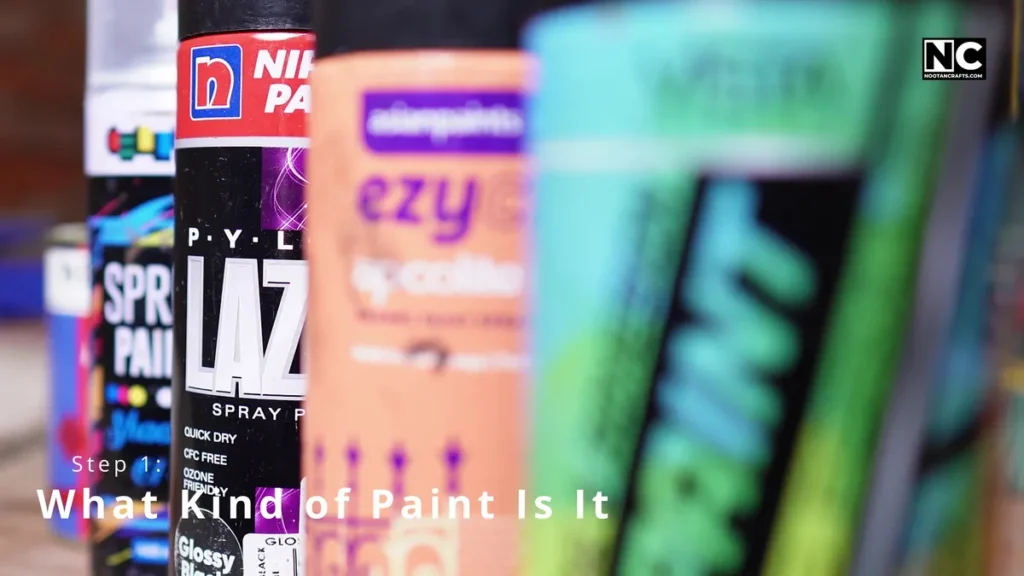
Check the can’s label before you grab a cleaner. Water-based or acrylic paint comes out with soap and patience. Oil-based paint needs stronger treatment and sinks deeper into the fibers, so regular washing alone won’t touch it. Either way, a stain that’s still wet has a real chance; a dried one just needs a few more steps.
If the can is long gone, the paint itself tells you. Water-based paint dries to a slightly rubbery film that you can often peel at with a fingernail. Oil-based paint dries hard and brittle and cracks when you flex the fabric.
Getting Wet Paint Out
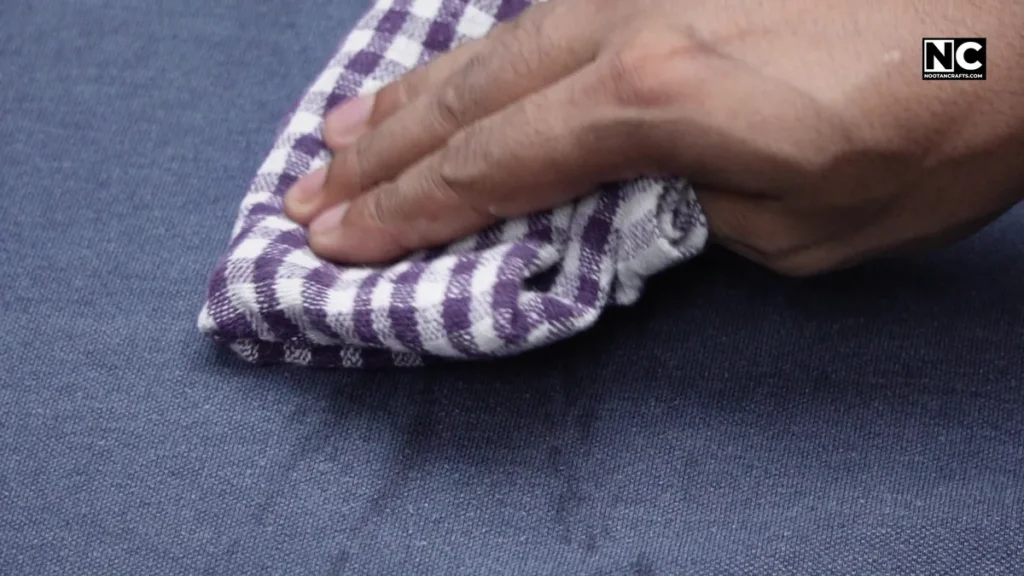
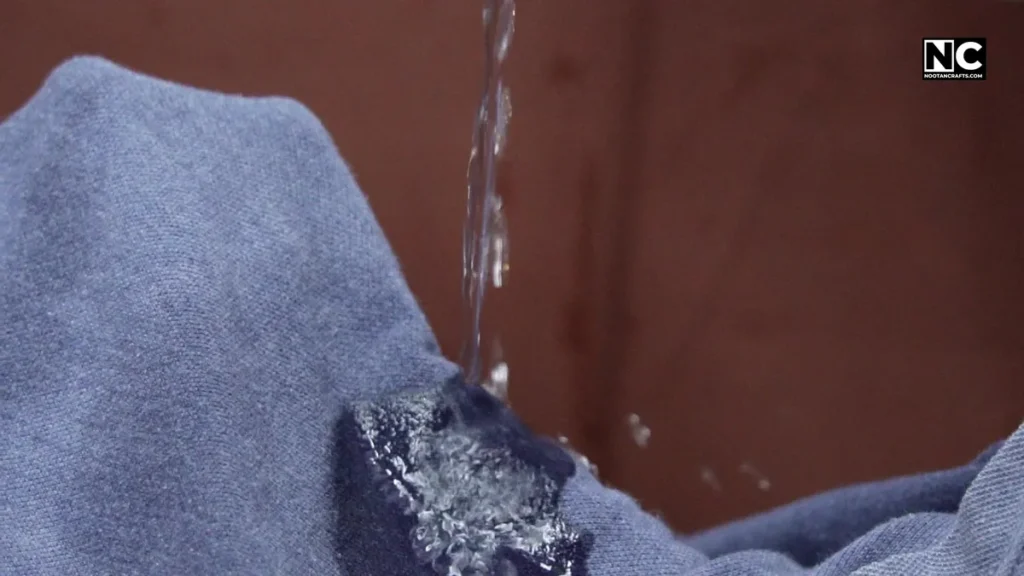
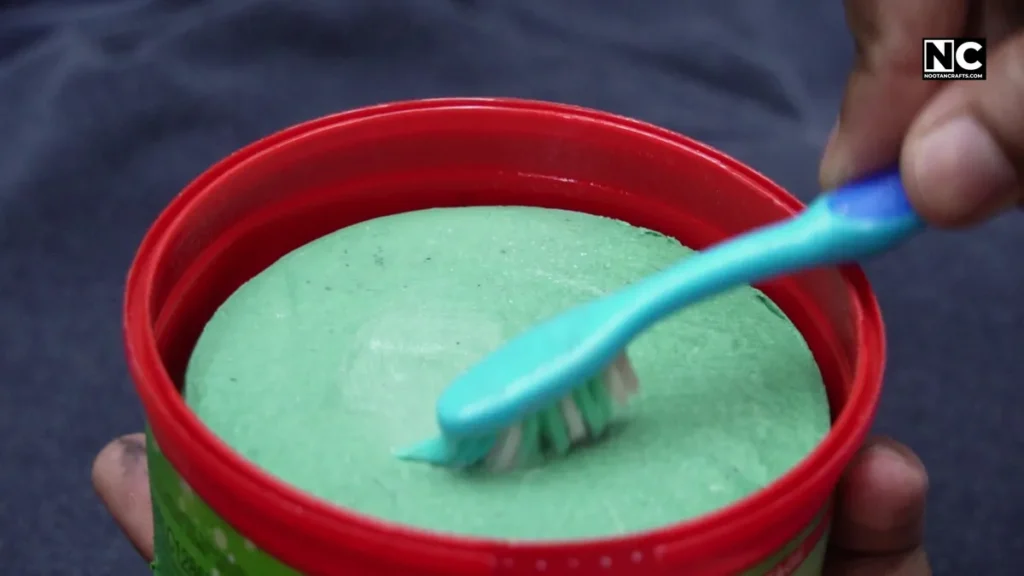
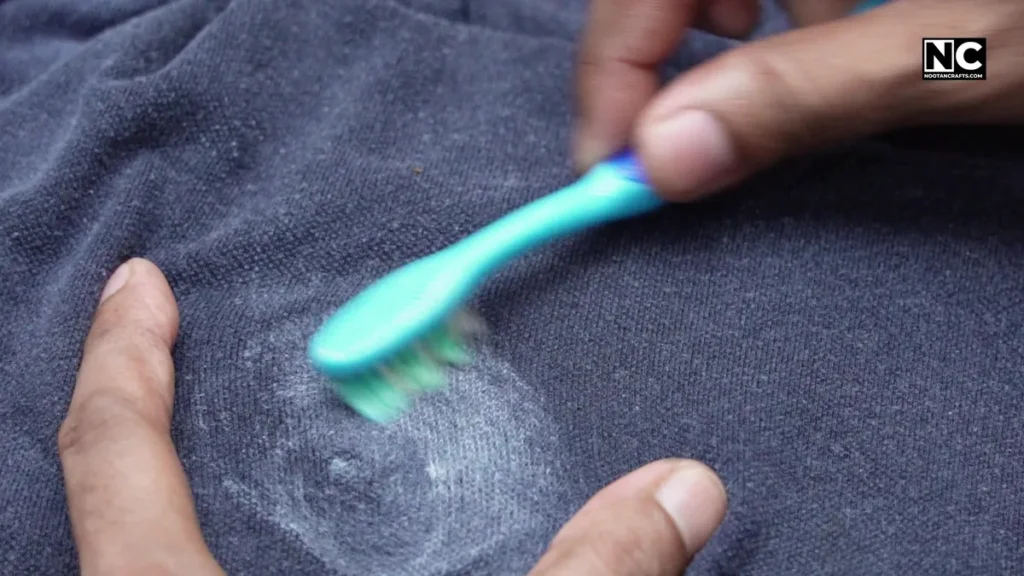
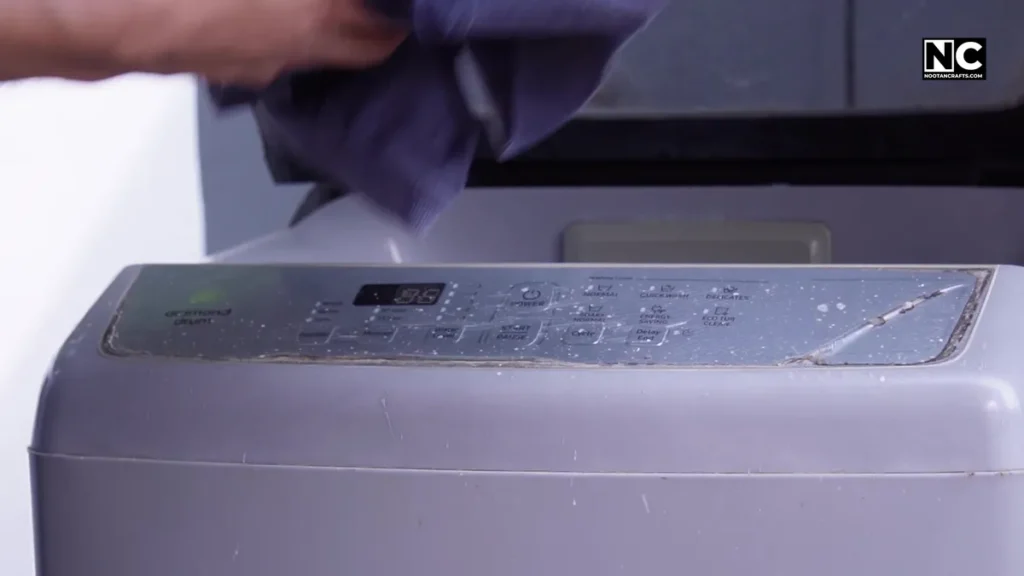
- Blot, don’t rub. Rubbing spreads the paint deeper into the weave instead of lifting it out.
- Rinse from the back of the fabric with cold water — that pushes the paint back out the way it went in, instead of driving it further through.
- Work in dish soap directly on the stain — a grease-cutting formula works on paint the same way it works on grease.
- Scrub gently in small circles with an old toothbrush.
- Wash on cold, air dry. No dryer yet — check the stain is fully gone first.
Cold water, every time. Warm water helps most stains and hurts this one, because heat starts the paint curing while it is still in the fabric.
Getting Dried Paint Out
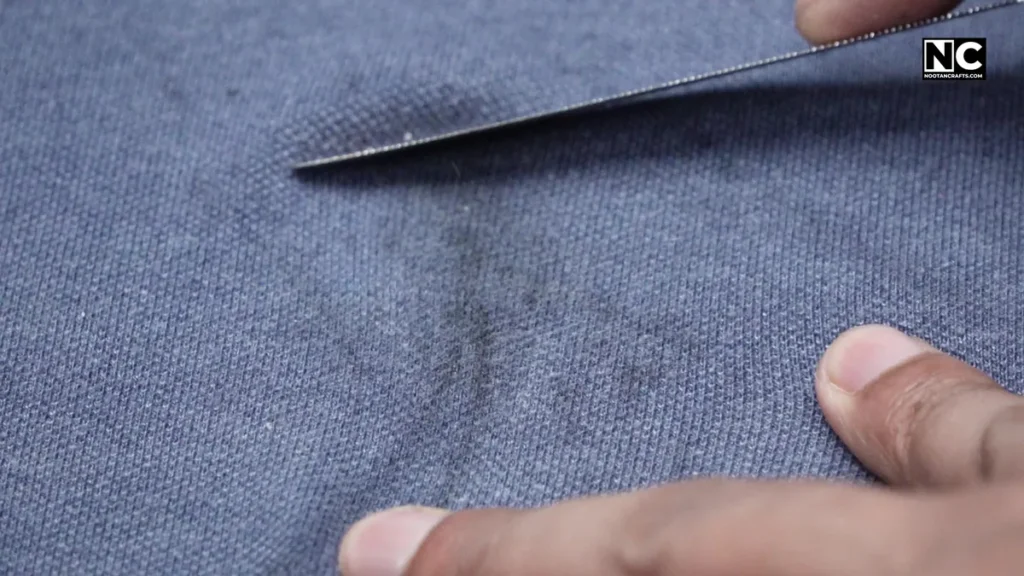
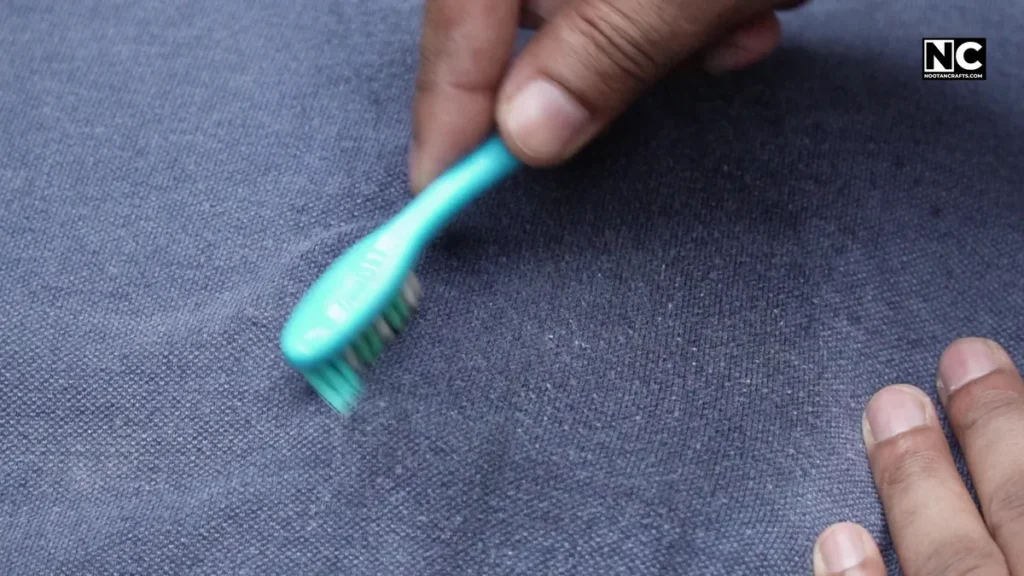
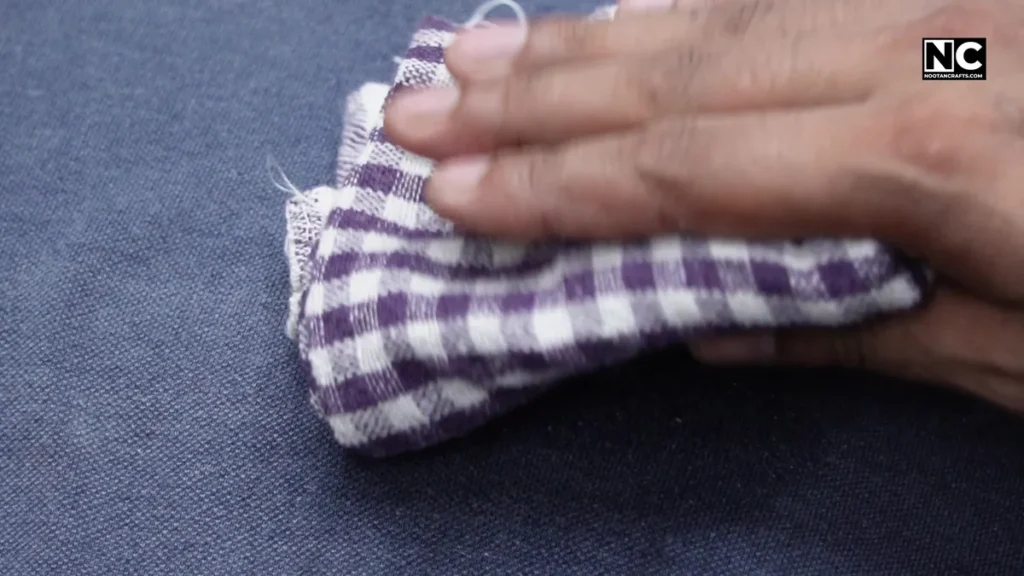
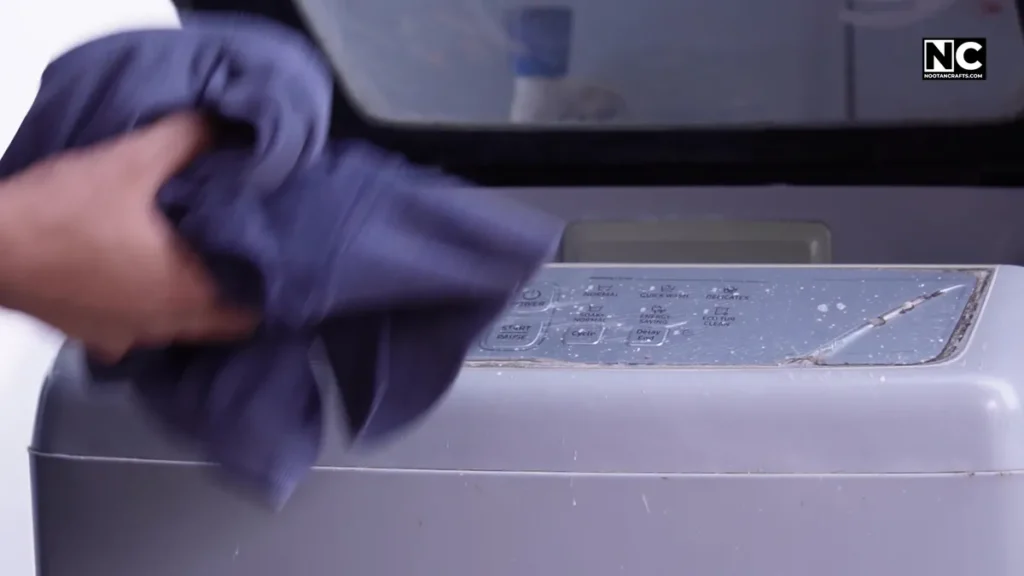
- Scrape off anything loose or crusty with a spoon or a dull knife before you add any liquid.
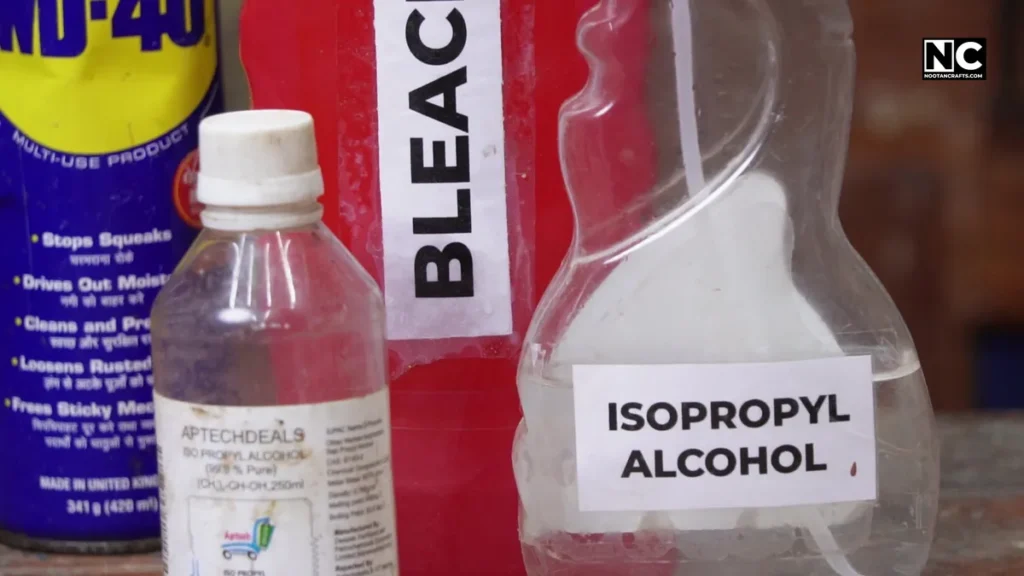
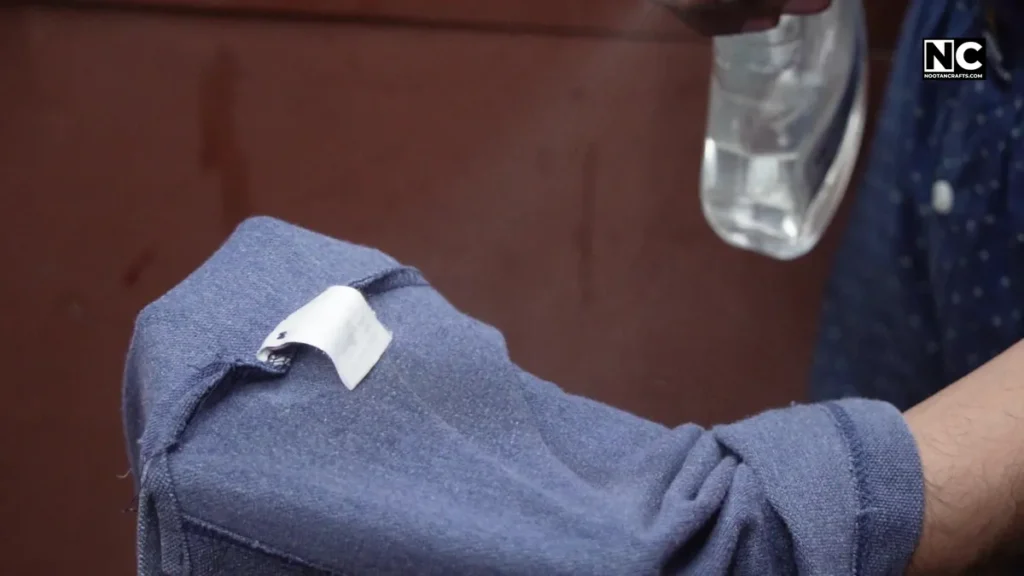
- Check the care label, then pick the solvent from the table above. On anything you cannot identify, stay with rubbing alcohol.
- Test on a seam allowance or inside hem first, then dab it onto the stain.
- Scrub with a stiff brush in small circles.
- Blot with a towel after every round to lift the paint you’ve loosened.
- Cold wash and air dry.
- Repeat if it’s still visible. Some fabric takes two or three rounds before it lets go.
Put an old towel underneath while you work, and move it every few rounds. Otherwise the solvent carries the paint straight through the garment and prints it onto whatever is behind — usually the back of the same shirt.
When a Household Solvent Is Not Enough
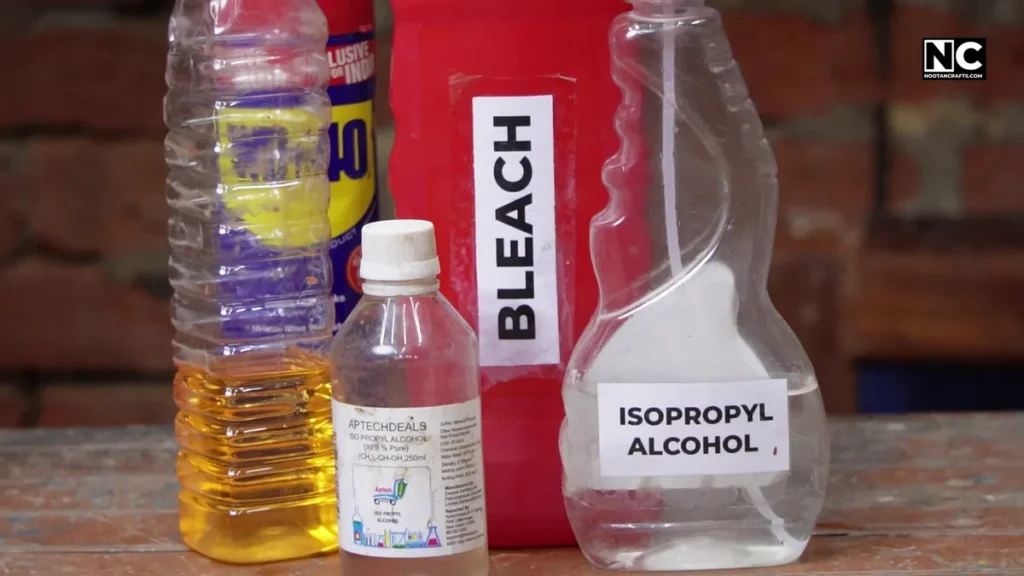
WD-40, paint thinner, and Goof Off can discolor fabric — and they’re flammable
Test on a seam or inside hem first, apply a small amount with a cloth, wait a minute or two, then scrub gently and wash immediately after. Work in a ventilated space and keep these away from open flame — and skip this step entirely on anything delicate, anything with elastane in it, or a fabric you can’t risk discoloring.
- Wash the garment before it goes anywhere near a dryer. Solvent left in fabric and then heated is a fire risk, not just a stain risk. Air dry if you are unsure.
- One solvent at a time. Wash in between. Mixing thinner, acetone and bleach in a sink is how people end up with fumes they did not plan on.
- Gloves. These strip the oil out of your skin, and thinner soaks straight through it.
- Never bleach. It does nothing to spray paint and it takes the fabric’s own color with it.
Where This Goes Wrong
- Rubbing a fresh stain. It just pushes the paint deeper instead of lifting it.
- Washing before treating. A wash cycle without pretreatment just bakes the stain in.
- Using the dryer before the stain is fully gone. Heat sets spray paint the way it sets any solvent-based stain — permanently.
- Warm or hot water. Same problem as the dryer, in slow motion.
- Reaching for bleach. It doesn’t remove spray paint and it will damage the fabric’s own color right alongside it.
- Acetone on a lining. The one that costs people a whole jacket. Acetate dissolves, and it does not come back.
- No towel underneath. The solvent carries the paint through and stains the other side.
- Giving up after one round. Dried paint usually needs two or three, with a blot after each.
Spray Paint on Shoes, Carpet and Upholstery
Same chemistry, different problem: you cannot put any of it in a washing machine, so nothing rinses away. You have to blot out everything you loosen.
- Canvas shoes behave like cotton and take solvent well. Pull the laces out, stuff the shoe with rags so the solvent cannot reach the inside, and work from the outside in.
- Leather or synthetic uppers: wipe while wet and stop there. Acetone strips the finish, and the mark it leaves is worse than the paint was.
- Carpet: scrape the crust, then work in from the edge of the stain toward the middle so you do not spread it. Blot with a white cloth, never a colored one, or you add a second stain.
- Upholstery: check the tag for a cleaning code. A code W means water-based cleaners only, and solvent will leave a ring. If it says S or X, leave it to a professional.
- Everywhere: use as little liquid as you can. Soaking spreads the stain sideways and can lift the backing glue.
Spray Paint Stain Questions People Actually Ask
Can I get spray paint out after it has been through the dryer?
Sometimes, on cotton, and it is worth one honest attempt. Scrape off whatever sits above the weave, then work the right solvent in and blot, three or four rounds. Heat cures the paint into the fibers rather than onto them, so what usually comes out is most of it, leaving a shadow. On polyester or a blend, dried and heat-set paint is generally there for good.
Does vinegar remove spray paint?
No. Vinegar is a mild acid and spray paint is a cured resin, so there is nothing for it to react with. It is useful on mineral deposits and some food stains, not on paint. Dish soap for wet paint, and the right solvent for dry, are what actually work.
Will hairspray or hand sanitizer work?
Both work a little, and both work because of the alcohol in them. Hand sanitizer is roughly 60 to 70 percent alcohol plus gel, so plain rubbing alcohol does the same job better and leaves nothing behind. Hairspray adds its own sticky resin to the stain, which is the last thing you need.
Is a commercial stain remover better than dish soap?
For wet water-based paint, no — dish soap is as good and you already own it. For dried paint, a dedicated paint remover such as Goof Off is stronger than anything in the kitchen, and the same fabric rules apply: it can discolor, it is flammable, and it does not belong on acetate, silk or elastane.
How do I get spray paint off my skin and out of my hair?
Not with solvent. Cooking oil, olive oil or petroleum jelly works — rub it in, give it a minute to soften the paint, then wash with soap. For hair, oil and a fine comb, worked patiently from the ends. Acetone on skin strips it and stings, and on a scalp it is not worth it.
What can I do if the stain will not come out at all?
Be honest with yourself about the garment, then pick a use for it. Overdyeing a cotton item darker hides a lot. A patch or an iron-on motif hides the rest. And a shirt with a paint mark on it is the shirt you want to be wearing the next time you spray something.
How do I avoid this next time?
Spray paint mist travels much further than people expect, so old clothes plus an apron does not cover it. Long sleeves, a cap, and an area with airflow moving away from you rather than across you. And spray with the can downwind of your body, not upwind of it.
The Two Things That Decide It
Get to it while it is wet, and keep it away from heat until the stain has actually gone.
Catch it wet, and you have real odds with nothing more than dish soap. Once it is dry it becomes patience and repetition rather than a single trick. And before you open anything stronger than soap, read the care label — acetone on an acetate lining takes the paint off and the jacket with it.