Make spray paint dry faster by spraying thin, light coats from 8–10 inches away instead of one heavy pass, working in 65–75°F (18–24°C) air with humidity under 50%, and giving it gentle airflow rather than none at all. Get those three right and touch-dry time drops from hours to well under one. Skip them — spray thick, spray cold, spray in a closed humid room — and the same paint can stay tacky for the rest of the day.
| Factor | What to aim for | Why it matters |
|---|---|---|
| Coat thickness | Thin, light passes, several of them | A thick coat dries on the surface first and traps solvent underneath, which stays tacky far longer |
| Temperature | 65–75°F (18–24°C) | Too cold and it barely dries; too hot and the surface skins over while the paint underneath is still wet, causing wrinkling or cracking |
| Humidity | Under 50% | Moist air slows solvent evaporation — that’s the single biggest reason paint stays tacky |
| Airflow | Gentle, not a direct blast | Moving air carries evaporating solvent away; too much airflow just kicks up dust that lands in your wet coat |
| Time between coats | Inside the can’s recoat window | Recoating at the wrong moment wrinkles the finish. See the recoat trap below — this is the one that ruins projects |
The propellant in the can is flammable, and so is the vapor coming off the wet paint
Spray paint is carried by propane, butane or dimethyl ether. Those are fuels. While the coat is still wet it is giving off flammable solvent vapor, and that vapor is heavier than air, so it pools at floor level rather than drifting away. Most “how to dry it faster” advice ignores this entirely.
- A heat gun is an ignition source. Its element runs hot enough to ignite solvent vapor. Pointing one at freshly sprayed paint in a closed space is the worst combination in this article. If you use heat at all, use a hair dryer on cool or low, in a ventilated space, and never a heat gun on a fresh coat.
- No open flame, no pilot light, no space heater. A gas water heater or furnace in the same garage is an ignition source sitting at floor level, which is where the vapor goes.
- Ventilate while it dries, not just while you spray. The solvent keeps coming off for hours after the last pass.
- Store cans below 120°F (49°C). A can left in a hot car or against a heater can burst.
- Don’t dry it in an oven, and don’t put it near one. This gets suggested online. It is a straightforward way to start a fire.
What’s Inside!
Why Spray Paint Takes So Long to Dry
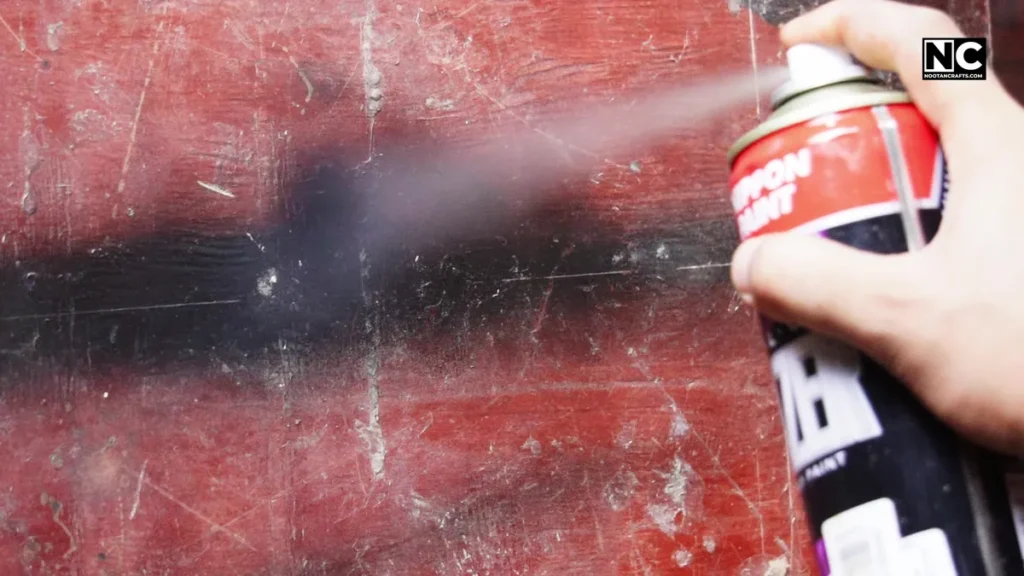
Spray paint is paint plus a propellant gas — propane, butane, dimethyl ether, or nitrogen, depending on the can. Press the nozzle and the propellant expands instantly, forcing the paint out as a fine mist. The tiny droplets land on your surface and the solvent in them starts evaporating right away, leaving the pigment and resin behind as the finish.
Everything that slows drying slows one of two things: how fast solvent can leave the film, or how fast the resin can harden afterward. Cold air slows both. Humid air slows evaporation because the air is already carrying about as much vapor as it can hold. A thick coat slows it because the solvent at the bottom has further to travel and a skin of drying paint above it to get through.
Dry Is Not Cured
This is where most ruined projects come from. “Dry” is not one moment, it’s four, and they’re hours or days apart.
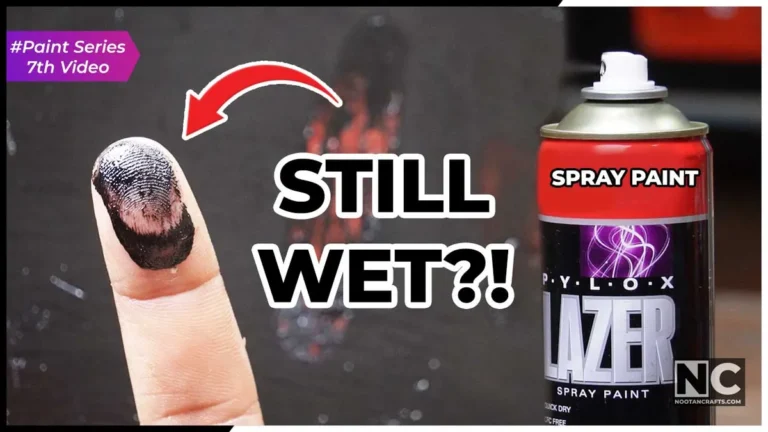
- Dry to touchA light touch doesn’t mark it. Often 20 minutes to a few hours. The paint is still soft underneath
- Dry to handleYou can pick the piece up carefully without leaving fingerprints. Usually a few hours
- Recoat windowSet by the can, not by how it feels. This is the one people get wrong
- Fully curedThe resin has hardened all the way through. Often 24 hours, and up to about a week before the finish reaches full hardness and scratch resistance
Touch-dry is not permission to use the thing. A chair that feels dry after an hour will still take a fingerprint under thumb pressure, and stacking, wrapping or hard use inside the first day is what leaves marks people blame on the paint.
The Recoat Trap
Look at the back of most aerosol enamel cans and you’ll find an instruction that reads strangely the first time: recoat within about an hour, or after about 48 hours. Not “wait at least 15 minutes.” Two windows, with a gap in the middle you’re being told to avoid.
The reason is what the fresh coat’s solvent does to the one underneath. Spray again inside the first window and the coat below is still soft, so the two layers melt together into one film. Wait until after the second window and the coat below has hardened enough to shrug the solvent off. Spray in between — and this is the trap, because that’s exactly when the surface feels dry and ready — and the fresh solvent softens a film that has already started to set. The lower coat swells, the skin on top doesn’t, and the finish wrinkles or lifts.
That wrinkled, crazed finish isn’t a bad can. It’s almost always a second coat applied a few hours after the first. Read the recoat instruction on the can you’re actually holding — the windows vary by product — and either stay inside the first one or wait out the second. There’s no fixing it afterward; it sands back and gets resprayed.
How to Make Spray Paint Dry Faster — Video
Speeding It Up Without Wrecking the Finish
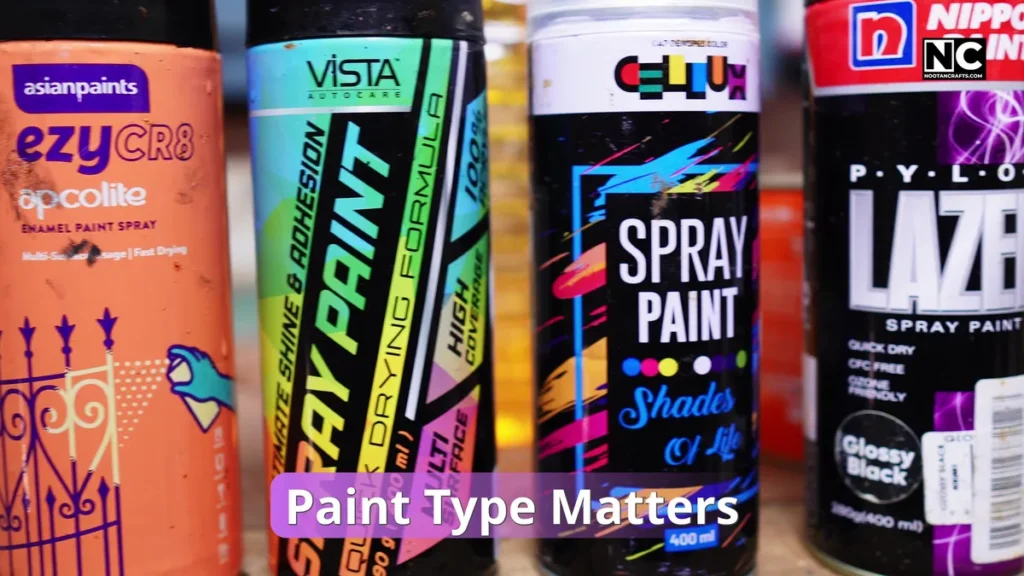
Paint type sets your baseline: water-based dries fastest, typically touch-dry in 20–30 minutes; acrylic takes a bit longer; oil-based is the slowest of the three, sometimes needing hours regardless of conditions. Nothing you do at the drying stage changes that baseline much — the wins are all in the setup.
- Fix the humidity first. It’s the biggest lever and the one people ignore. A dehumidifier in a closed garage does more than any amount of fanning. A cheap hygrometer tells you whether you’re fighting the air or not.
- Warm the object, not the paint. Bringing a cold piece of metal indoors for an hour before you spray beats any heat applied afterward. Paint sprayed onto a cold surface stays wet from below.
- Spray thinner than feels productive. Three light passes dry faster in total than one heavy one, and they look better.
- Move gentle air across, not at. A fan placed to the side, pointed past the work, clears solvent vapor without blasting dust into the finish.
- Use a hair dryer only on a stubborn spot, on cool or low, 15–20 inches away, and keep it moving. Parked in one place it dries that patch unevenly and wrinkles it.
- Leave the heat gun in the drawer. On a fresh solvent coat it’s both a fire risk and a blistering risk, and it buys you very little.
What I’d buy for this job


Last update on 2026-10-25 / Affiliate links / Images from Amazon Product Advertising API
Spray Paint Drying Questions People Actually Ask
My second coat wrinkled. What happened?
You almost certainly recoated in the gap — a few hours after the first coat, when the surface felt dry but the film underneath was only half set. The fresh solvent softened it and it lifted. Sand it back and respray, either within the can’s first recoat window or after the second.
How long should I wait between coats?
Read the can. Most aerosol enamels say recoat within about an hour or after about 48 hours, and the times in between are the ones to avoid. Thin coats sprayed back to back inside that first window are the fastest safe route.
Can I put it in the sun to dry faster?
Mild sun with a little airflow works well. Direct sun on a hot day can skin the surface over while the paint underneath stays wet, which gives you wrinkling for the same reason a heat gun does.
Does cold weather slow drying?
A lot. Paint can stay tacky for hours in the cold, and below about 50°F (10°C) many finishes will not cure properly at all — they stay soft indefinitely rather than just drying slowly.
Does shaking the can longer help it dry faster?
No, but it improves how smoothly the paint sprays and how even the coverage is, and an even thin coat does dry faster than a blotchy one. Shake for one to two minutes regardless.
Can I use a heat gun?
Don’t, on a fresh coat. The propellant and the solvent coming off the wet paint are both flammable, and a heat gun element is an ignition source. It also blisters finishes easily. A hair dryer on cool, kept moving and well back, does the small amount of good that heat can do here.
When can I actually use the thing I painted?
Handle it carefully after a few hours, use it normally after about a day, and treat it gently for roughly a week while the finish reaches full hardness. Hard use in the first day is what leaves the marks people blame on cheap paint.
Thin coats, the right temperature, dry air, and respecting the recoat window do more for drying time than any trick applied after the fact. Get the setup right and you’re not fighting the paint at all — for spraying technique itself, the HVLP spray gun guide covers the rest, and clearing the smell afterward is the same ventilation problem seen from the other side.