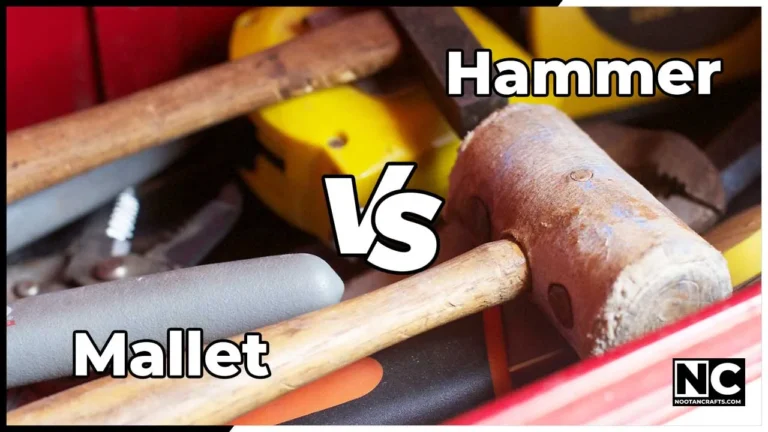
For a few years my mallet was a mugdar — the traditional Indian mace people swing for exercise. Not a perfect replacement, but it served the purpose more times than I can count. I also learned the difference the expensive way, by bending a chisel driving it with a steel hammer.
Use a mallet when the surface must survive the strike — wood, leather, plastic, tile, chisel handles, furniture joints. Use a hammer when the job needs concentrated force — nails, metal, demolition. The mallet’s soft, wide head spreads the blow so it doesn’t dent; the hammer’s small steel face focuses it so it drives.
That’s the whole rule. Everything below is the detail behind it — when a mallet is the wrong call, and which head material suits which job.
What I’d buy for this job

Last update on 2026-10-06 / Affiliate links / Images from Amazon Product Advertising API
What’s Inside!
- 1 – Quick Verdict: Which One Do You Need?
- 2 – What Is a Mallet?
- 3 – Why a Soft Face Does Not Dent
- 4 – What Is a Hammer?
- 5 – Mallet vs Hammer: The Differences That Matter
- 6 – When to Use a Mallet
- 7 – When to Use a Hammer
- 8 – No Mallet? What to Use Instead
- 9 – Mallet vs Hammer: Common Questions
- 10 – Choosing Between Them
Quick Verdict: Which One Do You Need?
| Your job | Reach for | Why |
|---|---|---|
| Tapping wooden joints together | Wooden or rubber mallet | Won’t bruise or dent the timber |
| Striking a chisel | Wooden mallet | A steel hammer bends and mushrooms the chisel handle |
| Laying tile or marble | Rubber mallet | Seats the piece in mortar without cracking it |
| Driving nails | Claw hammer (16 oz) | Focused force, and the claw pulls mistakes back out |
| Shaping or riveting metal | Ball peen hammer | The rounded peen is built for metal forming |
| Breaking concrete or masonry | Sledgehammer (open space) or club hammer (tight space) | Mass plus handle length equals force |
| Fitting machine or car parts | Dead blow hammer | Shot-filled head kills rebound, so nothing shifts back |
| Upholstery and tacks | Tack hammer | Light, often magnetized to hold the tack for you |
If you own one striking tool, make it a 16 oz claw hammer. If you own two, add a rubber mallet — that pair covers most of what a home workshop throws at you.
A loose head or a chipped face is what turns a routine job into an injury
- Check the head is tight on the handle. Grip the handle and try to twist the head. Any movement means stop and re-wedge it — a head that comes off mid-swing goes wherever it was pointed.
- Check the face for chips or mushrooming. A chipped steel face throws fragments at the speed of the swing. This is why safety glasses matter even for “just one nail.”
- Never strike hardened steel against hardened steel. Two hard faces meeting is how both of them chip. Use a soft-face mallet or a dead blow instead.
What Is a Mallet?
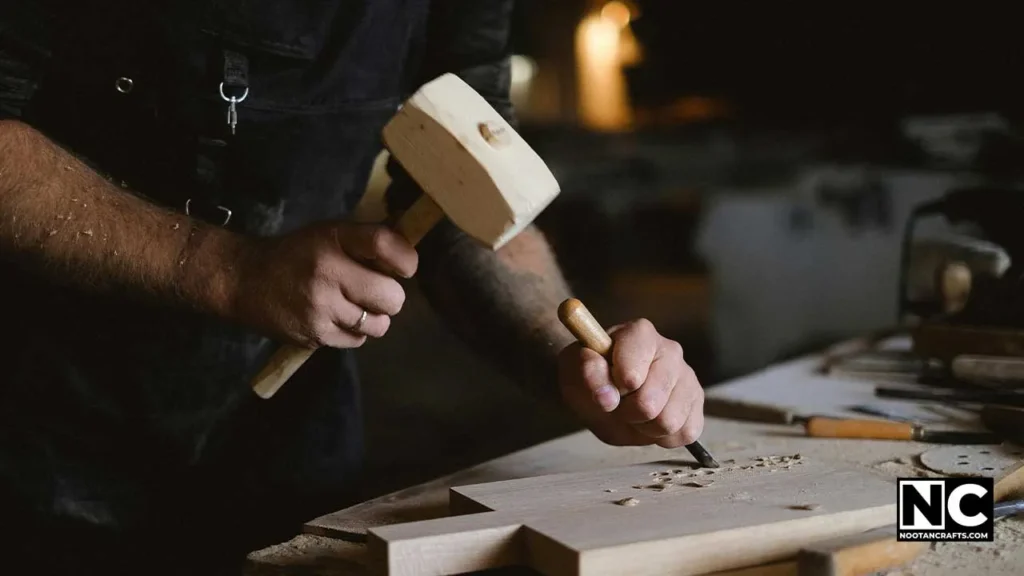
A mallet has a large cylindrical head made of rubber, wood, or plastic. The soft face and wide contact area spread the impact, moving the work without marking it. That is the entire design brief — force without damage.
You’ll see mallets in woodworking, leatherwork, furniture assembly, and tile laying. A mallet is also a chisel’s trusted partner — I learned that the hard way after bending and damaging a chisel by driving it with a steel hammer.
Why a Soft Face Does Not Dent
Worth understanding, because it tells you when the rule breaks. A mallet is not gentler in the sense of hitting with less energy — swing both equally hard and you put roughly the same energy into the work. The difference is how that energy arrives.
- The soft head squashes on impactThat deformation stretches the strike out over a longer moment, so the peak force is lower even though the total energy is the same
- The wide face spreads the loadThe same force over a bigger contact patch means less pressure at any one point, and pressure is what dents
- Steel does neitherA hard face barely deforms and touches over a tiny area, so the whole blow lands hard, fast and concentrated — which is exactly what a nail needs and exactly what a finished surface cannot take
This is why a rubber mallet is wrong for a chisel. Rubber stretches the blow out so far that the energy comes back at you as bounce instead of going into the cut. Wood deforms just enough to protect the handle while still delivering a crisp blow. Same principle, opposite ends of it.
Mallet Head Materials, and What Each Is For
| Head material | Use it on | Avoid it on |
|---|---|---|
| Wood (beech, hickory) | Chisels, wooden joints, dowels | Metal — the head splits |
| Rubber | Tile, furniture, sheet metal, upholstery | Chisels — too much bounce |
| Plastic / nylon | Machined parts, assembly work | Anything needing heavy force |
| Rawhide | Fine metalwork, jewelry, leather | Rough or dirty work — it wears fast |
Where a Mallet Earns Its Place
- Shaping wood without splintering the edge
- Working soft materials — leather, plastic, thin sheet
- Assembling furniture where a metal head would dent the finish
- Tapping marble and tile firmly into mortar without cracking it
What Is a Hammer?
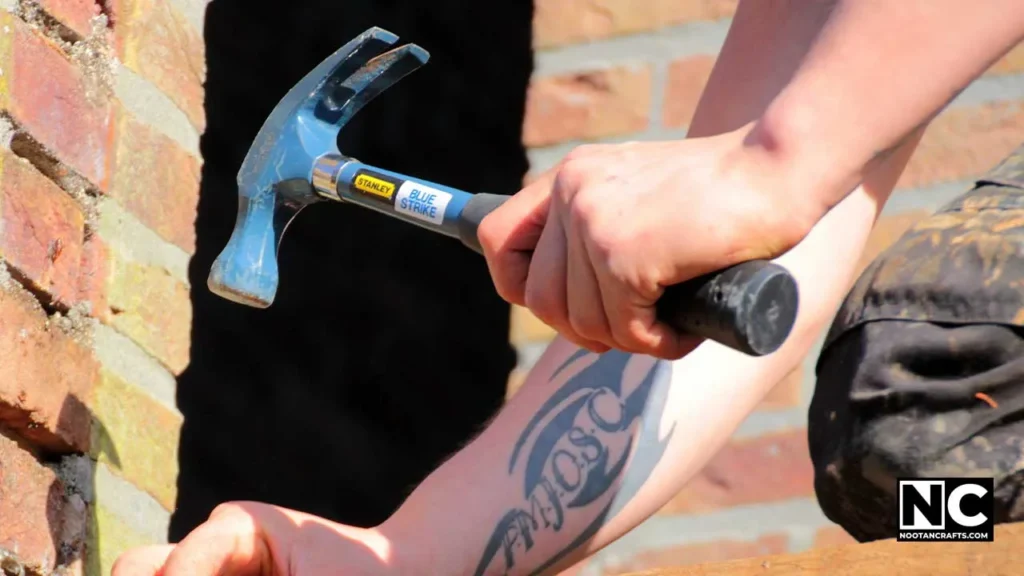
A hammer is the mallet’s heavier-duty cousin. Smaller steel head, focused striking area, and all the force concentrated into one point — which is exactly what you want for driving nails, breaking things apart, or shaping metal.
Most people picture a claw hammer when they hear the word, but there are thirteen distinct types, each built for a specific job — from a ball-peen hammer for metalworking to a sledgehammer for demolition.
I’ve lost count of how many times I’ve caught my own thumb learning to control one. Once you have the swing, it’s indispensable.
The Hammer Types Worth Knowing
Four of them come up constantly in this comparison – either because they are what people grab when a mallet was the right call, or because they do the one thing a mallet never can. There are thirteen types in all.
| Hammer | Why it comes up in this comparison |
|---|---|
| Claw | The default 16 oz household hammer, and the one people reach for when a mallet was the right call |
| Dead blow | The closest thing to a mallet that is still a hammer – shot-filled head, no rebound, won’t mark the work |
| Club | Short-handled weight for driving cold chisels, where a mallet would simply bounce off |
| Ball peen | Shaping and riveting metal – the job a mallet cannot do at all, because it is built not to deform anything |
The other nine – sled, framing, tack, roofing, bricklayer’s, cross-peen, scaling, chipping and the rubber mallet itself – each exist because a general-purpose hammer does that one job badly. What the milled face costs you on finish work, why a dead blow head is filled with shot, and which two are worth owning first: that is all in the guide to all thirteen hammer types.
Mallet vs Hammer: The Differences That Matter
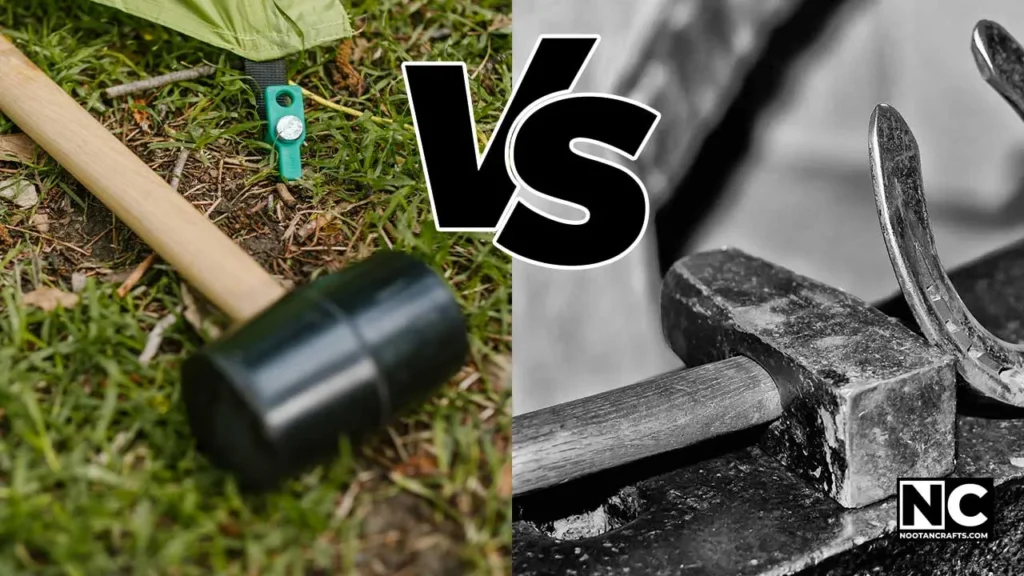
It comes down to head material and how it delivers force. A mallet spreads a softer blow across a wide face. A hammer concentrates a hard blow into a small area. Everything else follows from that.
| Feature | Mallet | Hammer |
|---|---|---|
| Head material | Wood, rubber, plastic or rawhide | Steel, usually hardened |
| How the blow lands | Spread out in time and area | Concentrated, fast and hard |
| Leaves a mark? | No, that is the whole design brief | Yes, on anything softer than the face |
| Rebound | High on rubber, low on wood | Low, but it rings back up the handle |
| Drives nails? | No, and trying wrecks the face | Yes, this is what it is for |
| Strikes a chisel? | Wooden mallet, yes. Rubber, no | Only a club hammer on a cold chisel. Never on wooden handles |
| Shapes metal? | Only soft sheet, without stretching it | Yes, a ball peen is built for it |
| The one it cannot do | Anything needing real force | Anything where the surface must survive |
When to Use a Mallet
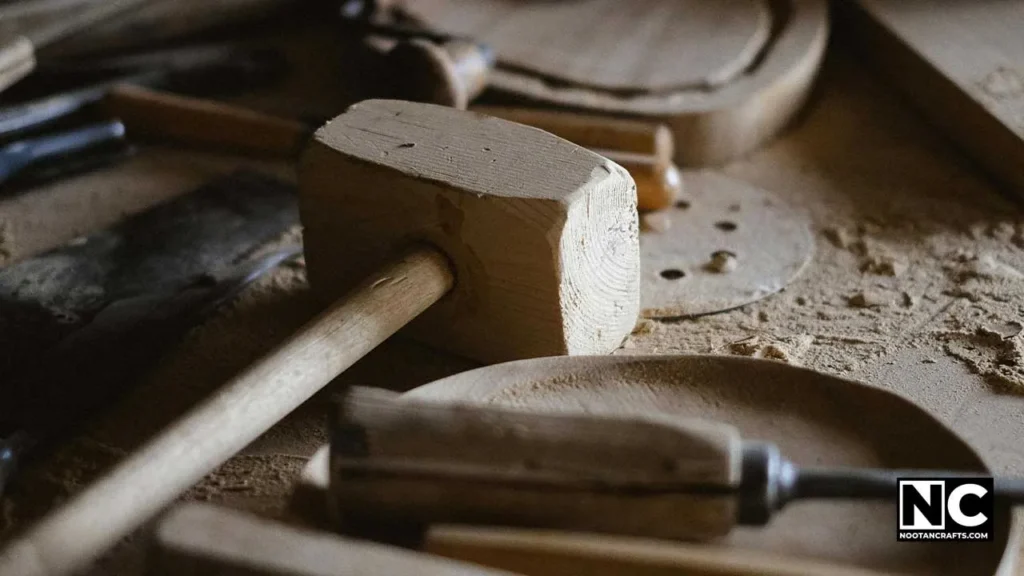
Reach for a mallet whenever the surface has to survive. I learned this tapping a wooden dowel into place with a hammer — one wrong swing, and there was a dent exactly where I did not want one.
Best Situations for Mallet Use
- Woodworking projects where you need to tap pieces together without damaging them
- Chiseling, to control the depth and precision of each cut
- Assembling furniture or working with materials that dent easily
- Shaping thin metal sheet or automobile body panels
Mistakes That Cost Me a Mallet
- Driving large nails with it. That’s a hammer’s job, and it will chew up the mallet face.
- Wrong head material for the job — a rubber mallet on a chisel bounces and robs you of control, whereas a wooden one transfers the blow cleanly.
When to Use a Hammer
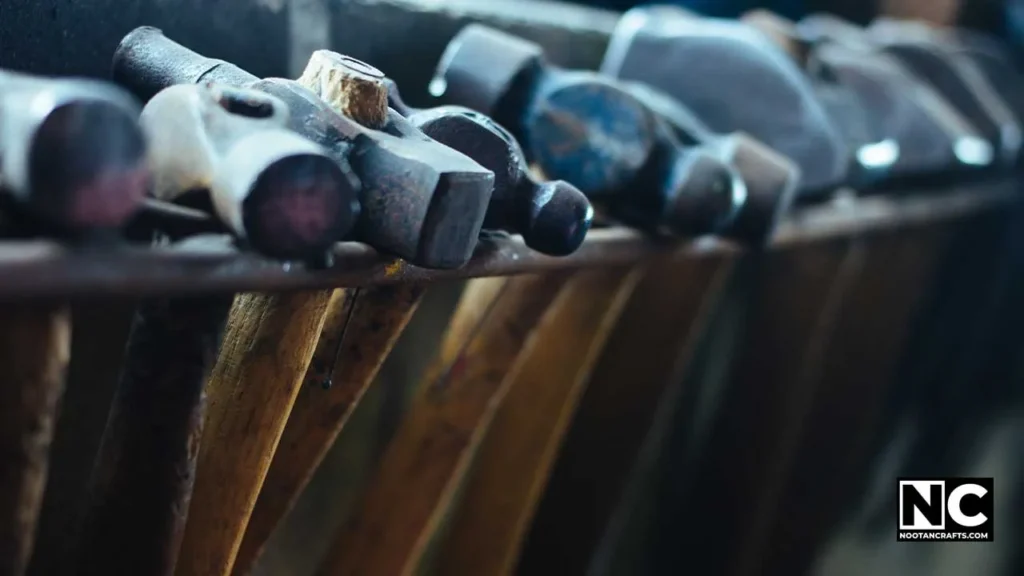
Any job that needs real force — nails into hardwood, breaking something apart, light demolition. I use a claw hammer for most DIY work, but there’s something satisfying about a ball peen hammer when shaping metal. The tool and the material seem to understand each other.
Best Situations for Hammer Use
- Driving nails into wood, drywall, or concrete (with the right hammer type)
- Breaking down materials during a demolition project
- Metalworking, especially shaping or flattening metal
Mistakes That Bend Nails and Ruin Work
- Too much force when it isn’t needed — that’s how you get bent nails and damaged material. Let the hammer’s weight do the work.
- Wrong hammer for the job, like using a ball peen for demolition. It isn’t built for that.
- Striking with the edge of the face instead of the center. That’s what bends nails and chips the face.
No Mallet? What to Use Instead
Most of the time you do not need to buy anything. You need to stop steel from touching the work.
- Put a scrap offcut between the hammer and the work. A block of softwood takes the dent instead of your workpiece, and the wood spreads the blow much the way a mallet head would. This is the answer nine times out of ten.
- For a chisel, use the offcut trick or stop. A steel hammer on a wooden chisel handle mushrooms it, then splits it. That is the mistake that cost me a chisel.
- A dead blow hammer covers both jobs. Shot-filled head, soft faces, no rebound. If you were going to buy one tool to sit between a mallet and a hammer, buy this rather than a second mallet.
- Improvise the head, not the handle. I used a mugdar for years and it worked because the striking end was heavy and wooden. Anything with a loose head or a cracked handle is not a substitute, it is an accident.
Mallet vs Hammer: Common Questions
Can I use a mallet instead of a hammer?
For light, surface-critical work, yes. For driving nails or anything needing real force, no — you’ll damage the mallet before you finish the job.
What is the main difference between a mallet and a hammer?
Head material and force delivery. A mallet has a softer, larger head of wood or rubber that spreads the blow. A hammer has a smaller, harder steel head that concentrates it.
Which tool is best for woodworking?
A mallet for joint assembly and chisel work, a claw hammer for nails. Most woodworkers keep both within reach.
Can a hammer damage materials?
Easily. Steel dents softer materials on contact. If the surface will be visible in the finished work, use a mallet or place a wood offcut between the hammer and the workpiece.
Are mallets and hammers interchangeable?
No. Each has a job. A mallet is for precision and surface protection; a hammer is for concentrated force.
What is the most commonly used hammer?
The claw hammer — it’s the most versatile and covers the majority of household and woodworking tasks.
Which hammer is best for metalworking?
The ball peen hammer. Its rounded peen is specifically designed for shaping and striking metal.
What hammer is best for breaking concrete?
A sledgehammer for open spaces, or a club hammer if you need more control in a confined area.
Why do some hammers have a milled face?
A milled (textured) face grips the nail head better and reduces slipping — particularly useful in framing work where you’re driving nails at speed all day. The trade-off is that it leaves a waffle mark, so it’s wrong for finish work.
What’s the difference between a claw hammer and a framing hammer?
A framing hammer is heavier and has a longer handle for driving large framing nails into structural lumber. A claw hammer is lighter and better suited to general household and finish work.
Choosing Between Them
Ask one question before you pick up either tool: does the surface need to survive this strike? If yes, mallet. If no, hammer. That single test covers almost every situation you’ll meet in a home workshop, and it’s the rule I wish someone had given me before I bent that first chisel.