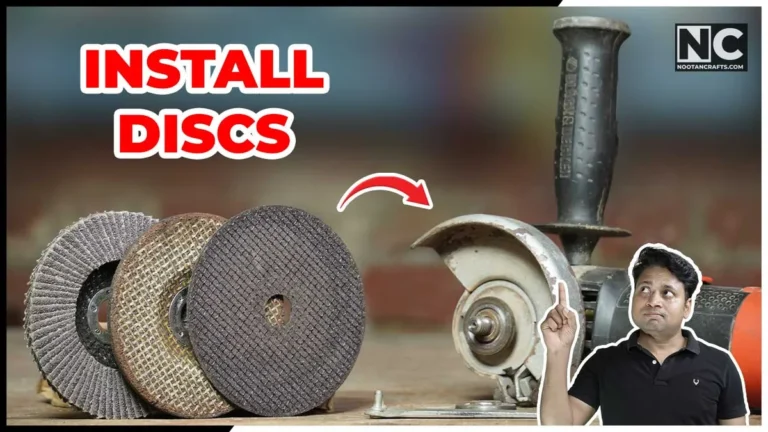
Which way should the disc face? And how do I know if I’ve tightened it correctly? And why is my disk still loose after tightening? These were some questions I had when I bought my first angle grinder. In this guide, I’m going to answer all of them — and tell you exactly how to put a disc on an angle grinder correctly.
What’s Inside!
- 1 – How to Put a Disc on an Angle Grinder – My Video
- 2 – 1. Before You Start — Safety First
- 3 – 2. Two Things That Matter When Changing a Disc
- 4 – 3. Locking Mechanisms — Which Type Does Your Grinder Have?
- 5 – 4. Understanding the Hardware
- 6 – 5. How to Fit a Cutting Disc
- 7 – 6. How to Fit a Grinding Disc
- 8 – 7. How to Remove a Disc
- 9 – 8. Common Confusions Answered
How to Put a Disc on an Angle Grinder – My Video
1. Before You Start — Safety First
Before touching the disc or the nut, unplug the grinder. If it’s cordless, remove the battery. This isn’t optional. An angle grinder spins fast enough to cause a serious injury within a second of accidental startup. Always disconnect power before changing anything.
2. Two Things That Matter When Changing a Disc
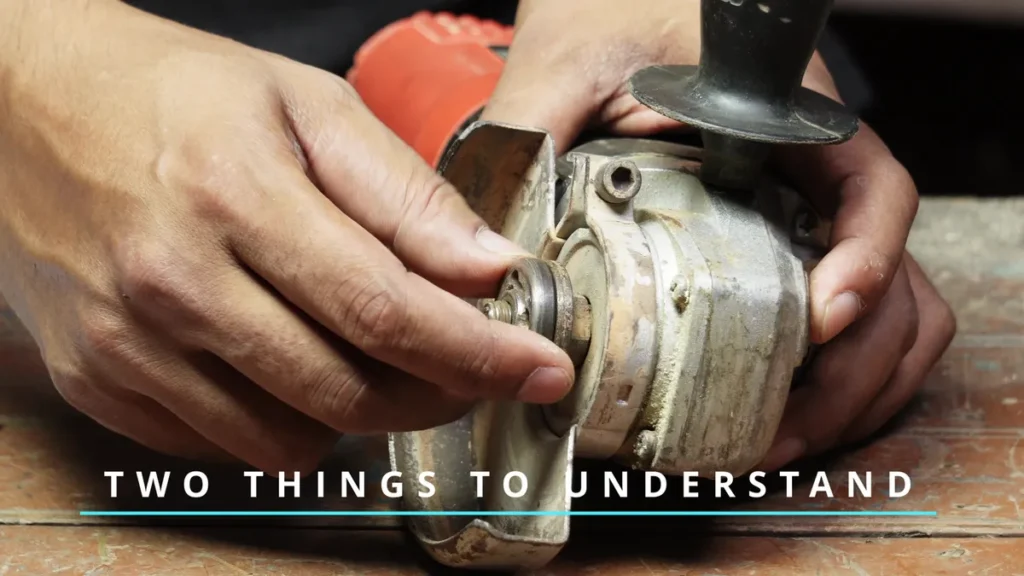
The process comes down to two things: the locking mechanism and the hardware. Lock the spindle so it doesn’t rotate, then mount the disc and tighten the nut. That’s the entire process — the sections below just explain how to do each part correctly.
3. Locking Mechanisms — Which Type Does Your Grinder Have?
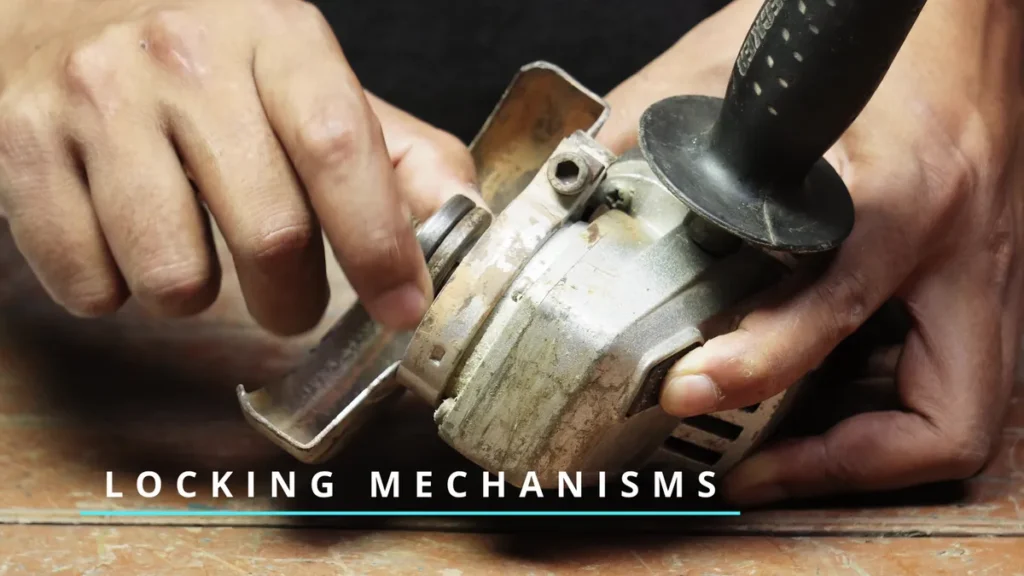
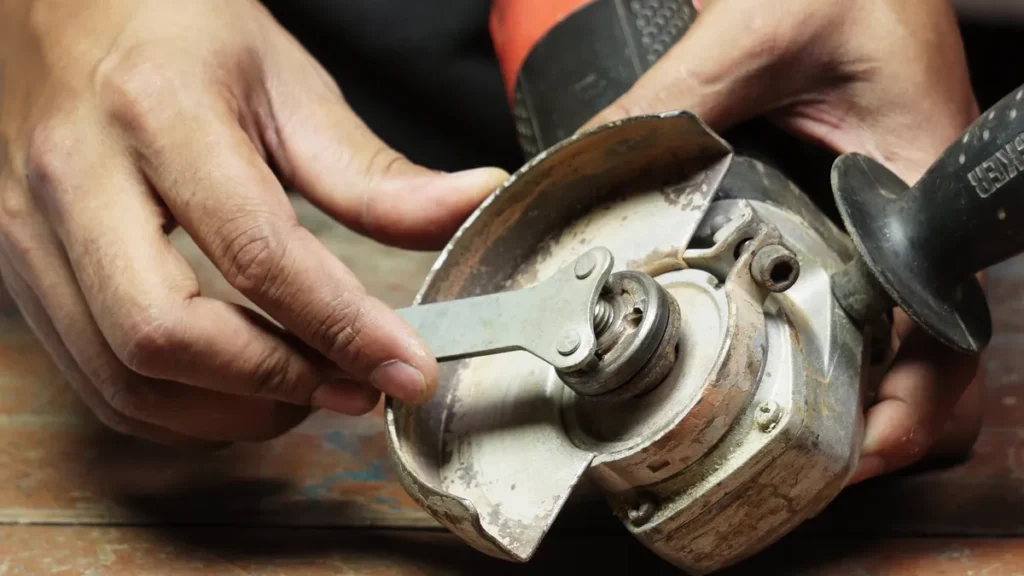
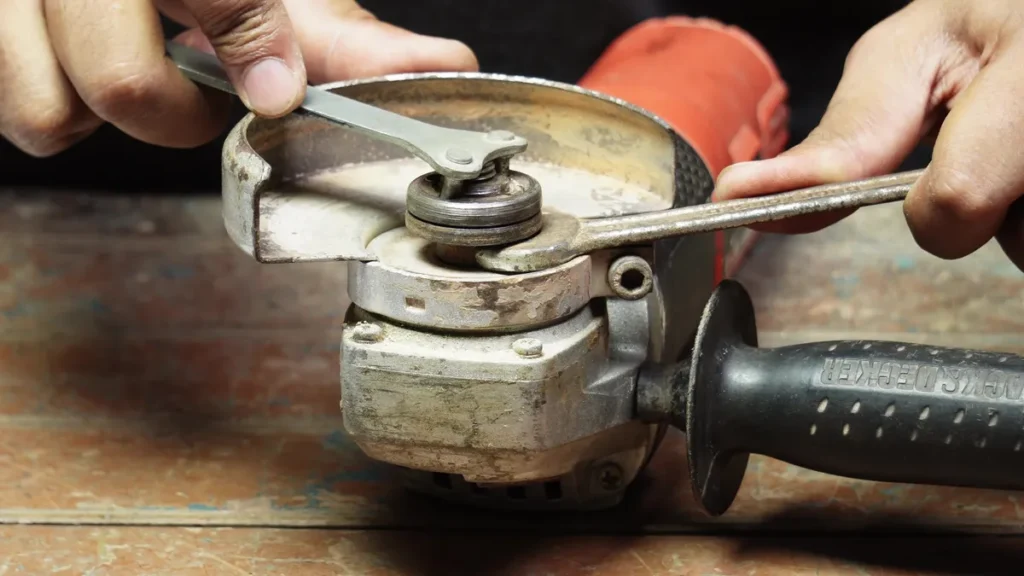
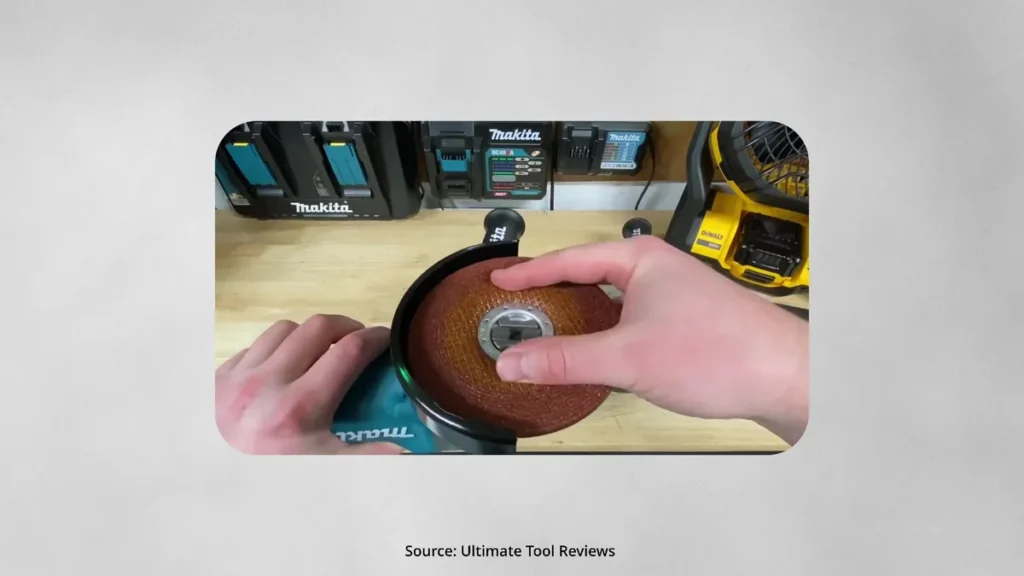
Most grinders use one of three locking systems:
- Spindle lock button — the most common. Press and hold it to lock the spindle, then tighten the nut with a spanner wrench.
- Two-wrench method — found on older models. One wrench holds the spindle; the other tightens the nut.
- Quick-release lever — found on some higher-end grinders. No nut required — press the lever and swap the disc directly.
4. Understanding the Hardware
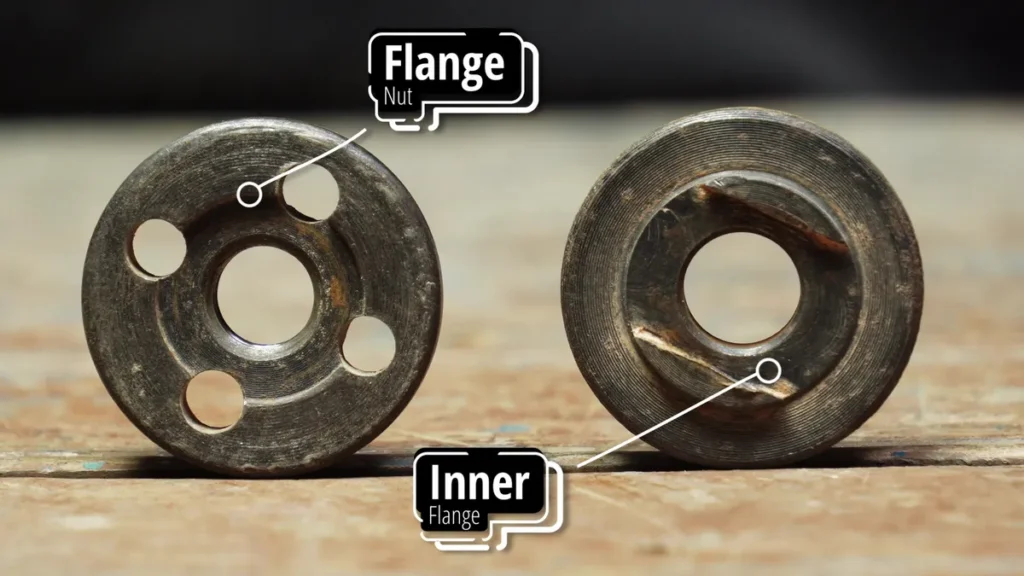
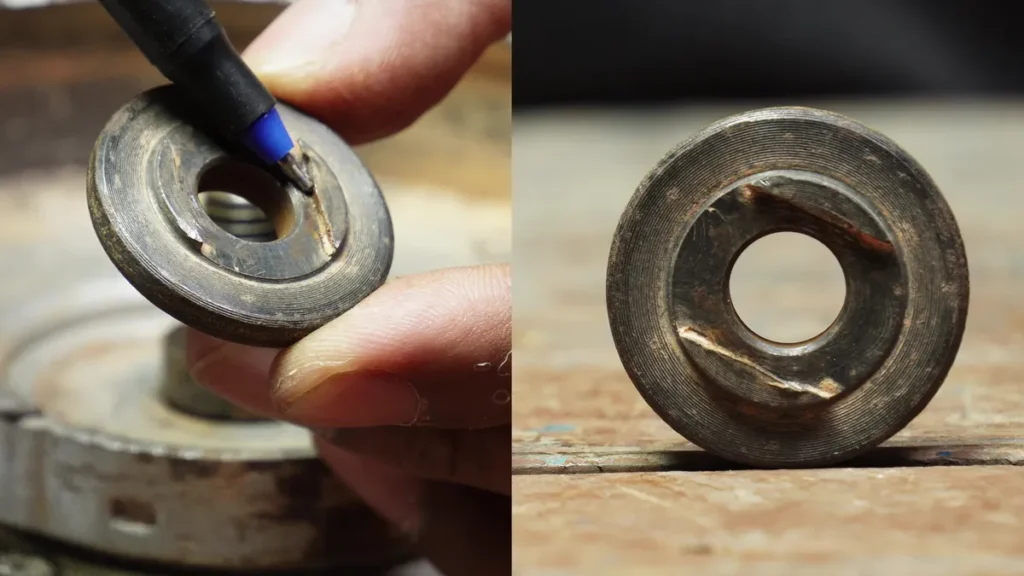
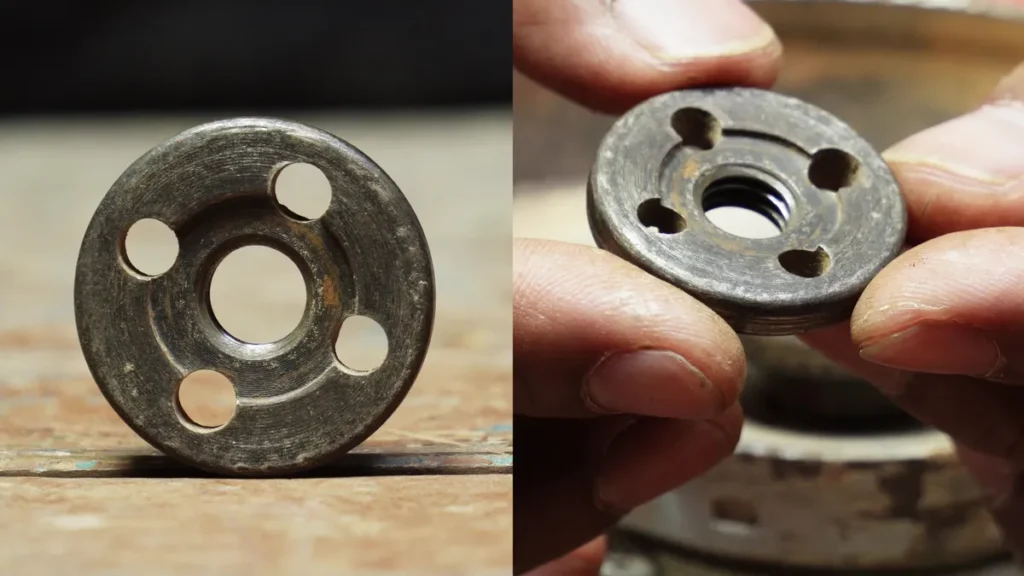
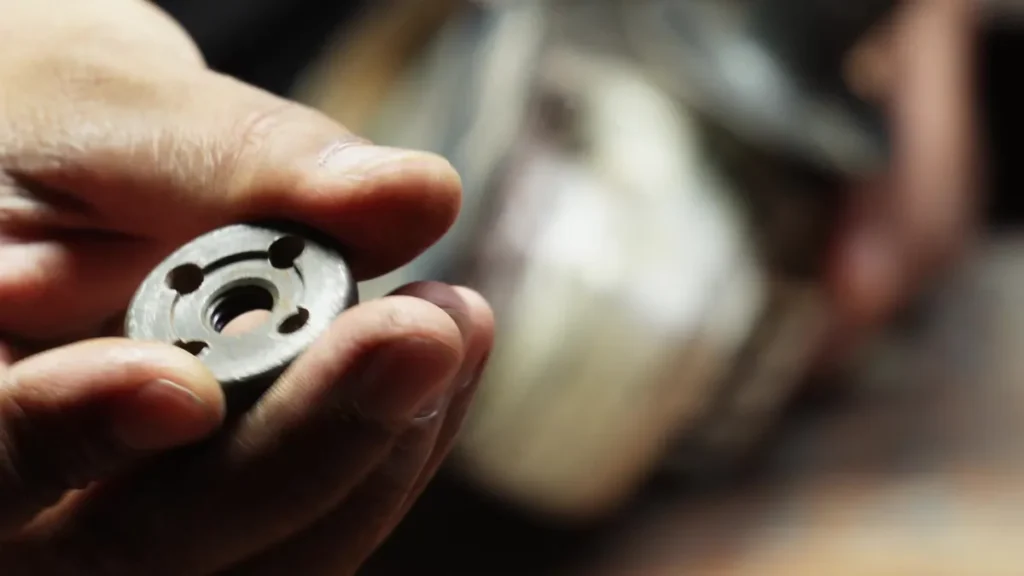
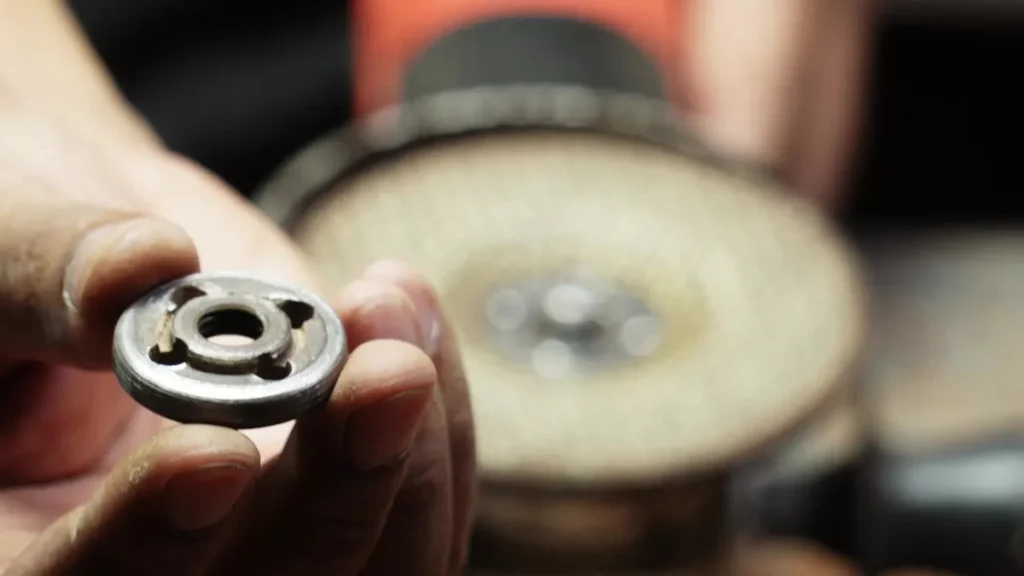
Your grinder comes with two pieces — an inner flange and a flange nut. It’s worth understanding what each one does before you start.
| Part | What it does | Key detail |
| Inner flange | Sits on the spindle, supports the disc from below | Grooved side faces down onto the spindle; raised hub faces up into the disc’s center hole |
| Flange nut | Clamps the disc from above | Which face goes down depends on the disc type — covered below |
5. How to Fit a Cutting Disc
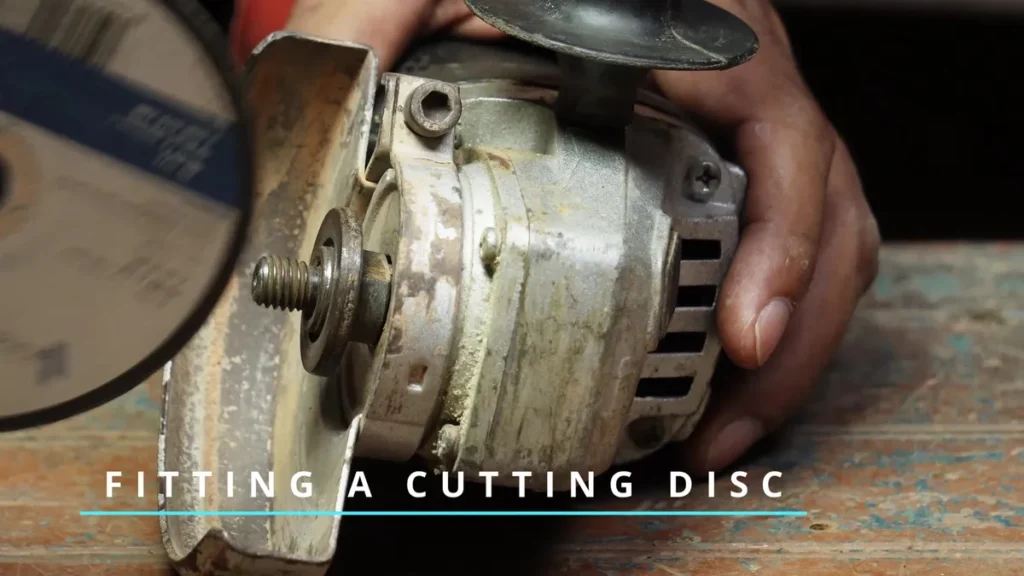
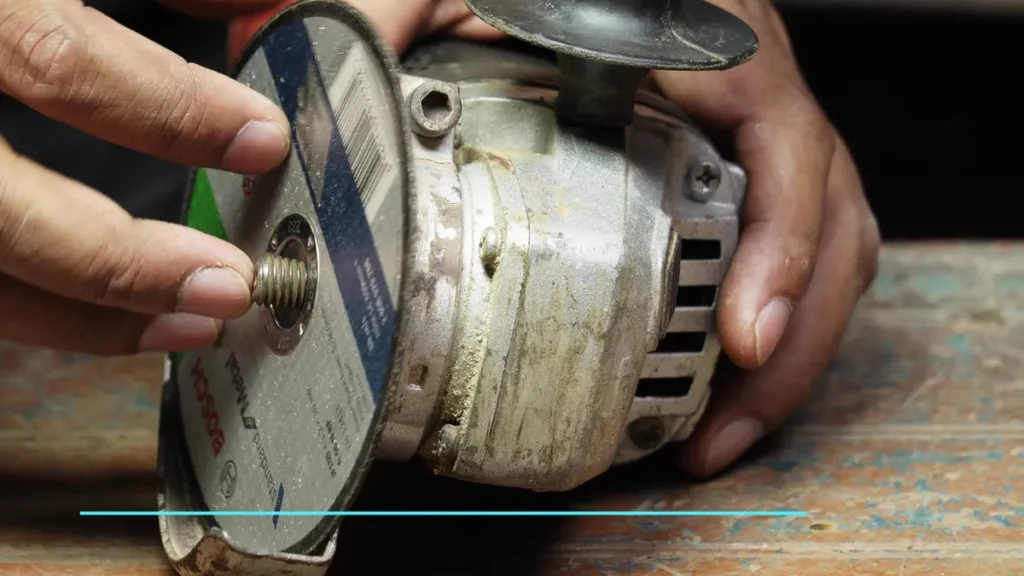
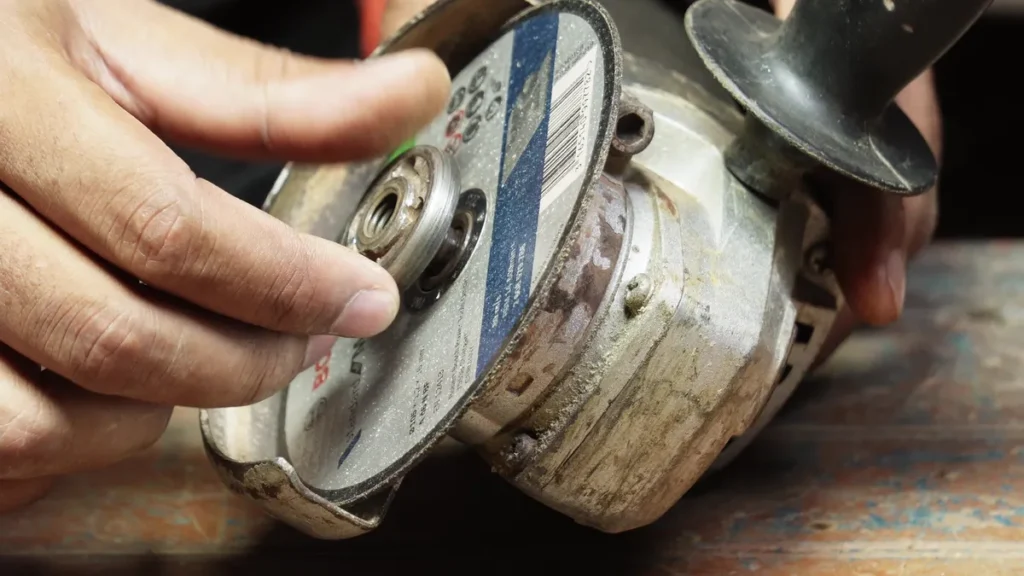
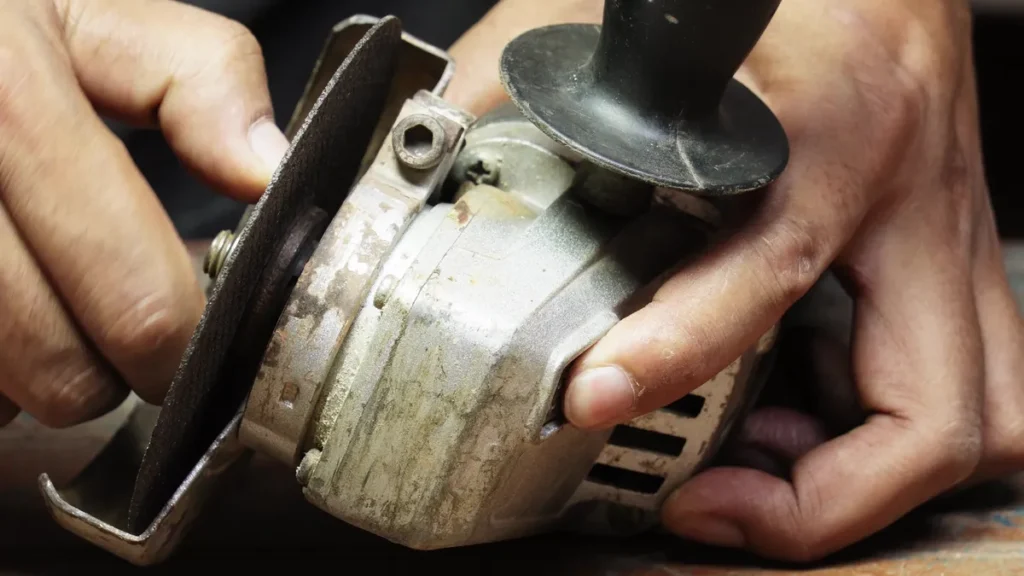
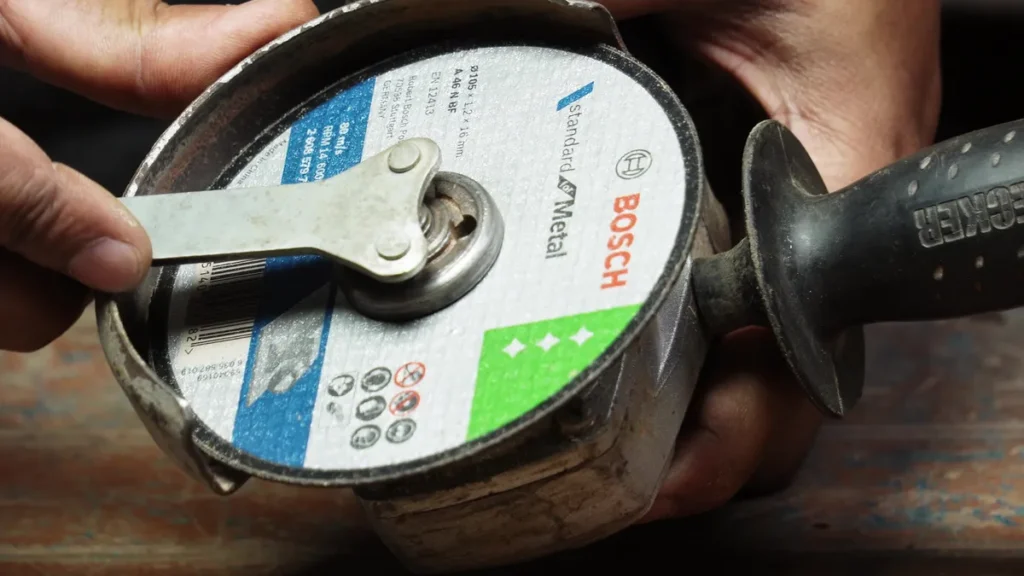
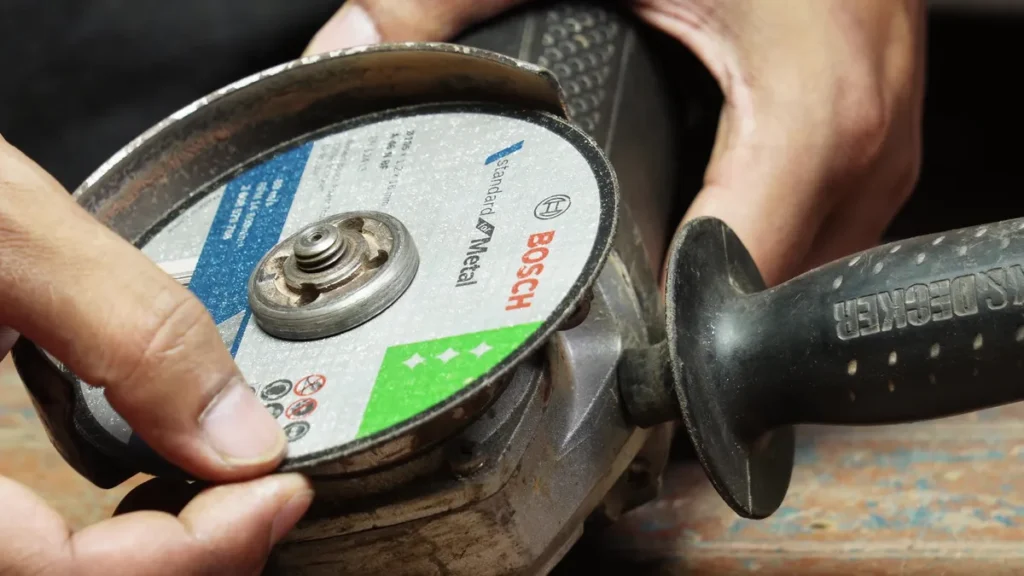
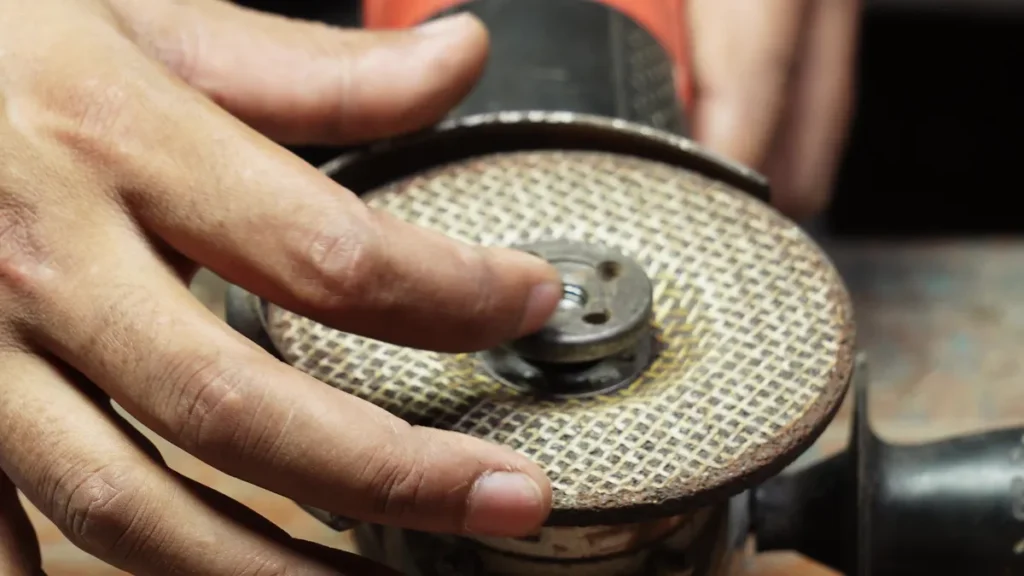
- Place the cutting disc onto the spindle — it sits on the raised hub of the inner flange.
- Place the flange nut on with the flat side facing down toward the disc.
- Thread it on by hand first.
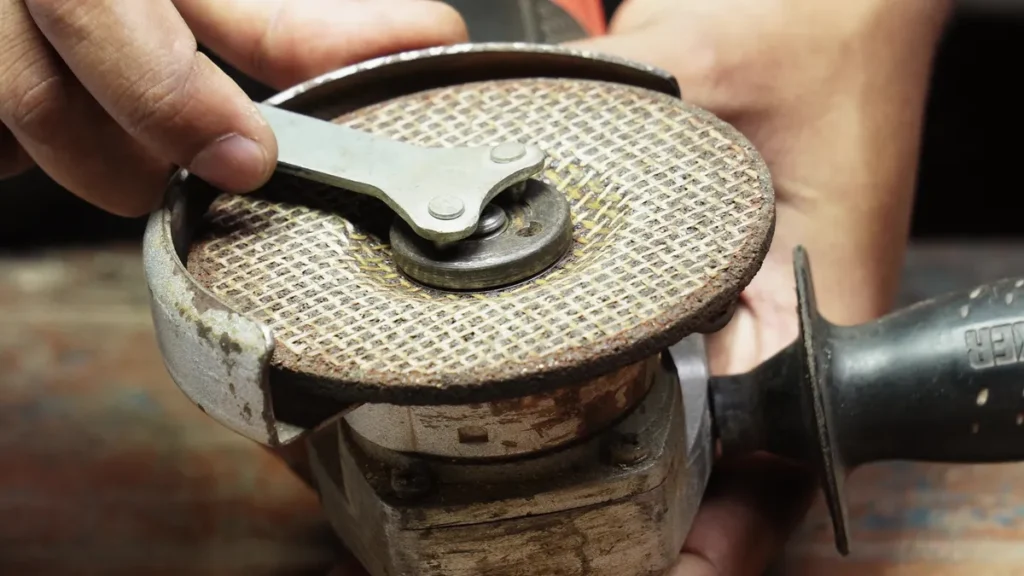
- Press the spindle lock, then tighten with the spanner wrench — apply firm pressure; don’t overtighten.
- Do a wobble test: grab the disc and try to move it. No movement at all means you’re done. Any movement — tighten slightly and test again.
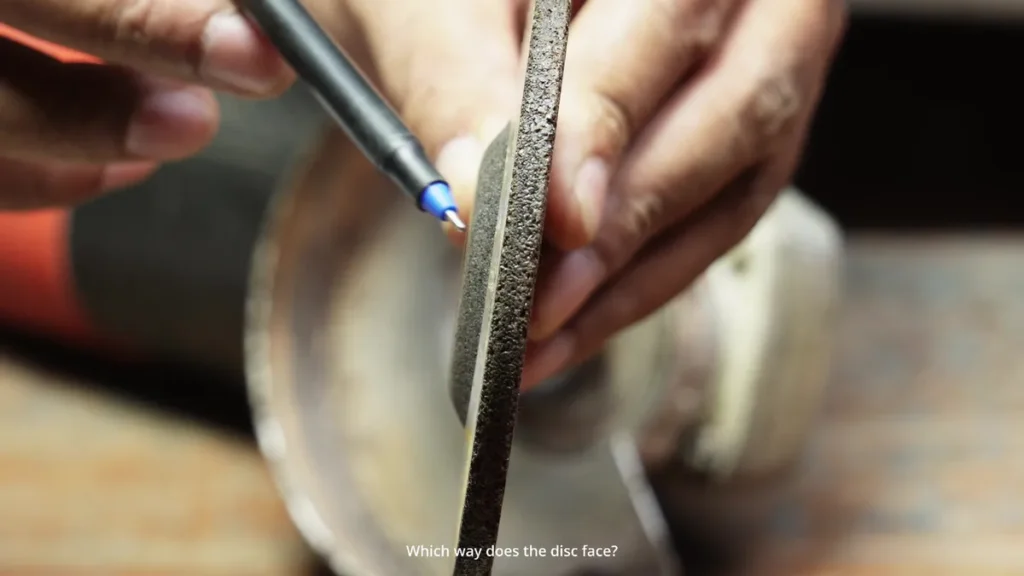
Cutting disc orientation: Cutting discs are symmetrical — either face can go up. No need to think about it.
6. How to Fit a Grinding Disc
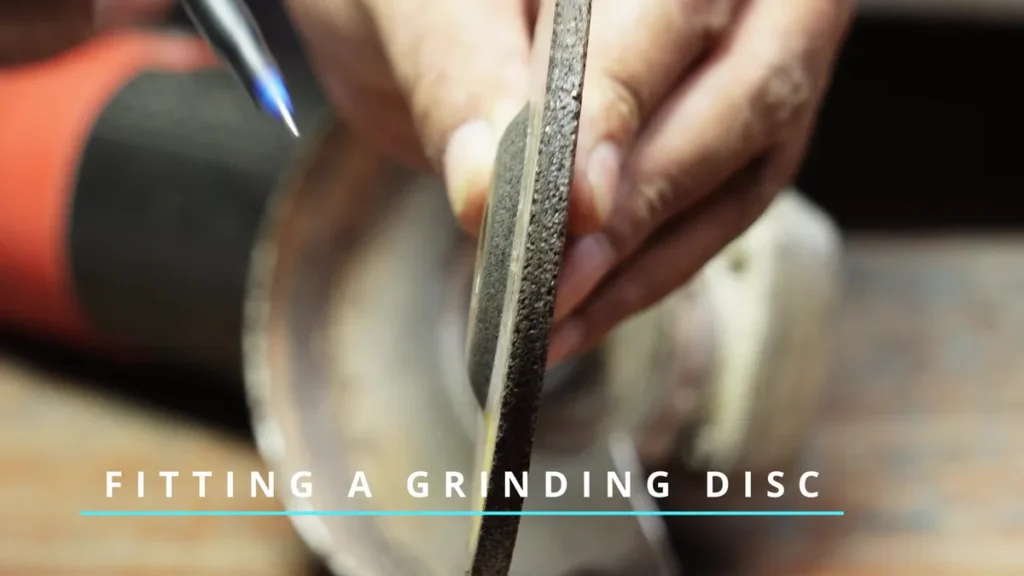
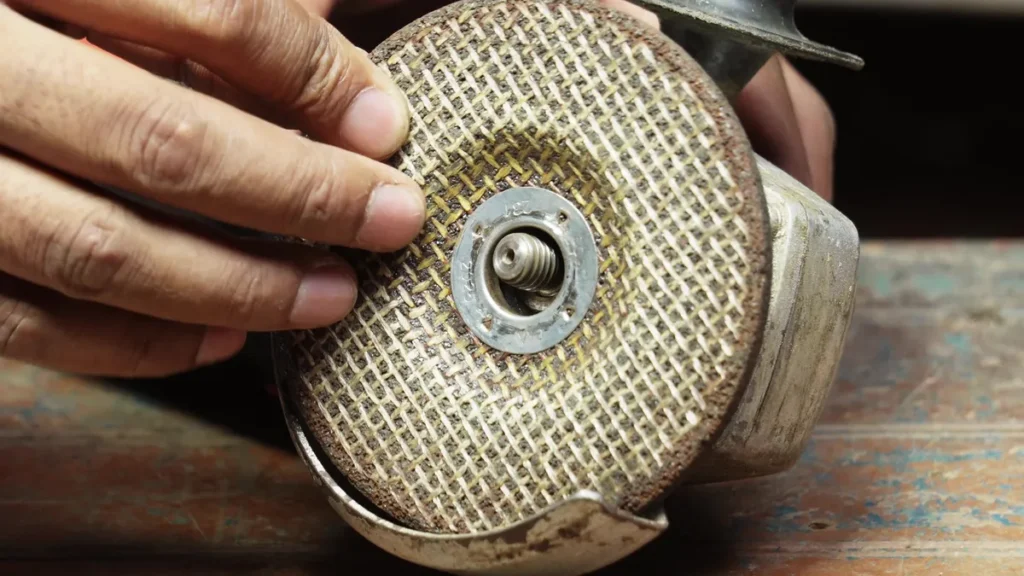
- The grinding disc is not symmetrical — its cup side faces down toward the grinder. If it’s wrong, it won’t sit flat, and you’ll feel it immediately.
- Place the flange nut on with the raised hub facing down into the disc’s center hole — the reverse of a cutting disc.
- Thread by hand, press the spindle lock, and tighten with the wrench.
- Do the wobble test, then spin the disc by hand before plugging in — it should rotate smoothly with no wobble.
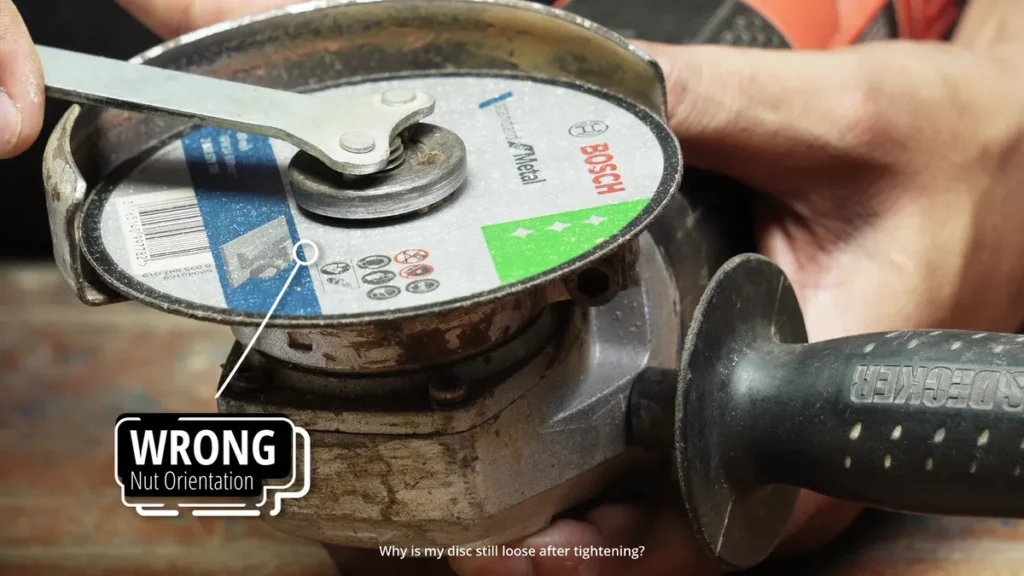
Wrong nut orientation is the most common reason a disc stays loose, no matter how hard you tighten. If it won’t clamp, check which face of the flange nut is facing down before anything else.
7. How to Remove a Disc
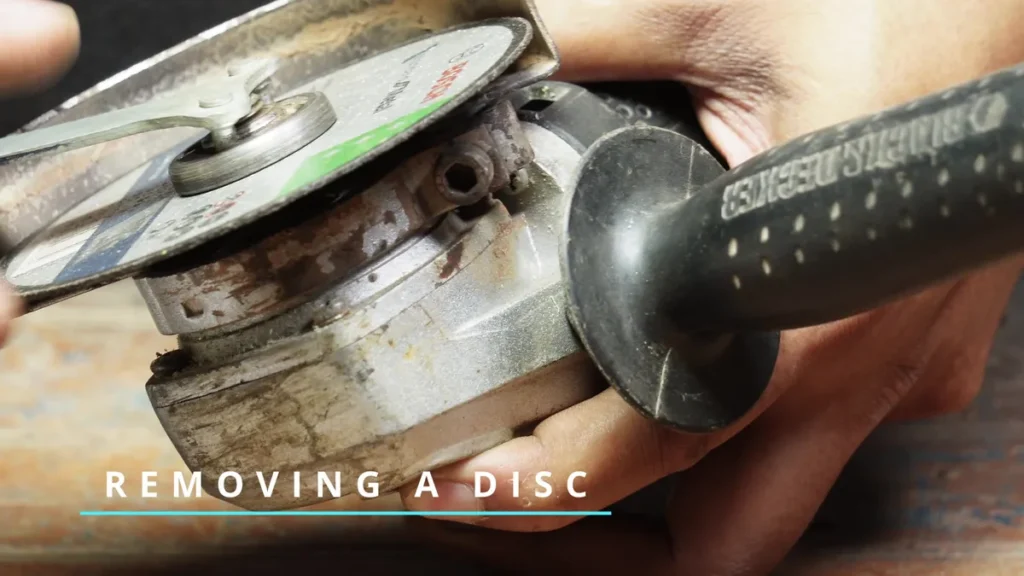
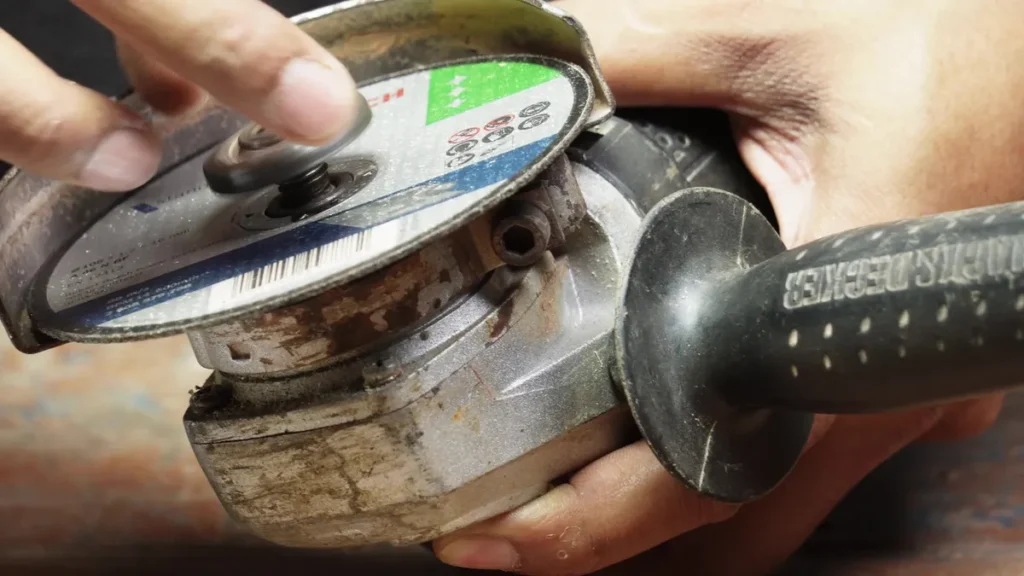
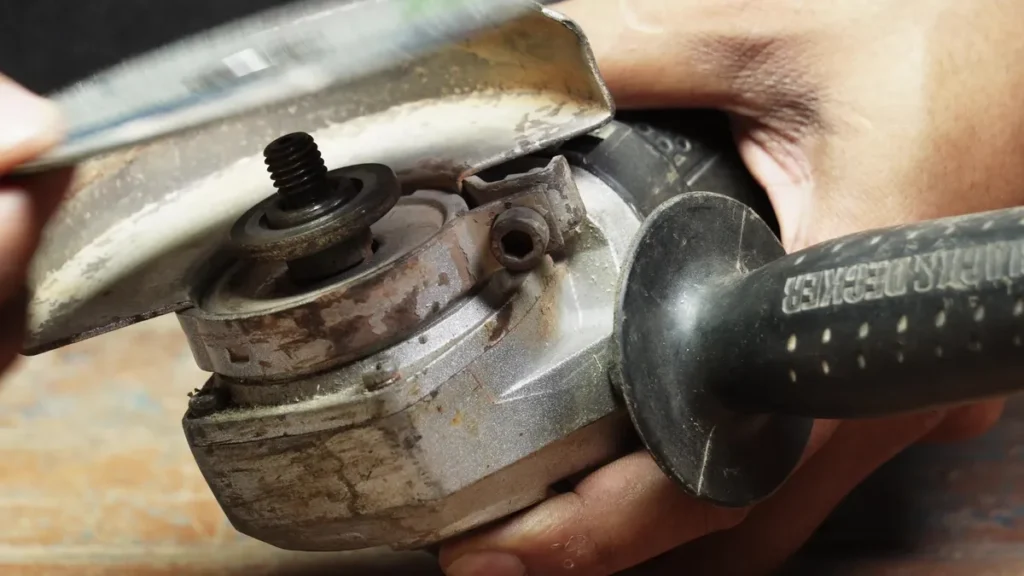
- Press the spindle lock.
- Insert the spanner wrench and loosen the nut counterclockwise.
- Unscrew by hand and lift the disc off.
Nut stuck and won’t budge? Always go counterclockwise to loosen — same as any standard nut. If it genuinely won’t move, a gentle tap with a hammer on the spanner can break it free. Don’t switch direction and try clockwise — you’ll tighten it further and make it worse.
8. Common Confusions Answered
Which way does the nut turn?
Clockwise to tighten, counterclockwise to loosen — same as any standard nut, always. If it feels awkward, check that the spindle lock is fully engaged before turning.
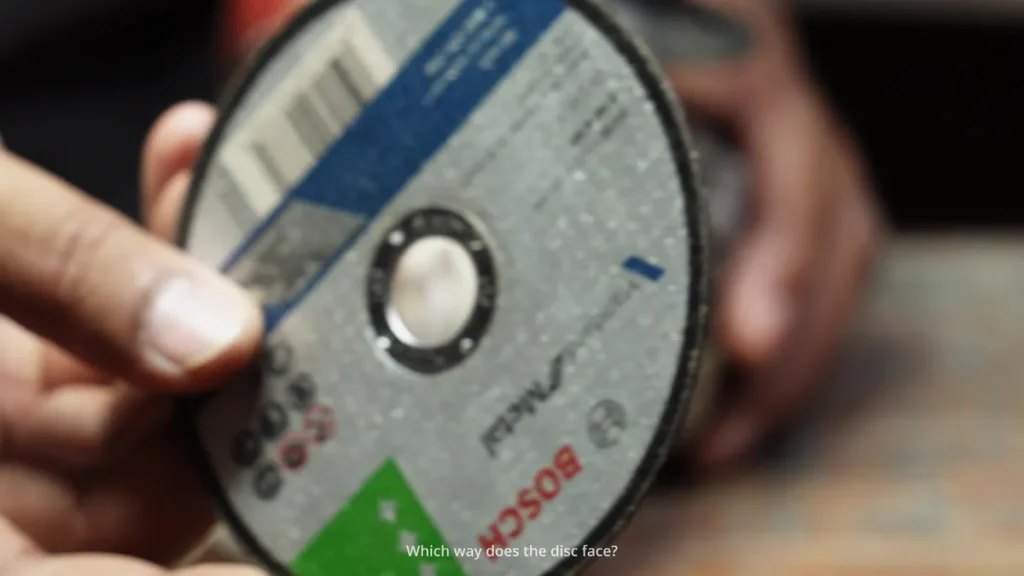
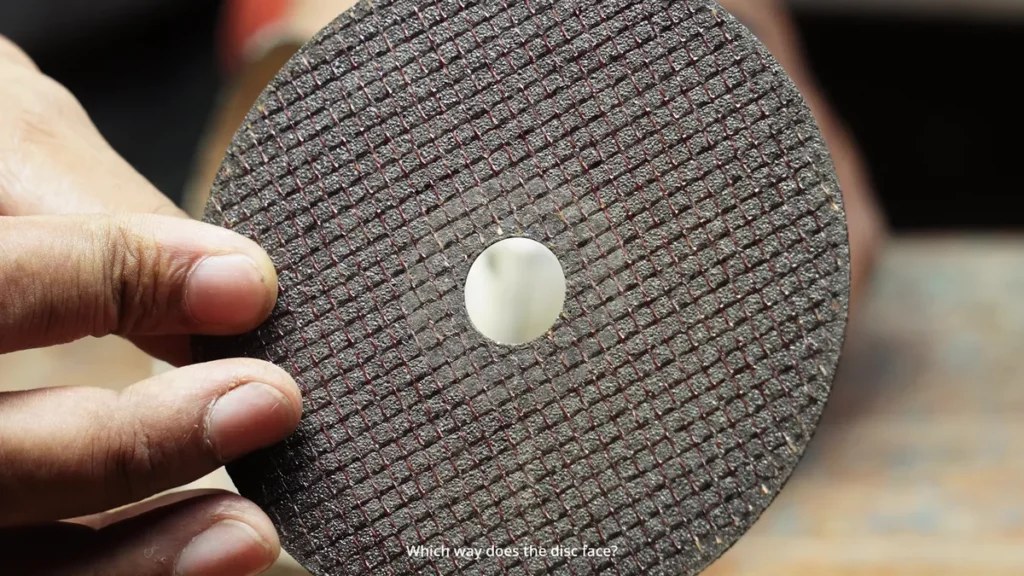
Which way does the disc face?
Cutting disc — either way, it’s symmetrical. Grinding disc — cup faces down toward the grinder. You’ll know immediately if it’s wrong because it won’t sit flat.
How do I know if I’ve tightened it enough?
The firm is enough. Overtightening stresses the disc. Do the wobble test — if the disc doesn’t move at all, you’re done.
Why is my disc still loose after tightening?
Almost always wrong flange nut orientation. Cutting disc needs flat side down; grinding disc needs raised hub down. The wrong way around, and it won’t clamp no matter how hard you go. If the orientation is correct, check for cross-threading — take the nut off, start by hand again, and make sure it catches cleanly before using the wrench.
Now that you know how to fit the disc correctly, the full beginner’s guide covers everything else — disc types, safety rules, cutting and grinding technique, and maintenance.
→ How to Use an Angle Grinder Safely — Complete Beginner’s Guide