
Yes — but only with a disc made and rated for an angle grinder. A purpose-built wood carving disc or a grinder-rated cutting wheel works and is sold for exactly this. Never bolt an ordinary toothed woodworking saw blade onto a grinder. That combination has no guard over the teeth, no depth control, no riving knife, and no brake, and it runs at a spindle speed most saw blades aren’t rated for; it is the single most dangerous thing people do with this tool.
The honest version: for cutting boards to length, a circular saw or a jigsaw is faster, safer, and more accurate. Where the grinder earns its place is shaping — carving, sculpting, hogging material off a slab — which no saw does.
What’s Inside!
- 1 – Quick Verdict
- 2 – What Actually Fits, and What It Does
- 3 – Wood Carving Discs
- 4 – Chainsaw Attachments
- 5 – Circular Saw Attachments
- 6 – Slowing It Down First
- 7 – Why the Grinder Fights You on Timber
- 8 – Working Method
- 9 – Where This Goes Wrong
- 10 – Angle Grinder and Wood Questions People Actually Ask
- 11 – Shape With It, Don't Saw With It
Quick Verdict
| What you want to do | Answer | Why |
|---|---|---|
| Carve, shape or sculpt timber | Yes – carving disc | This is the one job a grinder does better than any saw, with a disc rated for the speed |
| Rough-cut a board to length | Use a circular saw | Straighter, safer, faster. The grinder is the wrong tool and the result shows |
| Curves and cut-outs | Use a jigsaw | Designed for it, with a guard and a shoe that keeps the blade square |
| Trim branches or small logs | Carving disc, cautiously | Chainsaw attachments exist but see the warning below – most lack a chain brake |
| Strip paint or sand a surface | Yes – sanding or flap disc | Well within what a grinder is built for, at reduced speed |
| Fit a woodworking saw blade | Never | No guard over the teeth, no brake, no depth stop, and usually over the blade’s rated speed |
A toothed saw blade on an angle grinder is the classic amputation injury
The reason has nothing to do with the wood and everything to do with what the grinder is missing. A circular saw has a spring-loaded lower guard that closes over the teeth, a shoe that sets depth so only a few millimeters of blade is exposed, a riving knife that stops the kerf closing on the blade, and a blade rated for that saw’s speed. An angle grinder has none of those. It has an open guard sized for a flat abrasive disc, the full diameter of the blade exposed, and a spindle typically turning around 11,000 rpm.
When a toothed blade catches in timber — and it will, on a knot, on grain, on the kerf closing — the tool does not stop. It climbs out of the cut toward you, with exposed teeth, at full speed, and there is no brake. That is the mechanism behind the injuries. It is not a matter of being careful enough.
- Only fit discs sold for angle grinders, and check the rpm stamped on the disc against the plate on the tool. If the disc’s number is lower, it does not go on.
- Guard stays on, positioned between the disc and your body.
- Both hands, side handle fitted, workpiece clamped. A carving disc grabs hard enough to twist the tool out of one hand.
- Face shield over safety glasses. Wood carving throws chips continuously, not occasionally.
- Dust mask. A grinder produces far finer wood dust than a saw does, and hardwood dust is a known respiratory hazard.
- Watch for sparks in timber. Old reclaimed wood hides nails and screws; a carbide tooth meeting one throws sparks into a pile of dry shavings.
What Actually Fits, and What It Does
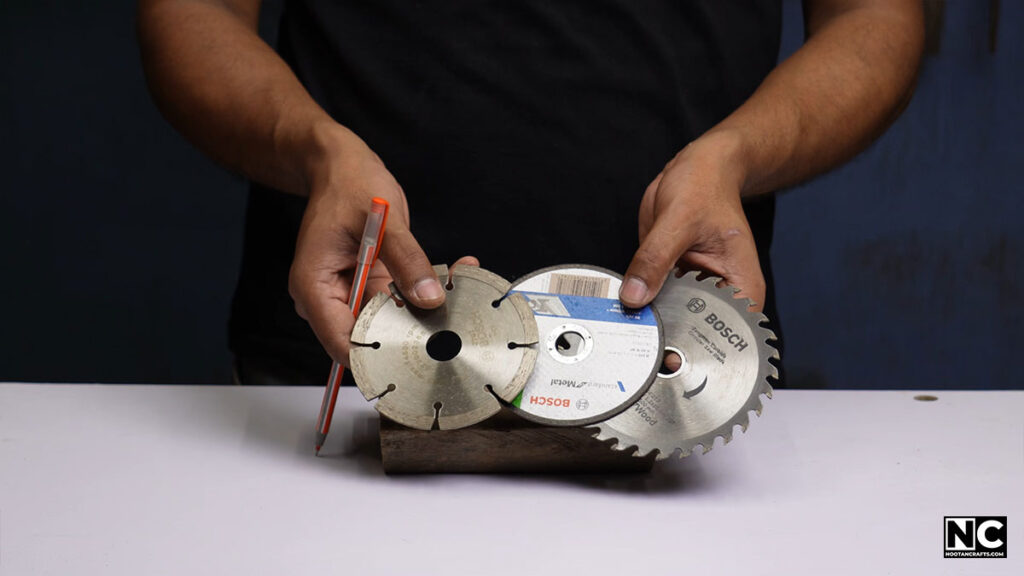
| Attachment | What it’s for | Cut quality | Verdict |
|---|---|---|---|
| Wood carving disc | Shaping, sculpting, hogging material | Rough by design | Recommended – what the grinder is actually good at |
| Carbide grit / rasp disc | Smoothing, contouring, shaping curves | Controlled, slow removal | Recommended – the gentlest option |
| Sanding or flap disc | Paint removal, surface prep | Good at reduced speed | Recommended |
| Chainsaw attachment | Branches, small logs | Rough | Caution – see below |
| Circular saw attachment | Straight cuts with a guard | Better, if the kit is sound | Only with a blade rated for the speed |
| Ordinary woodworking saw blade | Nothing on this tool | – | Never |
What I’d buy for this job



Last update on 2026-10-13 / Affiliate links / Images from Amazon Product Advertising API
Wood Carving Discs
Best for Carving and Shaping
Last update on 2026-10-13 / Affiliate links / Images from Amazon Product Advertising API
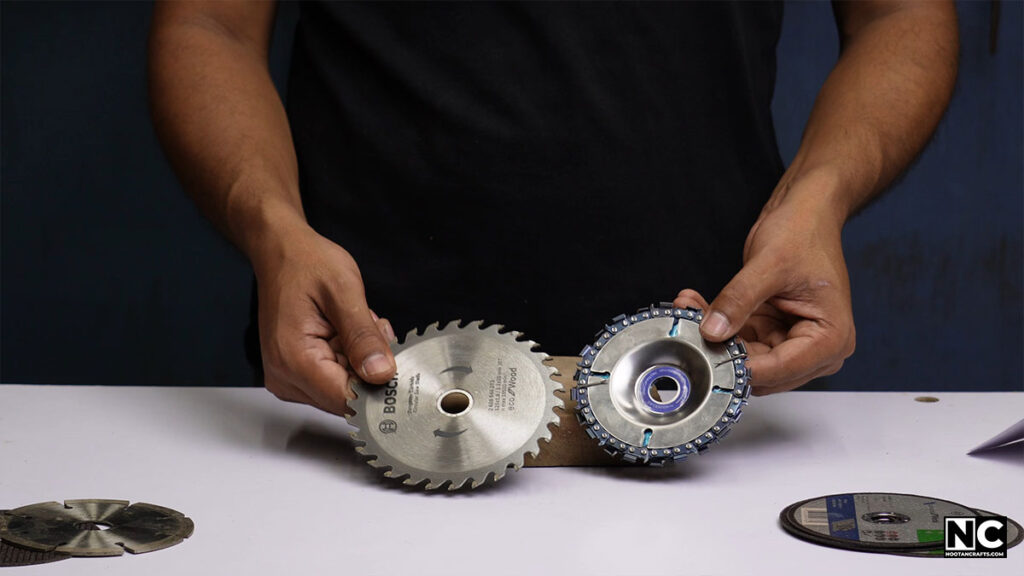
These are made for the job: widely spaced, less aggressive teeth on a disc rated for grinder speeds. The wide gullets clear chips instead of packing, which is what stops the disc from grabbing the way a fine-toothed blade does.
Do not expect precision. The cut is rough, and the disc removes material fast — that’s the point. For sculpting a bowl, shaping a chair seat, distressing a beam, or roughing out a carving, nothing else gets there as quickly.
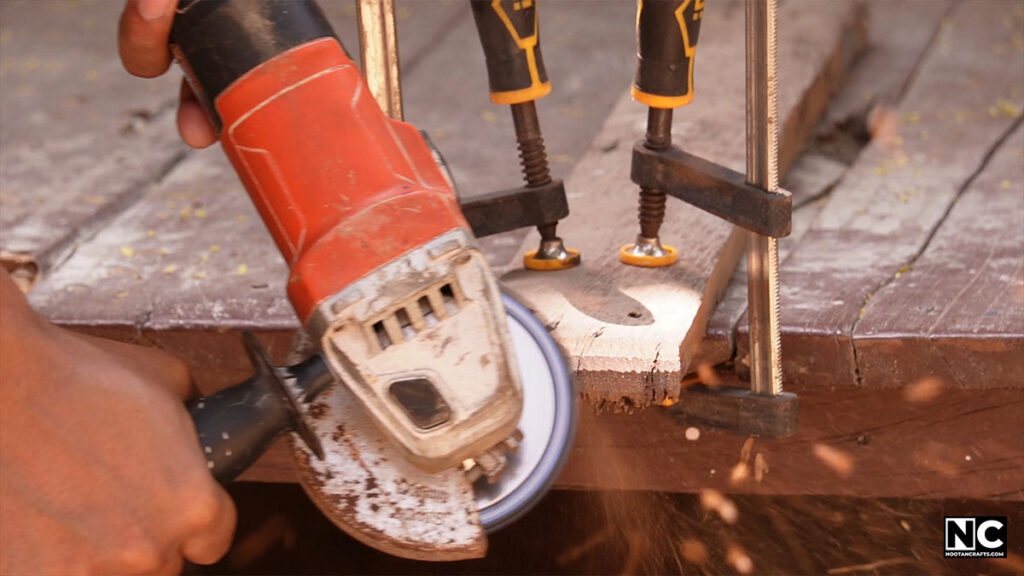
Start with a carbide-grit disc if you’re new to this. It has no teeth at all — the cutting is done by carbide particles bonded to the face — so it removes material steadily, and it cannot catch and climb the way a toothed carving disc can. Slower, and far more forgiving while you learn how the tool behaves against timber.
Chainsaw Attachments
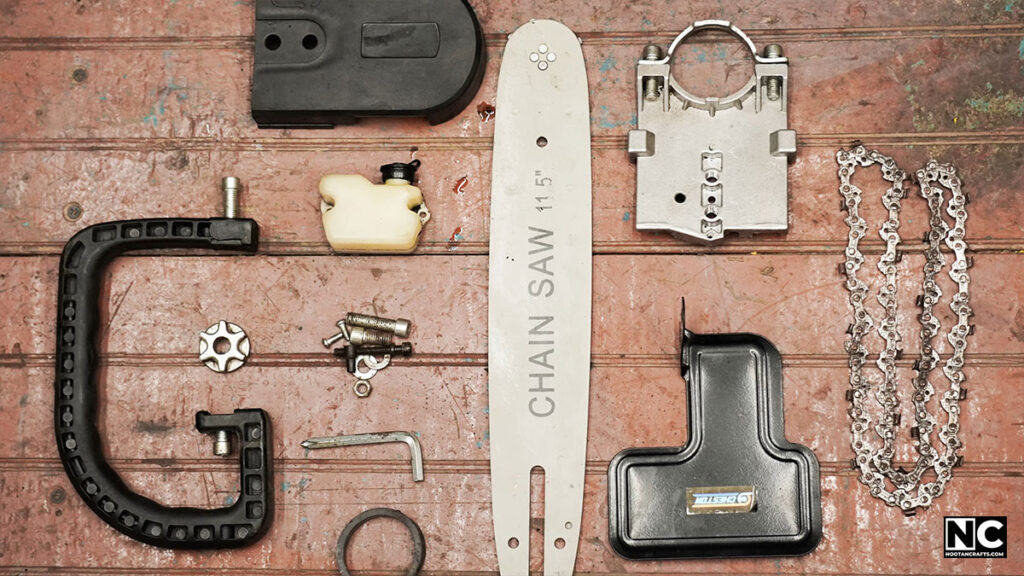
Best for Branches and Logs
Last update on 2026-10-13 / Affiliate links / Images from Amazon Product Advertising API
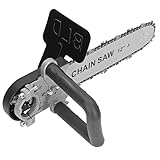
A small chain and bar that bolts on in place of the disc, turning the grinder into a compact saw for branches and small logs. They work, and they are popular, and they deserve a specific caveat rather than a general one.
I have one of these adapters for my own grinder, so this is not a warning from a distance. It is a warning about the thing sitting in my workshop.
Most of these attachments have no chain brake. A real chainsaw has one because the tip of the bar catching is what causes kickback, and the brake stops the chain in a fraction of a second when it happens. Bolted to a grinder, there is usually no brake, no proper handguard, and no chain catcher — and a grinder with a lock-on switch keeps running after it has left your hand. If you use one, keep the bar tip out of the cut entirely, both hands on the tool, and never work above shoulder height or up a ladder.
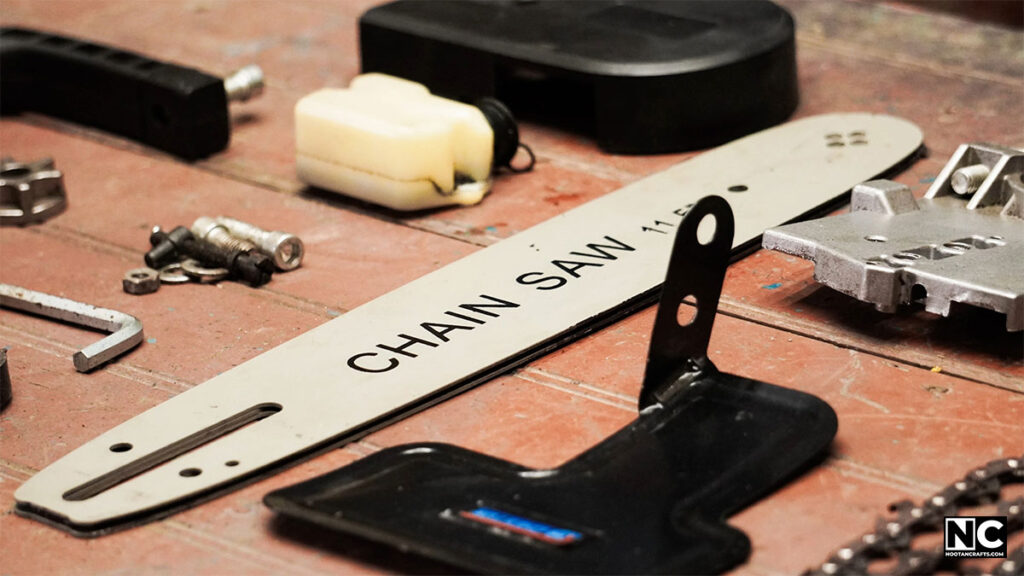
Keep the chain sharp and correctly tensioned. A blunt chain forces you to push, and pushing is what makes the bar wander and the tip catch. A slack chain can come off the bar entirely.
Circular Saw Attachments
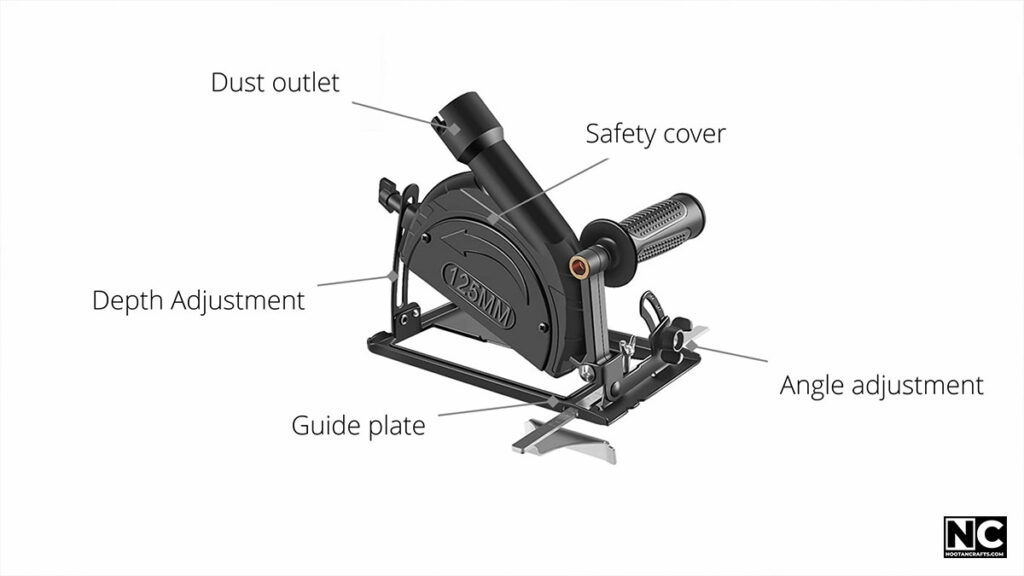
Best for Straight Cuts
Last update on 2026-10-13 / Affiliate links / Images from Amazon Product Advertising API
A shoe-and-guard kit that converts the grinder into something resembling a small circular saw. Fitted properly, it restores the two things a bare grinder lacks — a guard over the blade and a base plate setting the depth — and that is a real improvement over a naked blade.
Two conditions, and both are absolute. The blade must be rated at or above the grinder’s no-load speed — not the speed of the saw the blade was designed for. And the grinder must be slowed, either with a built-in variable speed dial or an external controller, as covered in controlling an angle grinder’s speed.
Meet those two conditions and it works. Fail either one and you have built exactly the tool the safety box above is warning you about, with a guard on it.
Slowing It Down First
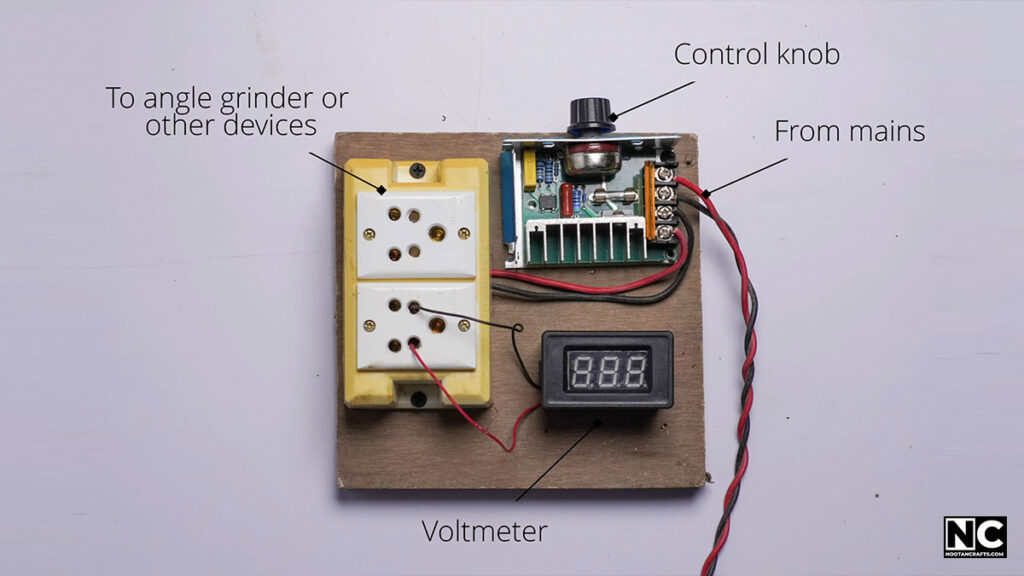
A grinder free-spins around 11,000 rpm, which suits an abrasive disc on steel and is far more than wood wants. At that speed, wood burns before it cuts, the surface scorches, and every grab is more violent than it needs to be.
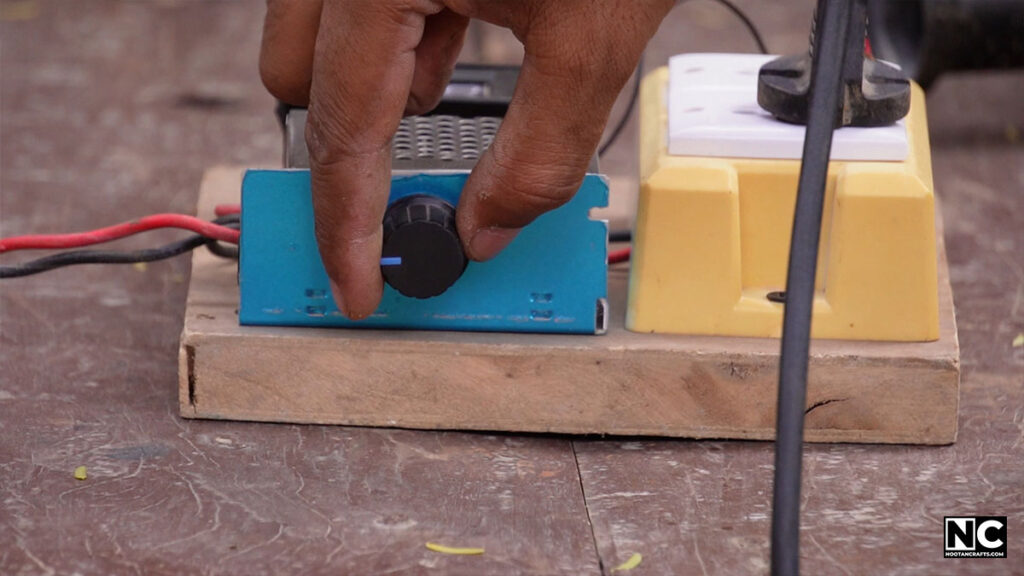
Best for Speed control
Last update on 2026-10-13 / Affiliate links / Images from Amazon Product Advertising API
If the grinder has a variable-speed dial, use it. If it doesn’t, an SCR voltage controller between the outlet and the tool will slow any plain brushed grinder — I built one for exactly this, and the full build is here.
Slowing it down does not make an unrated accessory safe. A controller has no rpm readout, so you have no way of knowing what speed you are actually at. Match the disc’s rating to the grinder’s plate speed first, then use the controller to go slower than that — never the other way round.
Why the Grinder Fights You on Timber
An angle grinder is built around an abrasive disc that wears away material by friction. It has no teeth to catch on anything, which is why the tool can get away with an open guard and no brake — a bonded disc that binds tends to stall or shatter rather than climb.
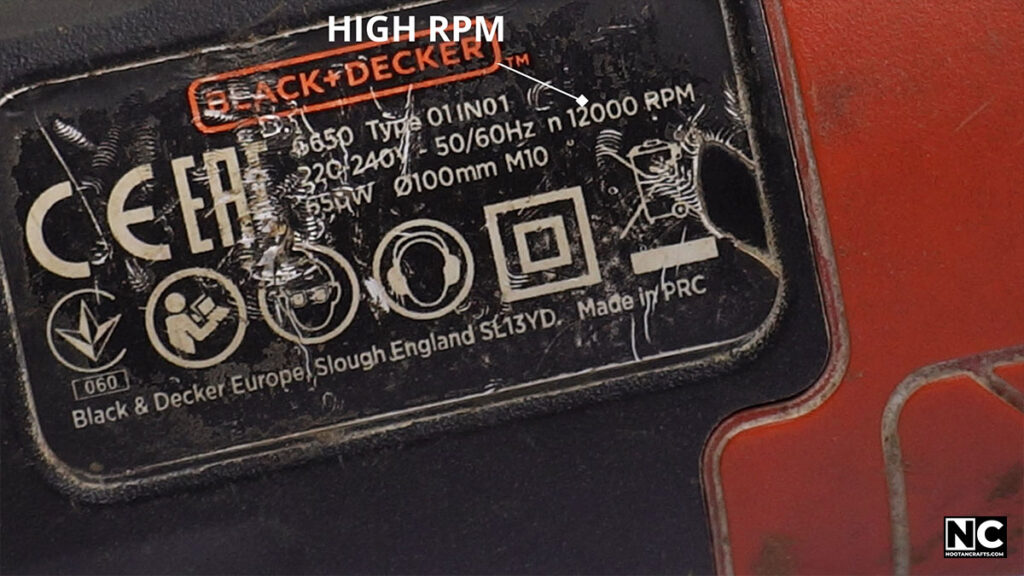
Give the same tool teeth and everything changes. A tooth that catches in fibrous material bites and pulls — the tool climbs the workpiece and comes back at the operator, which is kickback. Saws are designed around preventing it. Grinders are not, because nothing about their intended use produces it.
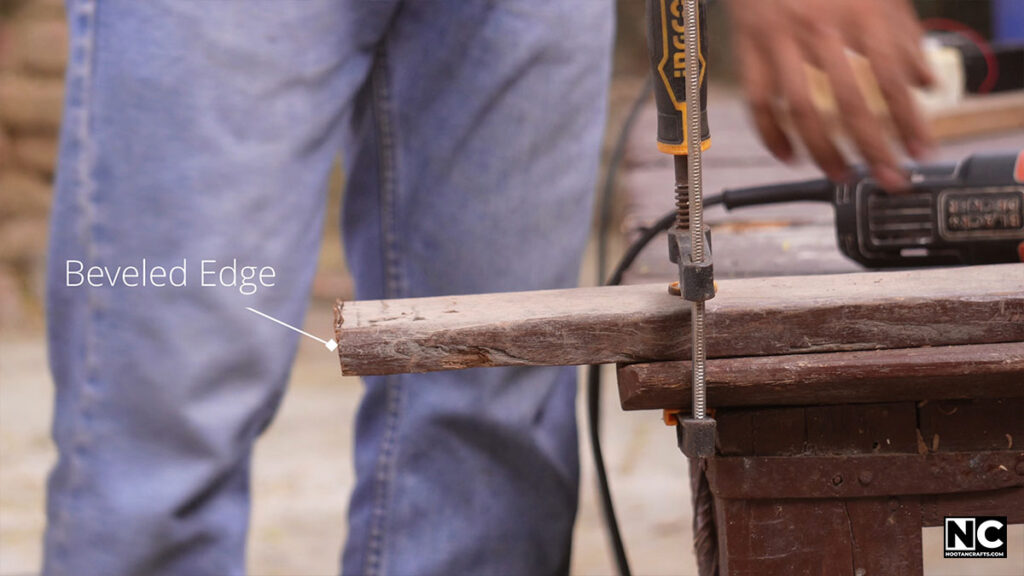
The accuracy problem follows from the same design. No shoe rests on the workpiece, so nothing holds the disc square. Every cut ends up slightly beveled, and on anything that has to fit against something else, that shows.
Working Method
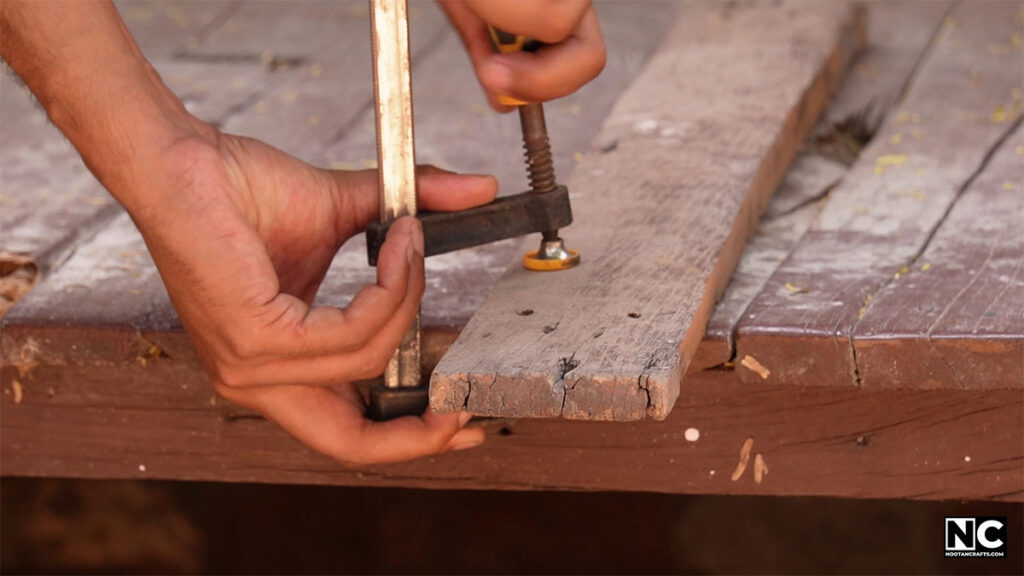
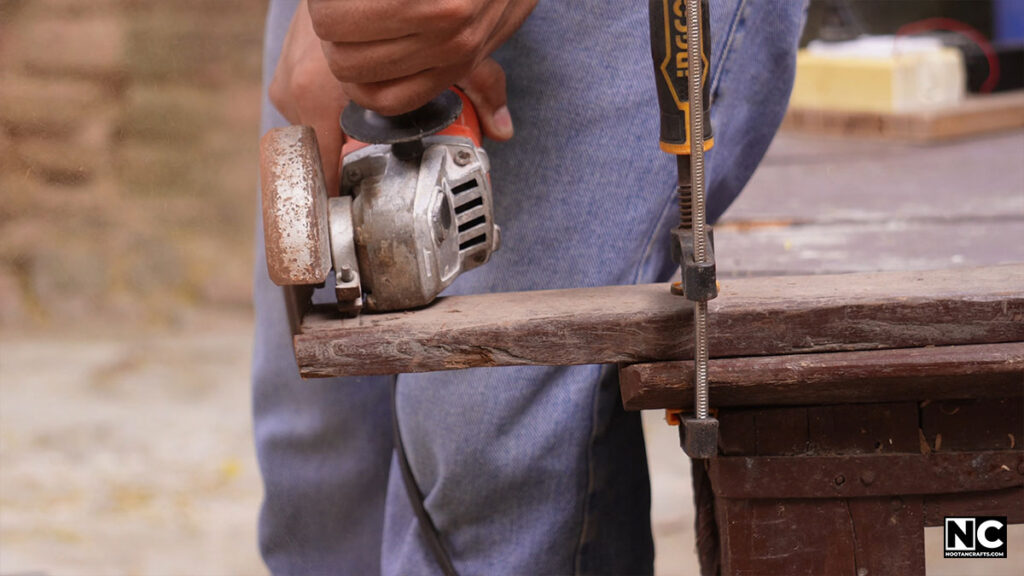
- Clamp the work, properlyTwo clamps, or a vise. Wood that shifts under a carving disc is how the tool ends up somewhere you did not intend.
- Check the disc’s rpm rating against the tool’s plateBefore every fitting, not just the first one.
- Fit the side handle and use both handsThe handle is the lever that lets you resist a grab. It is not optional on timber.
- Set the speed with the tool running freeLower than you would use on steel. Adjust before the disc touches wood, not during.
- Practice on scrap firstEvery carving disc behaves differently and the first few seconds tell you how hard this one bites. Scrap forgives that; your workpiece does not.
- Work in shallow passes, moving continuouslyLet the disc take a little at a time. Dwelling in one spot burns the timber and loads the disc.
- Keep the dust down and the area clearVentilation, mask, and nothing flammable in reach – fine wood dust plus a spark from a hidden nail is a real combination.

Where This Goes Wrong
- Fitting a woodworking saw blade. The one thing on this page with no safe version. No guard, no brake, no depth stop, usually over the blade’s rating.
- Taking the guard off for clearance. If the guard is in the way, the tool is wrong for the cut. That is information, not an obstacle.
- Full speed on timber. Burns the wood, loads the disc, and makes every grab more violent.
- One-handed work. A carving disc grabs hard enough to twist the grinder out of a single hand. Side handle on, both hands.
- Expecting a straight cut. Nothing holds the disc square. Use a saw when the cut has to be accurate.
- Reclaimed timber without checking for metal. A hidden nail throws sparks into dry shavings, and it wrecks a carving disc.
Angle Grinder and Wood Questions People Actually Ask
Can I put a circular saw blade on an angle grinder?
No. It is the specific combination that causes the worst injuries with this tool — no guard over the teeth, no depth control, no riving knife, no brake, and usually a spindle speed above what the blade is rated for. If you need a saw cut, use a saw.
What disc should I use to cut wood with a grinder?
One sold specifically for angle grinders and rated at or above your grinder’s no-load speed. A carving disc for shaping and rough work, or a carbide-grit disc for gentler, more controlled removal.
Is a carving disc safe?
Safe for the tool, in that it is designed and rated for it. It still grabs, and it removes material extremely fast, so it needs both hands, the side handle, clamped work and a face shield. A carbide-grit disc is the more forgiving place to start.
Can an angle grinder cut a straight line in wood?
Not reliably. There is no shoe holding the disc square to the surface, so cuts come out slightly beveled. A circular saw attachment improves it considerably; a circular saw improves it more.
Are grinder chainsaw attachments worth it?
They work for branches and small logs, but most have no chain brake, no handguard and no chain catcher — the three things that make a real chainsaw survivable when the bar tip catches. If you use one, keep the tip out of the cut and never work above shoulder height.
What speed should I use on wood?
Lower than you would on steel. Full speed burns wood and makes every grab sharper. Use the variable-speed dial if the tool has one, or an external controller if it doesn’t.
Can I sand or strip paint with an angle grinder?
Yes, and this is a job it does well. A sanding or flap disc at reduced speed strips paint and levels a surface quickly. Mask on — old paint may contain lead, and a grinder makes very fine dust.
Shape With It, Don’t Saw With It
An angle grinder with a carving disc is a very good shaping tool, and it does things no saw can — sculpted curves, hollowed forms, textured surfaces. It is a poor saw and a dangerous one when forced into that role. Fit only discs rated for the tool, slow it down, clamp the work, and reach for a circular saw the moment the cut has to be straight.


