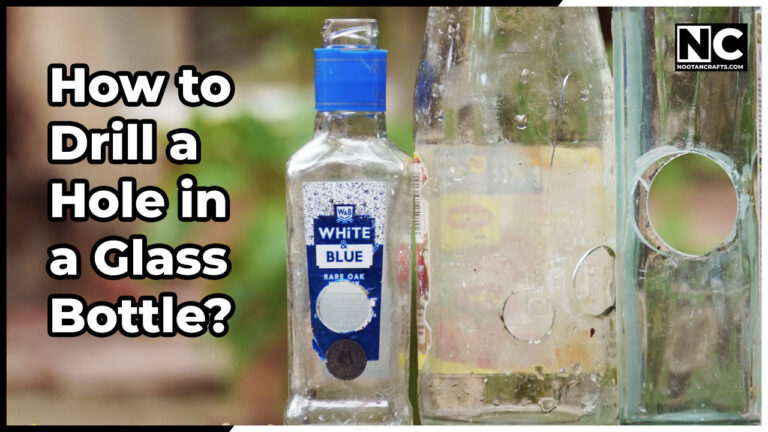
A diamond bit, water, and a speed slow enough to feel wrong. That is the whole method. Glass doesn’t cut like wood or metal—a diamond bit grinds through, and what usually goes wrong comes down to heat or a point load on an unsupported spot.
Before anything else, one check decides whether the job is possible at all.
You cannot drill tempered glass. It is not difficult; it is impossible. Tempered glass is held in permanent tension, so breaking the surface anywhere releases the whole pane at once, and it disintegrates into gravel. Ordinary bottles are annealed glass and drill fine. Oven doors, shower screens, car side windows and toughened tabletops are tempered — look for a small etched mark in a corner. If a piece is tempered, you have to make the hole before tempering, at the factory. No technique gets around this.
What’s Inside!
How to Drill a Hole in a Glass Bottle — Video
Required Tools


Last update on 2026-10-24 / Affiliate links / Images from Amazon Product Advertising API
What You Need
- Diamond-coated hole saw bits. I have tried other bits on bottles; these are the ones I keep going back to, because they cut efficiently and they are reusable. Mine run from 20 mm to 42 mm (3/4 in to about 1-5/8 in) and I used both ends of that range.
- A drill with variable speed, and no hammer setting engaged
- A continuous water supply. Some people submerge the bottle; I use a plastic bottle with a pinhole poked in it so water runs onto the cut without stopping. Use whatever you have, as long as it does not stop.
- A wood offcut and a spade bit to make a starting guide, and a marker
- Sandpaper to smooth the hole afterwards
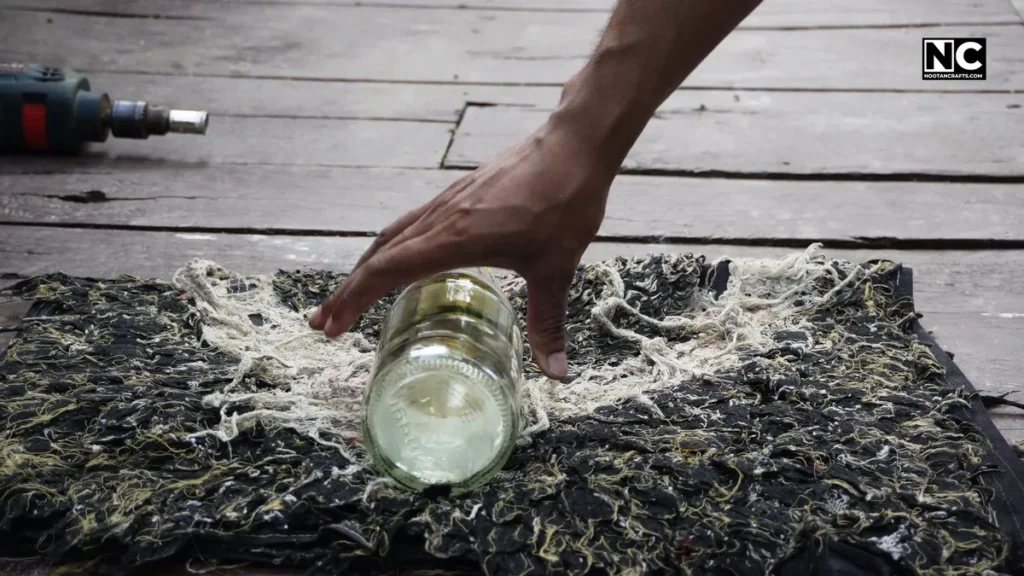
- A towel or thick cloth for the bottle to sit on
- Safety glasses
Nothing here is optional, and the water is the one people skip. A diamond bit run dry overheats in seconds, and hot glass under a spinning bit cracks from the inside out. On speed: start slow, because the bit still wants to wander before it has bitten, then bring it up to a steady working pace once there is a dent holding it. The water is what lets you do that.
The Method
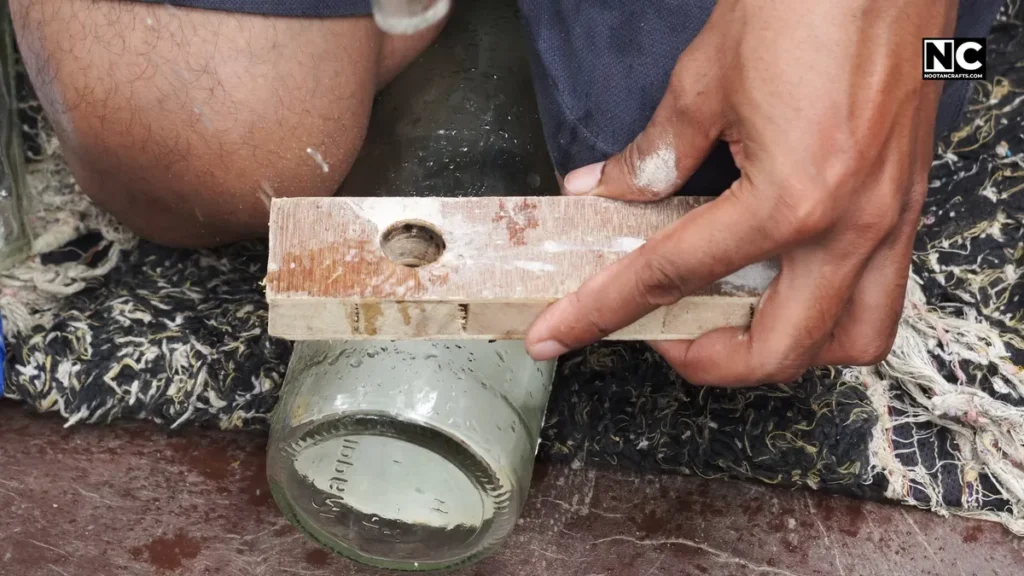
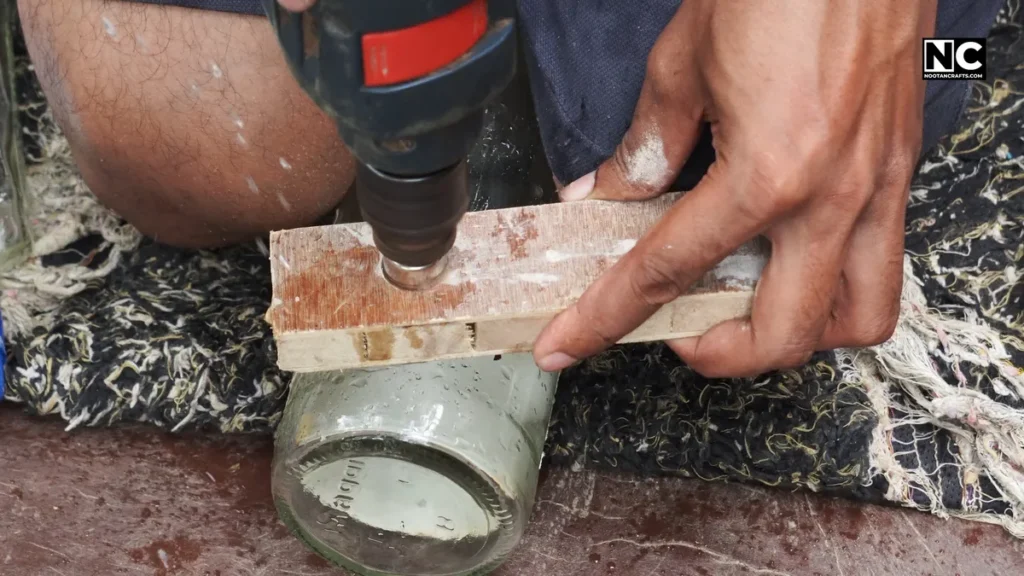
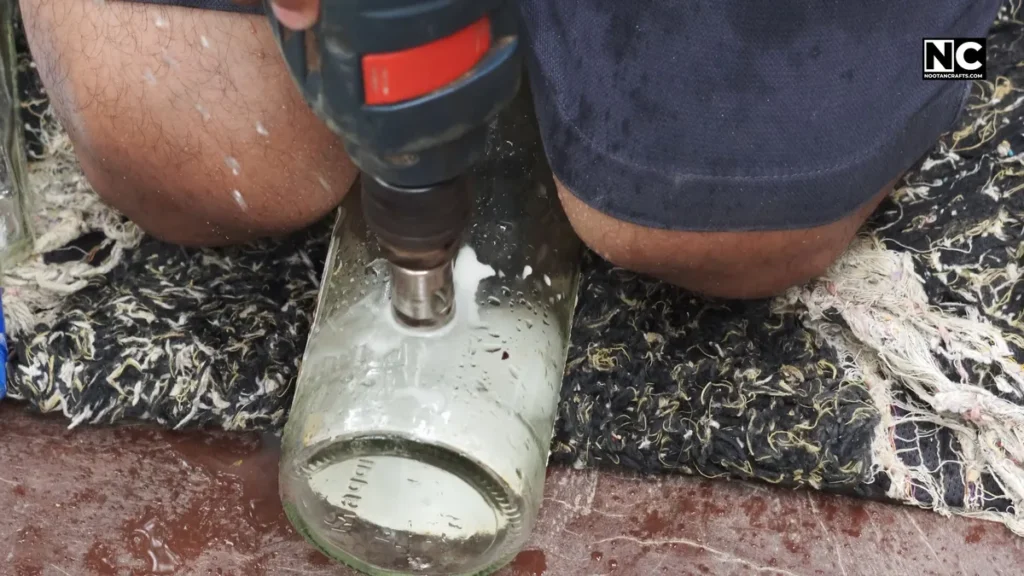
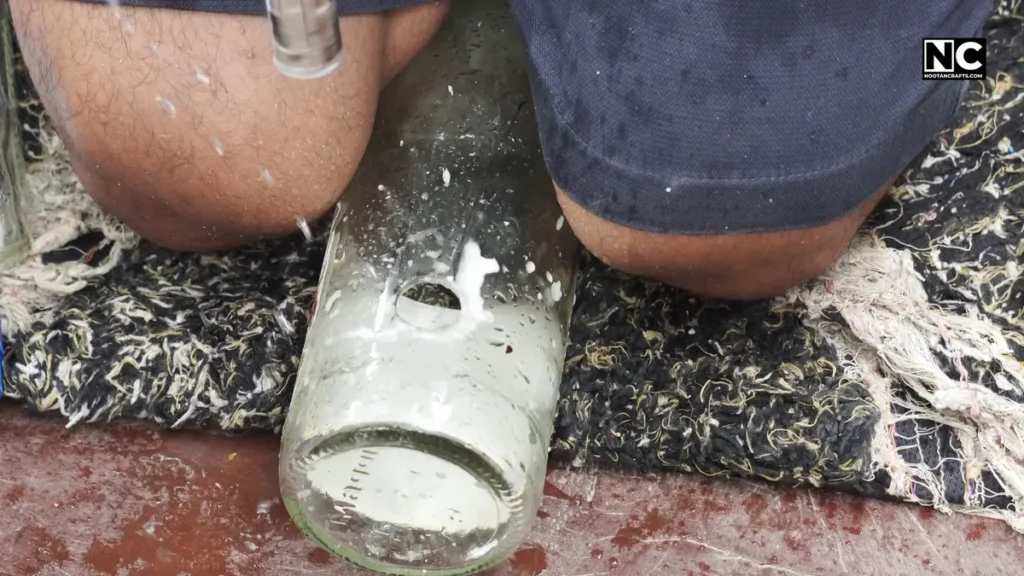
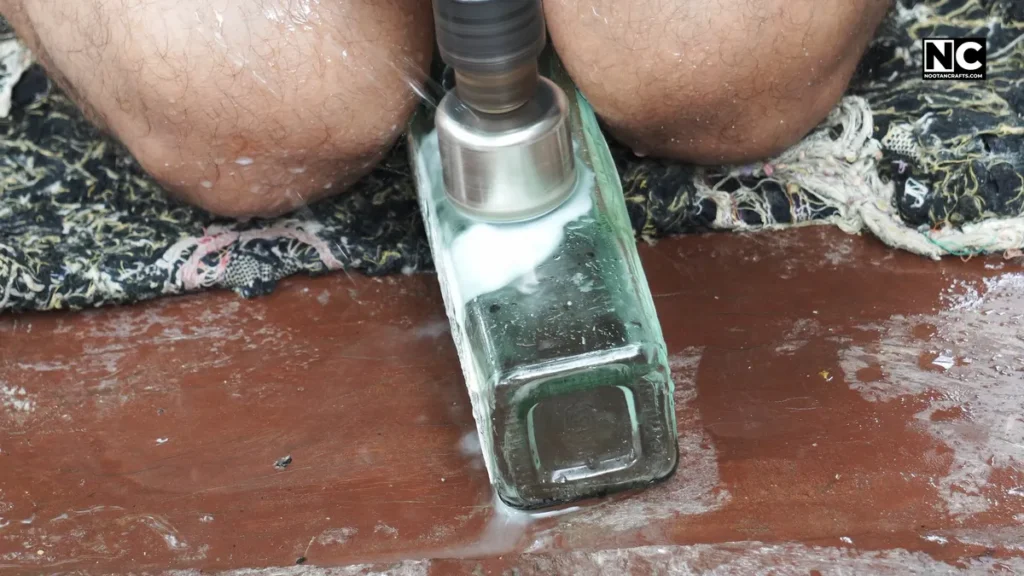
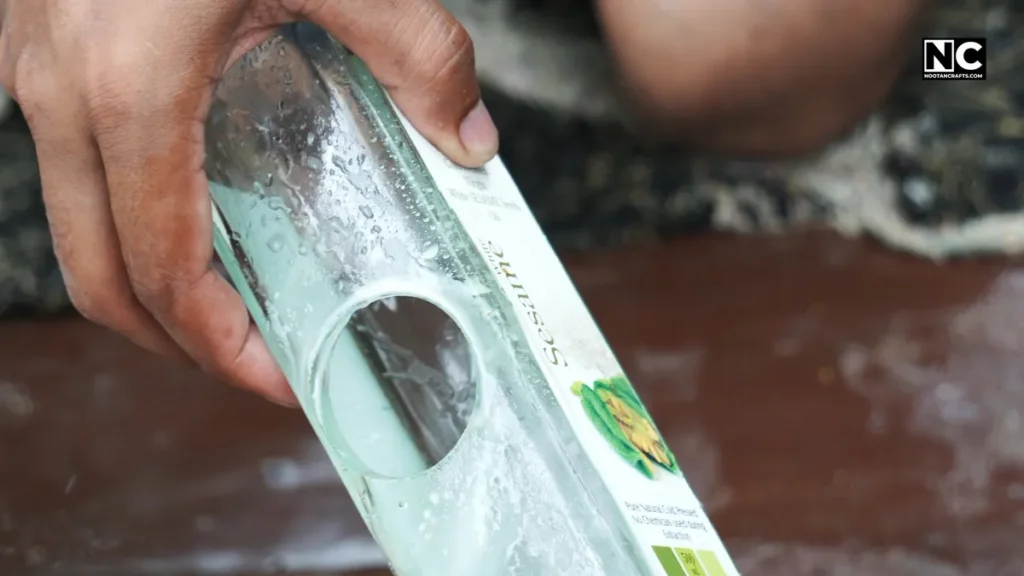
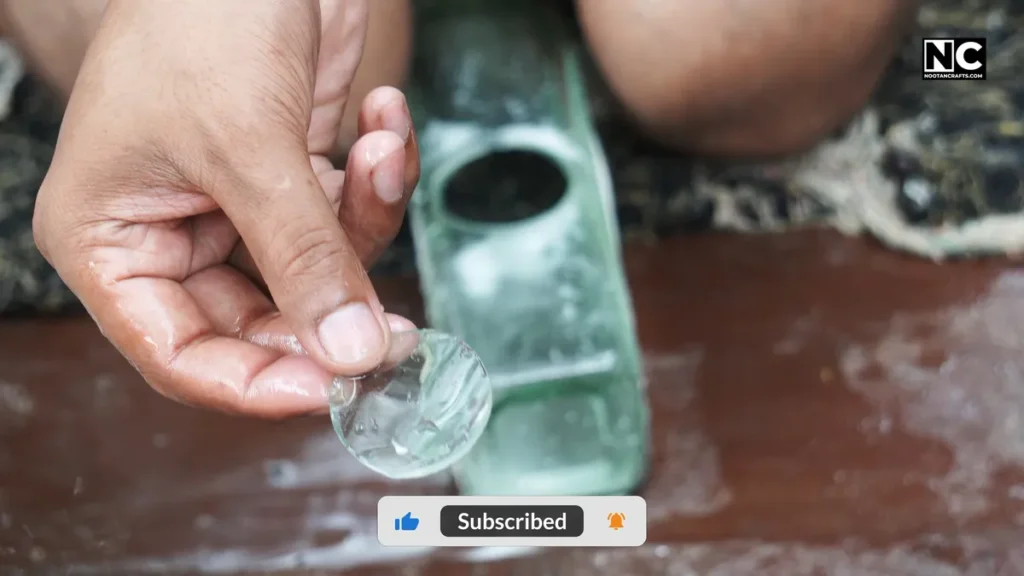
- Make the guide blockDrill a hole through a wood offcut with a spade bit, the same size as your diamond bit. A spade bit cuts slightly oversize anyway, which is what gives the diamond bit room to turn freely. If it comes out tight, file or sand it.
- Mark the bottlePut the marker where you want the hole.
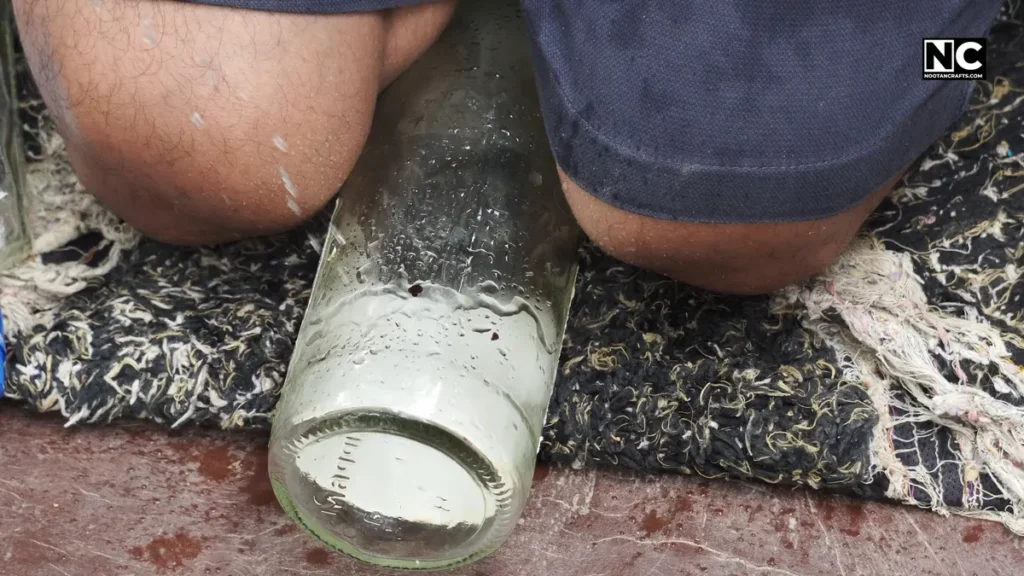
- Sit the bottle on a folded towel and hold it stillThe cloth supports the bottle and absorbs the vibration. Hold it firmly so it cannot move while you drill — a bottle that shifts mid-cut is a bottle that cracks.
- Get the water running before the drill doesWe need a continuous stream on the bit. If it runs dry it overheats, and then it damages the bit and breaks the bottle.
- Drill through the guide, then drop the guideHold the block on the mark, slide the bit into it, and start. Once the water turns cloudy you have a dent, and the dent is now the guide — take the block away, put the bit straight into it, and keep going. It does not take long to go all the way through.
- Or start freehand, at an angleNo block needed if you would rather not make one. Start with the bit tilted so only its edge is on the glass; once it bites, bring it upright and drill straight. Same method for a bigger hole — start at an angle, keep a firm grip on the drill, and stand it up once it has bitten.
- Ease off completely at breakthroughAs you feel the bit about to come through the far side, take the pressure off almost entirely. There is nothing behind that last sliver of glass holding it up, so if you are still pushing when it goes, it snaps instead of grinding and you get a chipped edge on the inside.
- Smooth the holeA little sandpaper takes the edge off once you are through.
What I’d buy for this job
Last update on 2026-10-24 / Affiliate links / Images from Amazon Product Advertising API
Water and Electricity, Together
You are deliberately introducing water to a running power tool
Every other job on this site tells you to keep the tool dry. This one requires the opposite, so the precautions are different rather than optional.
- Use a cordless drill if you have one. Battery voltage is not a shock hazard the way line voltage is, so it removes the problem rather than managing it.
- If it is corded, put residual current protection in the supply. Mine is corded, on a circuit with an RCCB that trips at 30 mA of leakage. A GFCI outlet or plug-in adapter does the same job for a single outlet; a breaker on the circuit covers everything downstream of it. Water on a floor and a corded tool is the exact case these exist for.
- Keep the water shallow and below the chuck. Enough to flood the cut, not enough to reach the tool.
- Safety glasses. Glass slurry is abrasive and it flicks.
- A glove on the steadying hand. If the bottle does crack, it cracks under your fingers.
- Never use hammer mode. If you are unsure which mode your drill is in, the drill types guide covers the selector. Check it before you start, not after the first attempt.
The Methods That Do Not Drill Holes
Two techniques come up constantly in searches for this, and both are worth knowing mainly so you don’t waste an afternoon on them.
| Technique | What it actually does | Use it for |
|---|---|---|
| Bottle cutter | Scores a continuous line around the bottle, then thermal shock separates it there | Cutting a bottle in half. It cannot make a hole in the middle of a face |
| Soldering iron and string, or a hot/cold cycle | Propagates a crack along an existing score line | The same job as above, more slowly. Still not a hole |
| Carbide masonry bit | Sometimes works on thin glass, often chips it badly | Nothing, if a diamond bit is available. The saving is not worth the bottle |
Making a hole and cutting a bottle are different jobs with different tools, and conflating them is why so many guides on this topic seem to change the subject halfway through. If you want the neck off, use a bottle cutter. If you want a hole for a cable, a tap or a fairy-light string, you need the diamond bit.
Why Bottles Crack
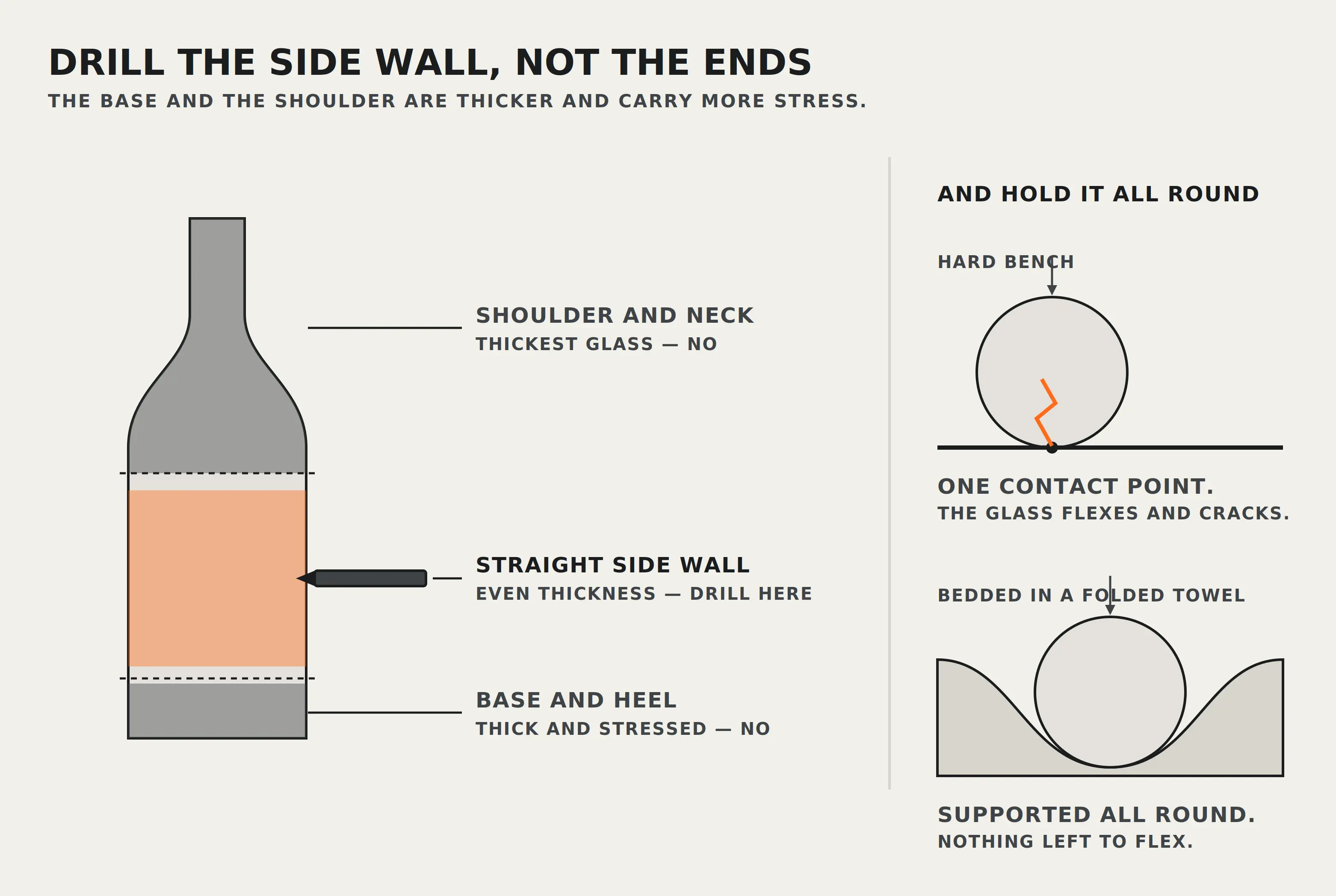
- Heat. The most common cause, by a long shot, and the one that got me. Dry drilling, or drilling too fast, puts a hot spot into a material that cannot expand locally without breaking.
- Pressure on an unsupported bottle. Glass has almost no give, so force has to go somewhere. That is what the folded towel is for—it supports the bottle all around instead of letting it rest on one hard point.
- An unsupported spot. A bottle resting on a hard bench touches it in only one place. Drill anywhere else and the glass flexes.
- Drilling the base or the shoulder. Both are thicker than the straight side wall, so the cut takes longer, and heat has more time to build. Neither is off limits — drilling the base is how bottle lamps get their cord through, and people do it routinely. It is simply the harder version of the same job, so if you have a choice, take the side wall.
The one I broke was heat, and it was avoidable. I drilled five bottles for this — sauce, whisky, cough syrup, oil and an old chemistry reagent bottle — and four of them came out clean, in two different hole sizes, with and without a guide block. The one that went let the water run out while I was pushing it along in a hurry. That is the entire reason. It was not the bottle, it was not the bit, and it was not bad luck: the cut ran dry and I did not stop.
Glass Drilling Questions People Actually Ask
What drill bit do I need for a glass bottle?
A diamond bit. I use diamond-coated hole saws, 20 mm to 42 mm (3/4 in to about 1-5/8 in), and both ends of that range cut bottles the same way. Carbide masonry bits occasionally work on thin glass and chip it more often than not. Nothing else is worth trying.
What speed should I drill glass at?
Start slower than feels productive, then settle into a steady working pace once the groove is seated. The thing that limits you is heat rather than the bit, so how fast you can safely run depends entirely on whether water is reaching the cut continuously. With a steady drip you can keep a reasonable pace; without it, no speed is safe. Larger bits cover more glass per revolution, so slow those down further.
Do I really need water?
Yes. It is the single most important part of the method, and more specifically it has to be continuous. Water carries heat away and flushes the abrasive slurry out of the cut; a bit run dry overheats within seconds and glazes over, which ruins the bit as well as the bottle. Dipping or re-wetting leaves gaps, and the gaps are when the damage happens — which is exactly how I lost the one bottle I lost.
Can I drill a wine bottle?
Yes — wine, beer and spirits bottles are annealed glass and behave predictably. The straight side wall is the easiest place to put the hole, because the glass is thinnest there and the cut is quickest. The base can be drilled too, which is how bottle lamps get their cord through, but it is thicker and takes longer, so the water has to keep running for longer as well.
How do I know if glass is tempered?
Look for a small etched stamp in one corner, usually naming the manufacturer and a standard. Bottles are never tempered. Shower screens, oven doors and toughened tabletops almost always are, and they cannot be drilled at any speed with any bit.
My bit stopped cutting – is it worn out?
More likely glazed. Diamond bits clog with glass slurry and stop biting, and running them dry accelerates it — more water is the first thing to try. If it stopped cutting suddenly while it was dry, the diamonds have probably come off the tip and it is finished.
If you only remember two things: check that it is not tempered, and never let the water stop. Four of my five bottles came out clean on that basis, and the fifth proves what happens otherwise. The same wet, patient, diamond-bit discipline applies to porcelain tile. Everything else on this page refines those two.