Nine are commonly used: hand drills, braces, hand augers, corded drills, cordless drills, hammer drills, rotary hammers, impact drivers, and pneumatic drills—plus drill presses and magnetic drills, which are machines rather than handheld tools. Most people only ever need two of them.
If you’re buying: a corded hammer drill first, because it covers wood, metal, and masonry on wall power. A cordless drill/driver second, for screwdriving and anywhere without an outlet. Everything else on this page is a specialist tool that solves one problem those two don’t.
Recommended Machines


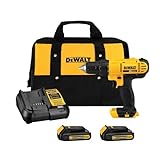
Last update on 2026-10-25 / Affiliate links / Images from Amazon Product Advertising API
What’s Inside!
- 1 – All Eleven, Compared
- 2 – Hand Drills, Braces and Augers
- 3 – Corded Drills
- 4 – Cordless Drill/Drivers
- 5 – Hammer Drills
- 6 – Rotary Hammers (SDS)
- 7 – Impact Drivers
- 8 – Pneumatic Drills
- 9 – Drill Presses
- 10 – Magnetic Drills
- 11 – Which to Buy, in What Order
- 12 – Where to Go From Here
- 13 – Drill Type Questions People Actually Ask
- 14 – Two Tools Cover Almost Everything
All Eleven, Compared
| Type | Power | Best at | Can’t do |
|---|---|---|---|
| Hand drill | You | Small, delicate, controlled holes in wood | Anything hard, or anything large |
| Brace | You | Large holes in wood, high torque by leverage | Speed; metal and masonry |
| Hand auger | You | Deep, large-diameter holes in wood | Anything but wood |
| Corded drill | Wall power | Constant power, general work, low cost | Working away from an outlet |
| Cordless drill/driver | Battery | Screwdriving with a clutch, portability | Sustained heavy drilling |
| Hammer drill | Wall power or battery | Brick, block, light concrete | Dense structural concrete, chiselling |
| Rotary hammer (SDS) | Wall power or battery | Concrete, large masonry holes, chiselling | Fine work – too aggressive for wood |
| Impact driver | Battery | Driving long screws and bolts, fast | Precise drilling – it has no chuck for round shanks |
| Pneumatic drill | Compressed air | All-day industrial duty, light in the hand | Working without a compressor |
| Drill press | Wall power, fixed | Perfectly square, repeatable holes | Leaving the bench |
| Magnetic drill | Wall power | Large accurate holes in steel, on site | Anything non-ferrous to clamp to |
The one distinction everybody gets wrong: a hammer drill and an impact driver are not the same tool and are not interchangeable. A hammer drill adds axial percussion—it punches the bit forward, into masonry. An impact driver adds rotational impact—it hits the bit round the way to drive a screw that has stopped turning. One makes holes in walls; the other drives long screws into timber. Neither does the other’s job.
No clutch means the tool turns instead of the bit
Corded drills, hammer drills and rotary hammers generally have no torque clutch. When a bit binds — breaking through steel, hitting rebar, catching a knot — the motor keeps making torque and the only thing free to move is the tool, which snaps round in your hands. A cordless drill/driver with a clutch is the exception, and it is the reason a clutch is worth having.
- Fit the side handle on anything with real power, and use both hands. It is the lever that lets you resist a bind.
- Clamp small workpieces. A piece that spins with the bit becomes a blade — the classic drill press and bench injury.
- Check walls for cables and pipes before drilling masonry. A bit passes through a cable with no change in feel.
- Mask for masonry. Concrete and brick dust contains respirable crystalline silica, and the harmful fraction is too fine to see.
- No gloves at a drill press. Gloves are for handling material; a glove caught in a rotating chuck pulls your hand in. Same for sleeves, ties and long hair.
- Take the chuck key out before you press the trigger on any keyed chuck.
Hand Drills, Braces and Augers
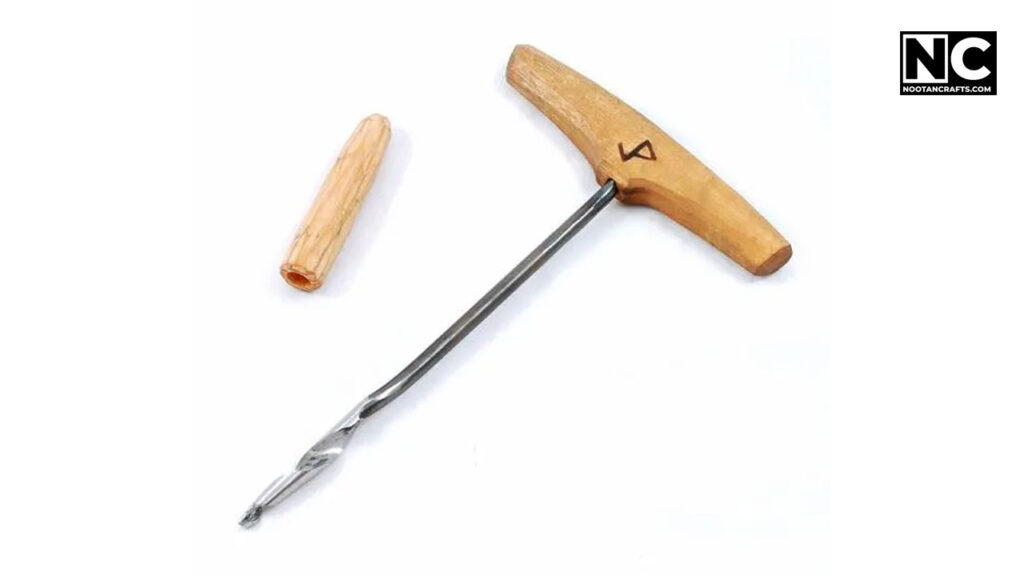
A hand drill turns the bit through gearing driven by a crank. It sounds obsolete and it isn’t, for one reason: you feel exactly what the bit is doing, and you can stop instantly. On thin stock, on a delicate repair, on anything where an electric drill would punch through before you noticed, a hand drill is the more controllable tool.
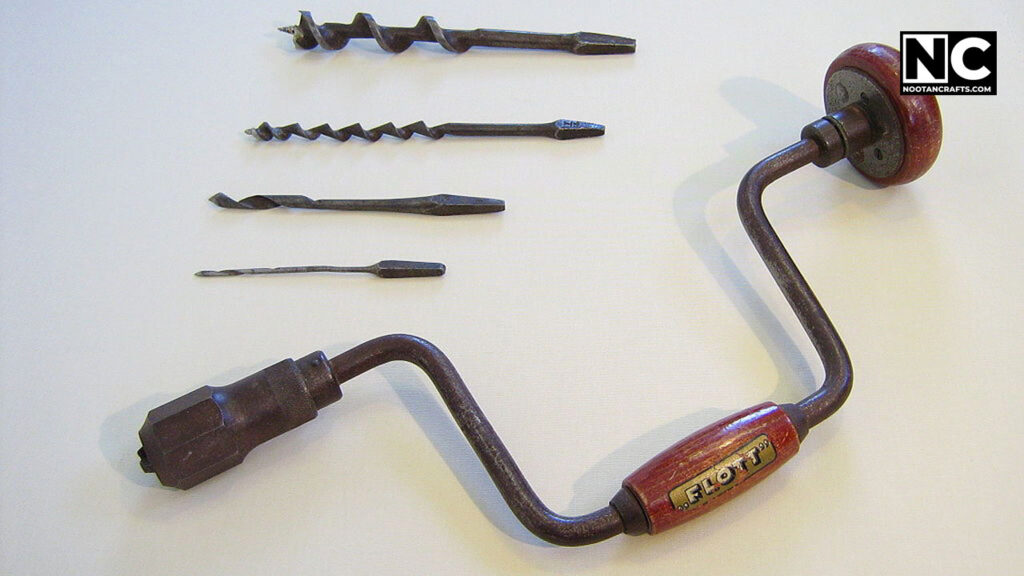
A brace uses a U-shaped crank offset from the shaft, so the whole sweep of your arm becomes leverage. That geometry produces far more torque than any handheld electric drill, which is why braces are still used for large auger bits in wood — and why an old one will bore a hole a cordless drill would stall in.
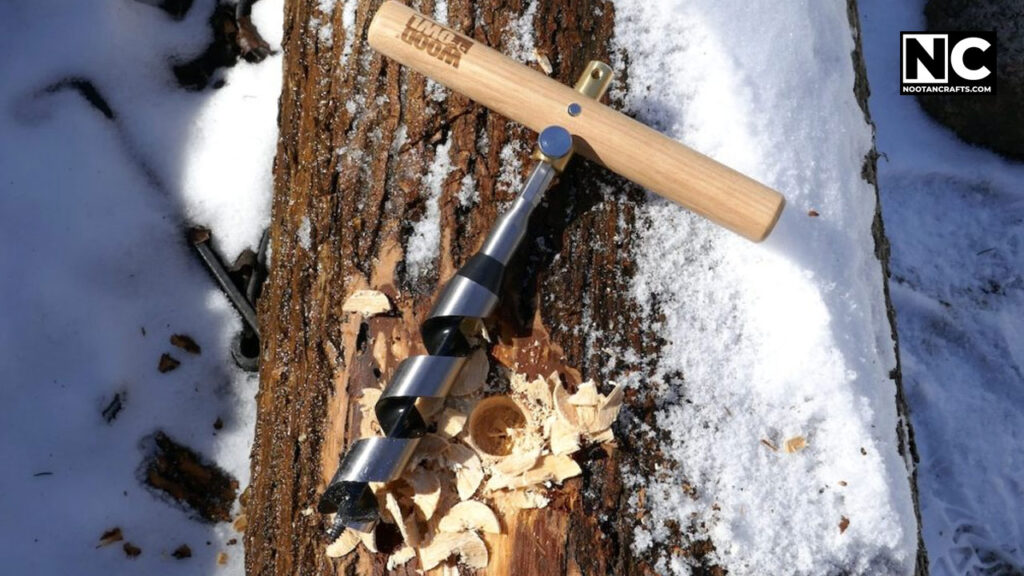
A hand auger has a spiral bit that pulls itself into the wood, clearing chips up the flutes as it goes. For deep, large-diameter holes in wood, it is efficient rather than merely nostalgic.
Worth owning one anyway: a hand drill needs no power, no charge and no warm-up, and it will not split a delicate piece by running away with you. In a workshop that already has three electric drills, it is the tool that comes out for the job where a mistake cannot be undone.
Corded Drills
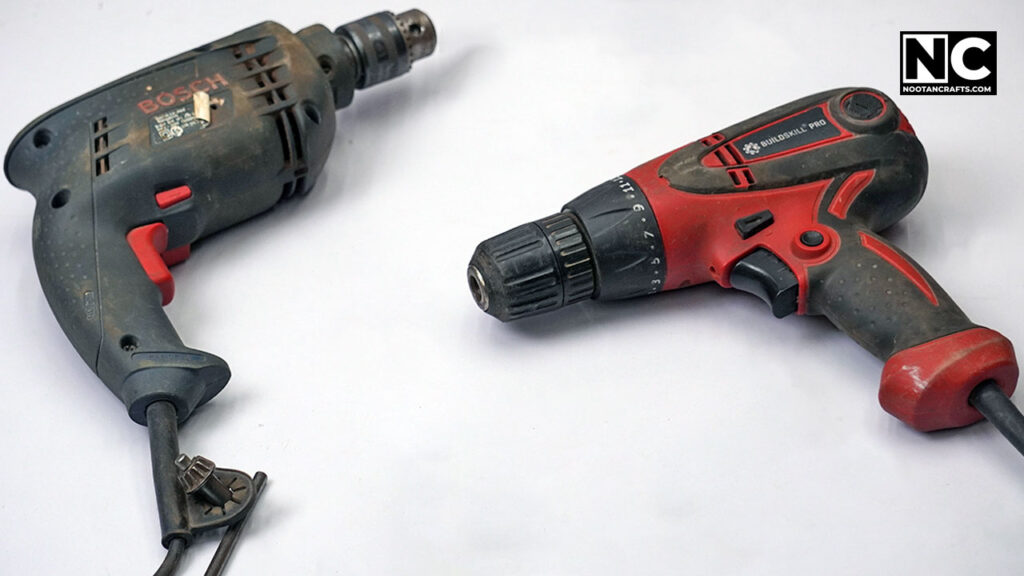
Wall power, constant output, no battery to age out, and cheaper than an equivalent cordless for the same power. A corded drill delivers its rated wattage on the first hole of the day and the last one, which is exactly what a cordless cannot promise.
- Strongest atSustained drilling, masonry with percussion, value per watt
- Weakest atScrewdriving – most have no clutch
- Watch forThe cord itself, at the strain relief – it is where corded tools fail
- Buy this ifIt is your first drill and you work near a socket
Almost every corded drill sold is a hammer drill — the percussion setting is included as standard. That’s why the distinction between a “drill” and a “hammer drill” causes so much confusion in shops, and it’s covered in using a Bosch GSB 500 RE, which is the archetype of this class.
Cordless Drill/Drivers
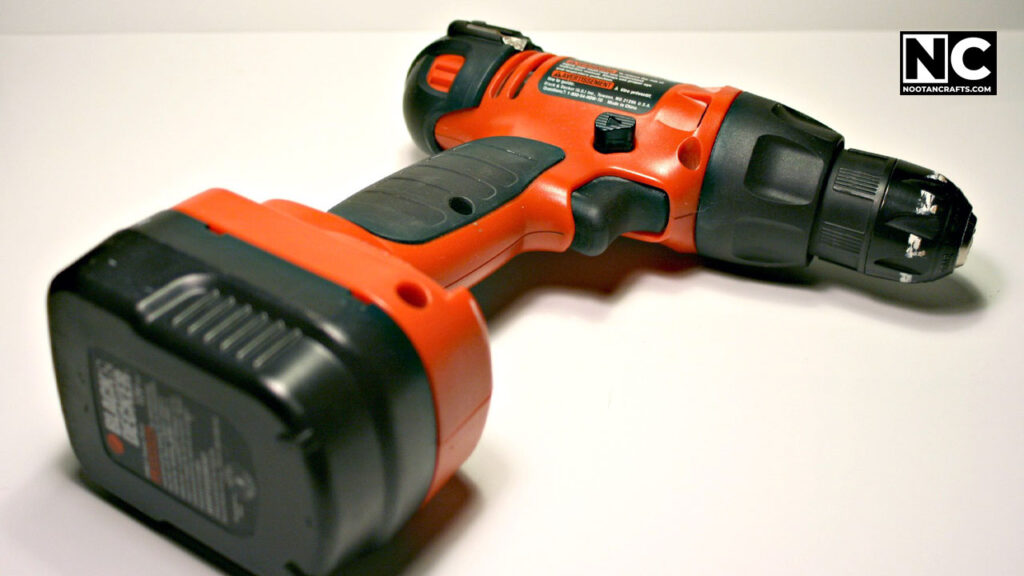
The convenience is obvious. The feature that actually matters is less so: a cordless drill/driver has a torque clutch, the numbered collar behind the chuck. Set it and the drive slips when the screw seats, instead of stripping the head or snapping the screw. That single mechanism is why cordless drills replaced corded ones for assembly work, far more than the missing cable did.
- Strongest atScrewdriving, overhead and ladder work, anywhere without power
- Weakest atLong sessions of heavy drilling – it runs the battery down and heats up
- Watch forBattery platform lock-in; your first cordless tool decides the next five
- Buy this ifYou already have a corded drill, or you mostly drive screws
The batteries are the real purchase. Pick one voltage platform and stay on it — buying across brands is how people end up with four chargers and no spare cells. That trade-off runs through every cordless tool, and it’s the same calculation as corded versus cordless grinders.
Hammer Drills
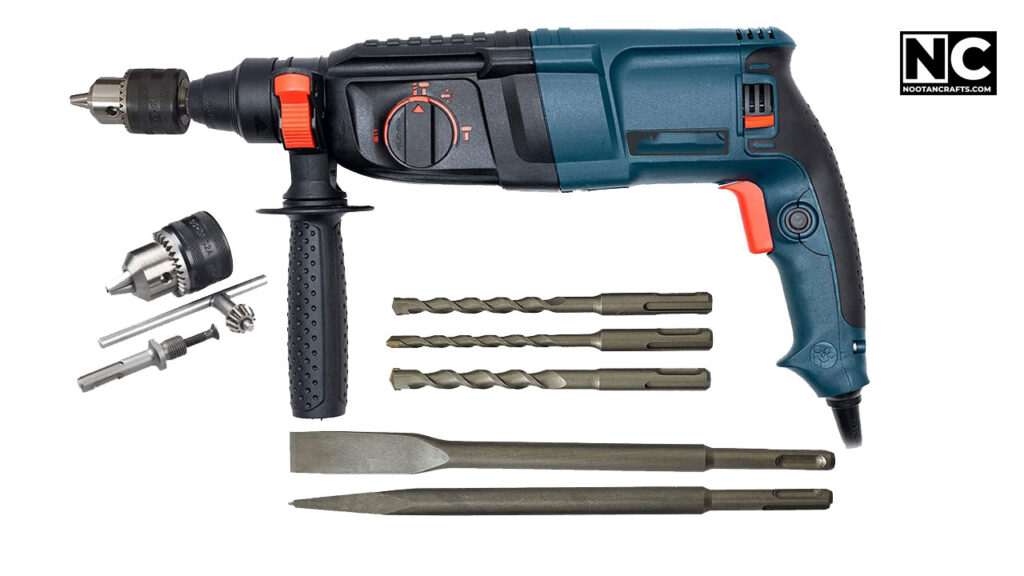
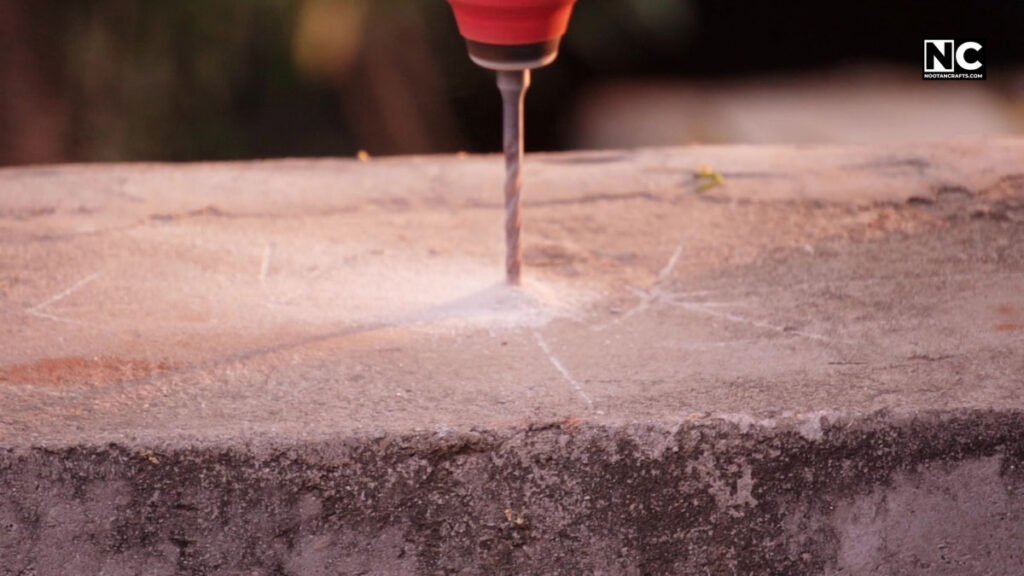
A normal drill with a percussion mode. Inside, two ridged plates sit behind the chuck; in hammer mode they’re allowed to ride over each other as the shaft turns, vibrating the chuck forward thousands of times a minute. That vibration crushes masonry while the bit’s rotation clears the debris.
Two consequences follow from that mechanism, and they explain most of the frustration people have with these tools. The blows are small, so it is slow in dense material. And the plates only engage while you press hard, so light pressure produces heat and no hole — you are part of the mechanism.
Good for brick, block, and light concrete. Hard work on a structural slab, and the full technique for getting there is in drilling concrete without a rotary hammer.
Rotary Hammers (SDS)
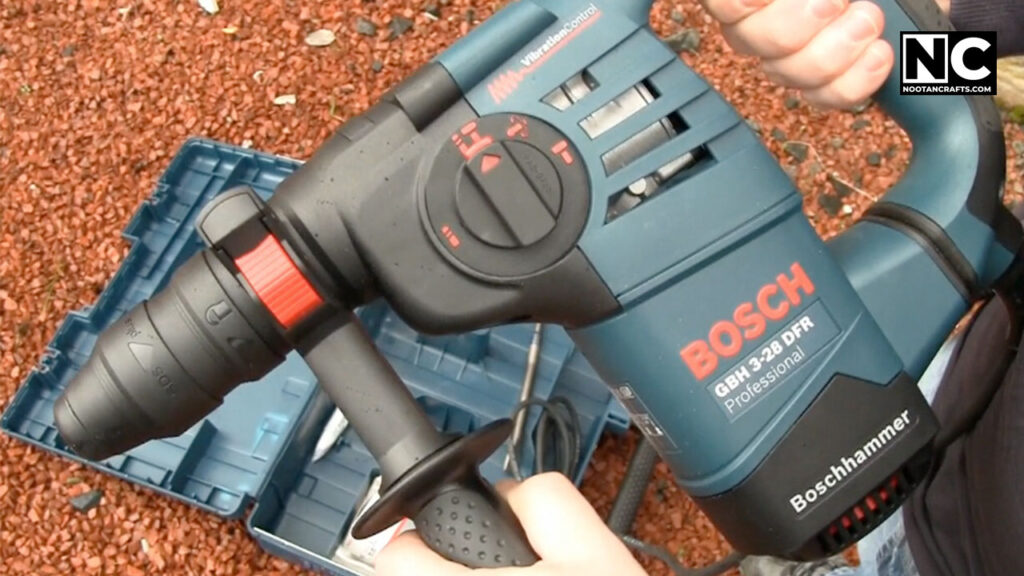
A different machine, not a stronger hammer drill. Instead of rigid plates, it uses a piston — driven by the motor through a crank — that fires a hammer mass at the back of the bit. The blows are far larger; they happen whether or not you lean on the tool, and the energy comes from the machine rather than from you.
- ChuckSDS – the bit slots and locks in, no chuck key, no jaws to slip
- ModesUsually rotary, rotary-with-hammer, and hammer-only for chiselling
- Strongest atConcrete, deep or large masonry holes, breaking out
- Watch forToo aggressive for wood and delicate work; it is not a general-purpose drill
The chiseling mode is the underrated part. With the rotation switched off and a point or flat chisel fitted, the same tool removes tiles, chases channels and breaks out old mortar. If you’re renting one for a day of concrete holes, that mode usually pays for the hire.
Impact Drivers
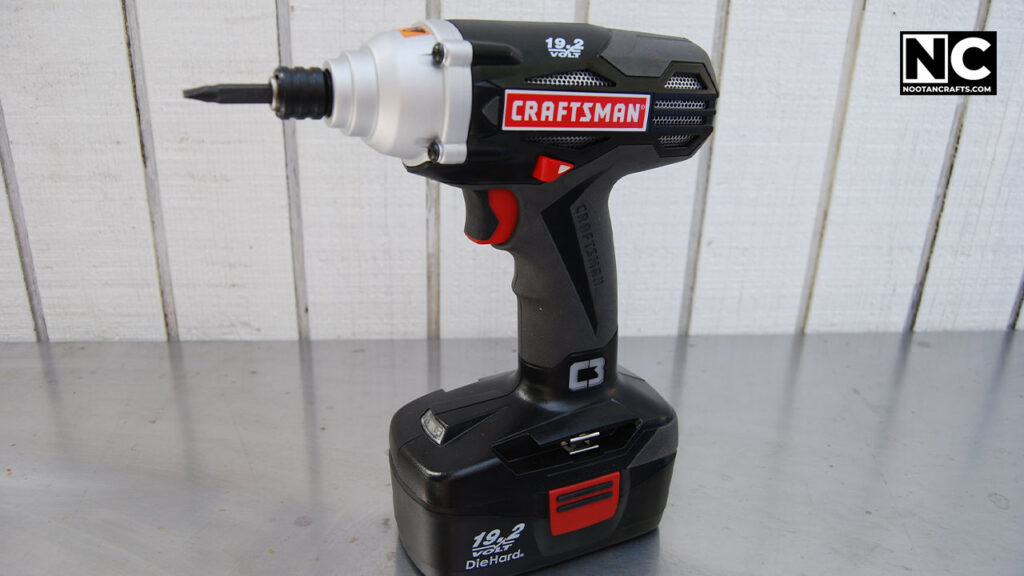
Short, stubby, and unmistakable once you’ve heard one work. An impact driver drives a screw normally until it meets resistance, at which point a hammer inside starts striking the anvil rotationally — thousands of small blows in the direction of turning. That converts a stalled screw into a moving one without the reaction torque going into your wrist.
It takes only 1/4-inch hex shanks, so it will not hold an ordinary round-shank drill bit. Hex-shank bits exist and work fine, but this isn’t a precision drilling tool—there is no chuck to center a bit accurately and no clutch to stop it.
What it is better at: long screws into hardwood, decking, structural lumber, and anything where a drill/driver stalls and twists in your hand. Once you’ve driven a hundred 100 mm screws with one, going back to a drill for that job feels absurd. For everything shorter and more delicate, the drill/driver’s clutch is the better tool.
Pneumatic Drills
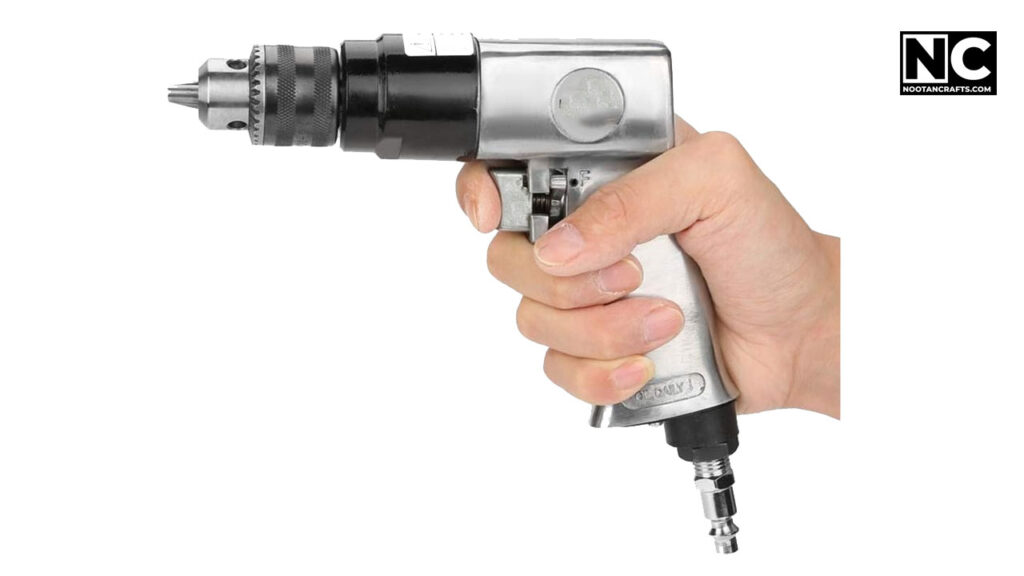
Run on compressed air rather than electricity. With no motor windings, brushes, or battery in the tool, they’re lighter for the same output, and they can run continuously without overheating — which is why production lines and workshops with an air ring main use them all day.
The catch is the compressor. Air tools are cheap; the compressor and plumbing that feed them are not, and the running cost is real. Unless you already have air in the workshop for other reasons, this is an industrial answer to a domestic question.
Drill Presses
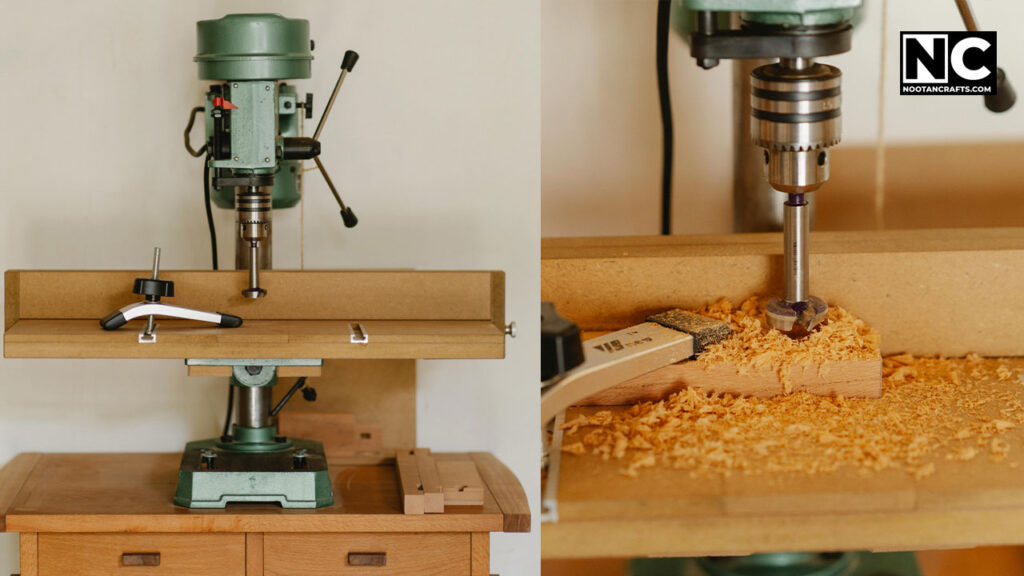
Everything a drill press offers comes from one fact: the bit cannot move sideways. The quill travels only up and down, dead square to the table, so every hole is perpendicular, and every hole is the same. Nothing handheld gets close, no matter how steady your hands are.
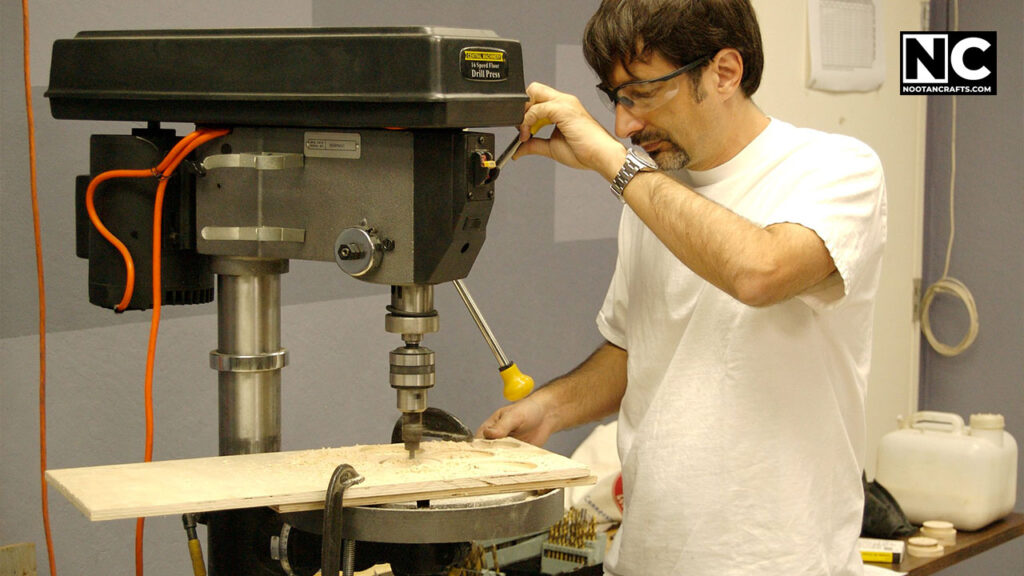
Benchtop models suit a home workshop; floor-standing ones take taller work and usually have more power and a longer quill stroke. The depth stop is the feature people underuse — set it once, and every hole in a batch is the same depth, which matters for dowels, hinges, and anything repeated.
Clamp the work, every time. A drill press has enough torque to snatch a piece of steel out of your hands and spin it into a blade. This is the most common serious injury with the machine and it is entirely prevented by a clamp or a machine vise — which is also why gloves must not be worn at a drill press.
Magnetic Drills
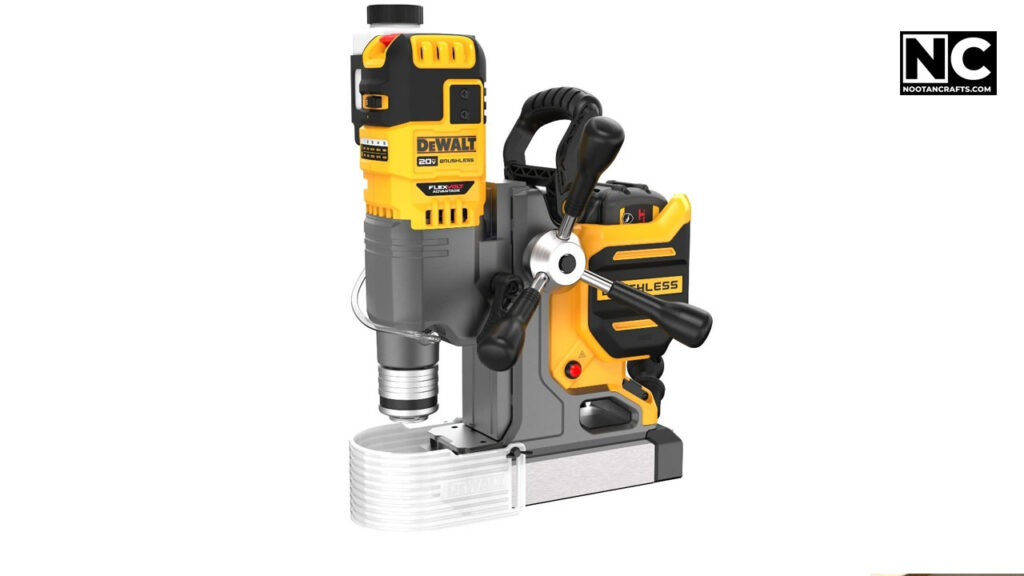
A drill press you take to the work. An electromagnet in the base clamps the machine to a steel beam or plate hard enough that it can drill large accurate holes in situ — including upside down and vertically, which is the whole point on structural steel.
They usually run annular cutters rather than twist bits: a hollow cutter that removes only a ring of material and drops out a solid slug, so a 30 mm hole takes a fraction of the power a twist bit would need. Specialist, expensive, and unbeatable at the one job it does.
Which to Buy, in What Order
| Buy | Which one | Because |
|---|---|---|
| First | Corded hammer drill | One tool covering wood, metal and masonry, at the lowest cost per watt |
| Second | Cordless drill/driver | The clutch, and the freedom from an outlet. This is the one you’ll pick up most |
| Third, if you build | Impact driver | Long screws stop being a fight. Buy it on the same battery platform |
| Third, if you fix buildings | Rotary hammer (SDS) | Concrete becomes trivial, and the chisel mode does jobs nothing else will |
| When accuracy matters | Drill press | Square, repeatable holes. Nothing handheld substitutes |
| Only for steel fabrication | Magnetic drill | Large holes in beams on site; a specialist purchase, usually hired |
| Only if you have air | Pneumatic | The compressor costs more than the tool. Industrial answer |
The most common buying mistake is going straight to cordless for everything. A cordless drill is more pleasant and more expensive, and its batteries are a recurring cost. Corded first, cordless second, is more workshop for the money — the same reasoning that runs through choosing power tool brands in India.
Where to Go From Here
Picking the drill is the easy half. Almost every problem people actually hit is downstream of it — the wrong bit, a material that fights back, or a hole that ends up somewhere other than where it was marked.
The bit matters more than the drill
A cheap drill with the right bit beats an expensive one with the wrong bit, every time. The rule underneath all of it is that the bit has to be harder than what it is cutting, and stay harder once it heats up — which is the actual reason cobalt exists, rather than any difference in raw hardness. For metal, that means matching the bit to the specific metal: HSS, cobalt, or carbide, and knowing how to tell which you need. In wood, the choice depends on how much material you’re moving and how clean the exit needs to be—a spade bit versus an auger bit is a decision about pulling power, not size.
Materials that fight back
Masonry, tile, and glass each fail differently, so each needs a different approach, not more pressure. Concrete without percussion is slow but possible with a masonry bit, body weight, and a habit of clearing the dust — the full method is here, including when to stop and rent an SDS instead. Porcelain tile cracks because the glaze is under tension and the bit skates before it bites. Glass needs a diamond bit, water, and almost no pressure at all. And metal with a hand drill is mostly a lesson in going slower than feels productive, because heat is what kills the bit.
The pattern across all four: every one of these materials is damaged by heat or by shock, and both come from forcing the bit. If a hole is not progressing, the answer is a different bit or a different speed — never more weight on the drill.
Getting the hole where you wanted it
A handheld drill wanders for two reasons: the bit has nothing to bite into at the start, and your eye cannot judge square as well as it thinks. A center punch fixes the first. For the second, jigs and reference tricks can get a handheld drill close to a press—drilling straight without a press. Deliberate angles are their own problem, because the bit wants to slide down the slope before it starts cutting: drilling at 45 degrees.
Driving screws, and not splitting the wood
A drill/driver will drive screws all day, provided the torque clutch is set rather than ignored — using a drill as a screwdriver is mostly about that dial. The other half is the hole underneath. Wood splits because the screw thread wedges the fibers apart faster than they can compress, which is why the pilot hole matches the screw’s shank, not its thread: pilot hole sizes by screw gauge.
Drill Type Questions People Actually Ask
What’s the difference between a hammer drill and an impact driver?
Direction. A hammer drill hits the bit forwards, along its axis, to crush masonry. An impact driver hits it round the way, rotationally, to keep a stalled screw turning. One is for holes in walls, the other for driving screws — they are not alternatives to each other.
Hammer drill or rotary hammer for concrete?
Rotary hammer, by a wide margin. A hammer drill’s percussion comes from two ridged plates and only works while you press hard; a rotary hammer drives a piston that strikes the bit directly. On dense concrete that’s the difference between minutes and seconds per hole.
Do I need both a drill and an impact driver?
If you build things regularly, yes — and most brands sell them as a twin pack on one battery platform for that reason. If you drill a few holes a year, one drill/driver covers it.
Can an impact driver drill holes?
With hex-shank bits, roughly. It takes 1/4-inch hex only, so ordinary round-shank bits won’t fit, and there’s no chuck to center a bit precisely or clutch to stop it. Fine for rough holes; not for accurate ones.
Is a corded drill still worth buying?
Yes, and it’s usually the better first purchase. Constant power, no battery to degrade or replace, more watts per rupee, and the percussion mode comes as standard on almost all of them.
What does SDS mean?
It’s the bit-holding system on rotary hammers — the bit slides into slots and locks, rather than being gripped by chuck jaws. That’s what lets the bit move back and forth under the hammer piston, which a conventional chuck cannot allow.
Is a drill press worth it for a home workshop?
If you work with metal, or you need holes that are truly square and repeatable, yes — it does something no handheld tool can. If you mostly drill walls and assemble furniture, the money is better spent elsewhere.
Are hand drills obsolete?
No. They give feedback and control an electric drill cannot, need no power, and won’t run away with you on delicate work. A brace also out-torques any handheld electric drill for large auger bits in wood.
Two Tools Cover Almost Everything
A corded hammer drill and a cordless drill/driver between them handle nearly every hole and screw a home workshop produces. The rest of this list exists because each one solves a problem those two can’t — concrete at speed, screws too long to drive, holes that must be square, holes in a beam you can’t bring to a bench. Buy for the problem you actually have, not the number of types.