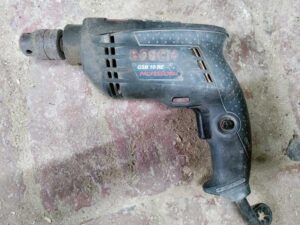
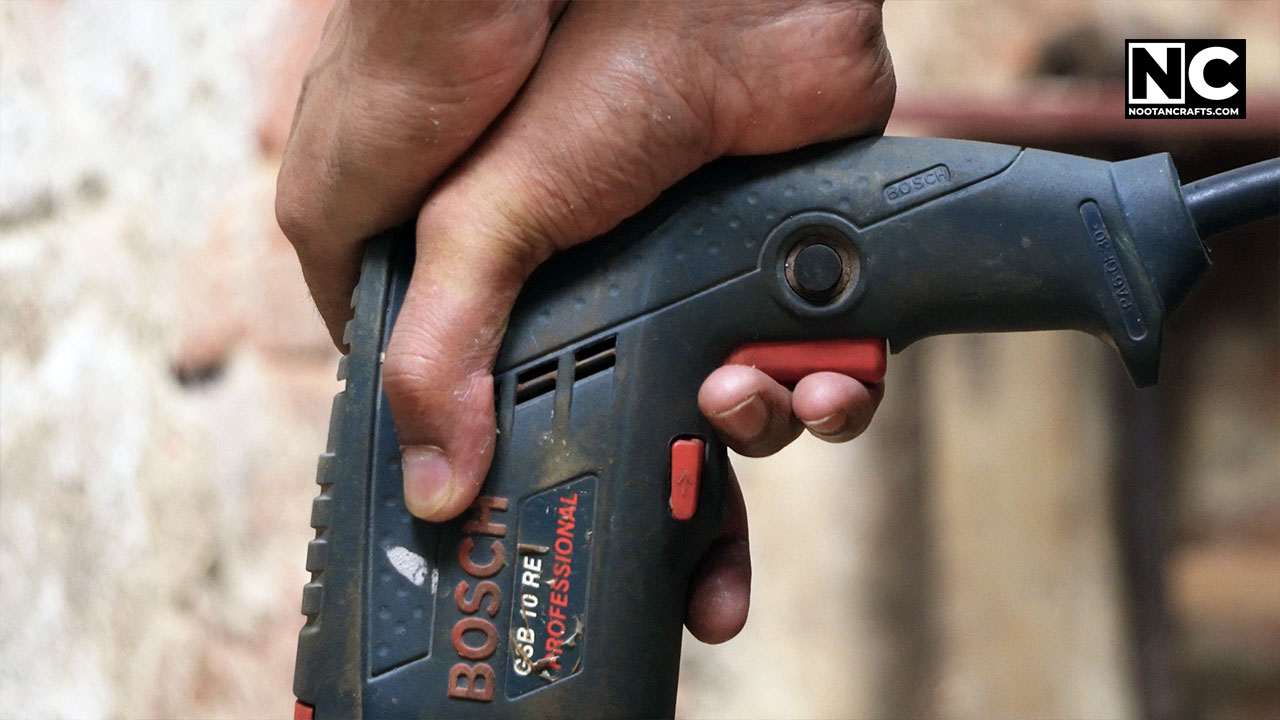
I drilled concrete this way for years. My first tool was a used Bosch GSB 10 RE, bought in 2014, and I used it on wood, plastic, metal, and concrete until it died in 2019 — then I bought the same model again because I was attached to it. I only got a rotary hammer a few years ago. Everything here is what I learned along the way.
Fit a masonry bit, start slow to make a pilot indent, then lean your weight into the drill and let it run at moderate speed, backing out every few centimeters to clear the dust. That’s the technique, and it works — with an ordinary impact drill it takes a few minutes to make a hole instead of a few seconds.
One thing to settle first, because the phrase confuses everybody: a “hammer drill” in most people’s hands means the percussion setting on a normal drill, and almost every corded drill sold has one. What makes concrete effortless is an SDS rotary hammer, which is a different machine. If your drill has an impact mode, use it — the guide below assumes you will. If it has none at all, skip to the section on that, because the method changes.
- Masonry drill bit, carbide-tipped
- Drill with an impact or percussion mode, if you have one
- Pencil or center punch
- Safety glasses, gloves, P2 or N95 dust mask
- Vacuum cleaner, or a helper with one
- Masonry nail and a hammer, for a drill with no impact mode
My first drill machine, bought in 2014
Concrete dust is a silica hazard, and walls have things in them
Drilling concrete produces respirable crystalline silica — dust fine enough to reach deep into the lungs, where it causes permanent scarring. It is not the visible gray cloud that matters, it is the part you cannot see. A cloth over your face does nothing. A P2 or N95 mask, dust extraction at the hole, and drilling outdoors or with the window open are the actual controls.
The other hazard is what the bit meets. A masonry bit will drill straight through a buried cable or a water pipe with almost no change in feel, and it will meet rebar sooner or later in any structural concrete.
- Check the wall before you drill. Cables run vertically and horizontally from outlets and switches; pipes run to faucets and radiators. A detector costs far less than a rewire, and a live cable at line voltage through a steel bit is a fatal shock risk.
- Stop if you hit rebar. Sudden hard resistance and a change in sound means steel. Move the hole 50 mm and start again — do not try to force through it. Cutting reinforcement also weakens the structure.
- Two hands, side handle fitted. An impact drill has no clutch. If the bit binds, the whole tool twists, and on a ladder that is how people fall.
- Never drill overhead without eye protection. Dust and chips come straight down at your face.
- Let the tool cool. Long sessions on concrete cook the motor and draw the temper out of the bit’s carbide tip.
What’s Inside!
Which Tool You Actually Have
Work out which row you’re in before you start. It changes what is realistic.
| What you have | Concrete up to 8 mm | Larger, or dense concrete |
|---|---|---|
| SDS rotary hammer | Seconds per hole | Easy – this is the right tool |
| Impact / percussion drill | Slow but fine | Possible with patience; expect to work for it |
| Drill with no impact mode | Only with a hammer-started pilot – see below | Realistically, hire a tool |
| Cordless drill, no impact | Brick or block only, not structural concrete | No |
Brick and block are not concrete. Older walls and internal partitions are often brick, aerated block or plaster over block, all of which drill far more easily than a structural concrete slab or lintel. If the bit is making steady progress and gray-red dust, you’re probably in masonry rather than concrete — and the job is much easier than this page assumes.
Drilling It, Step by Step
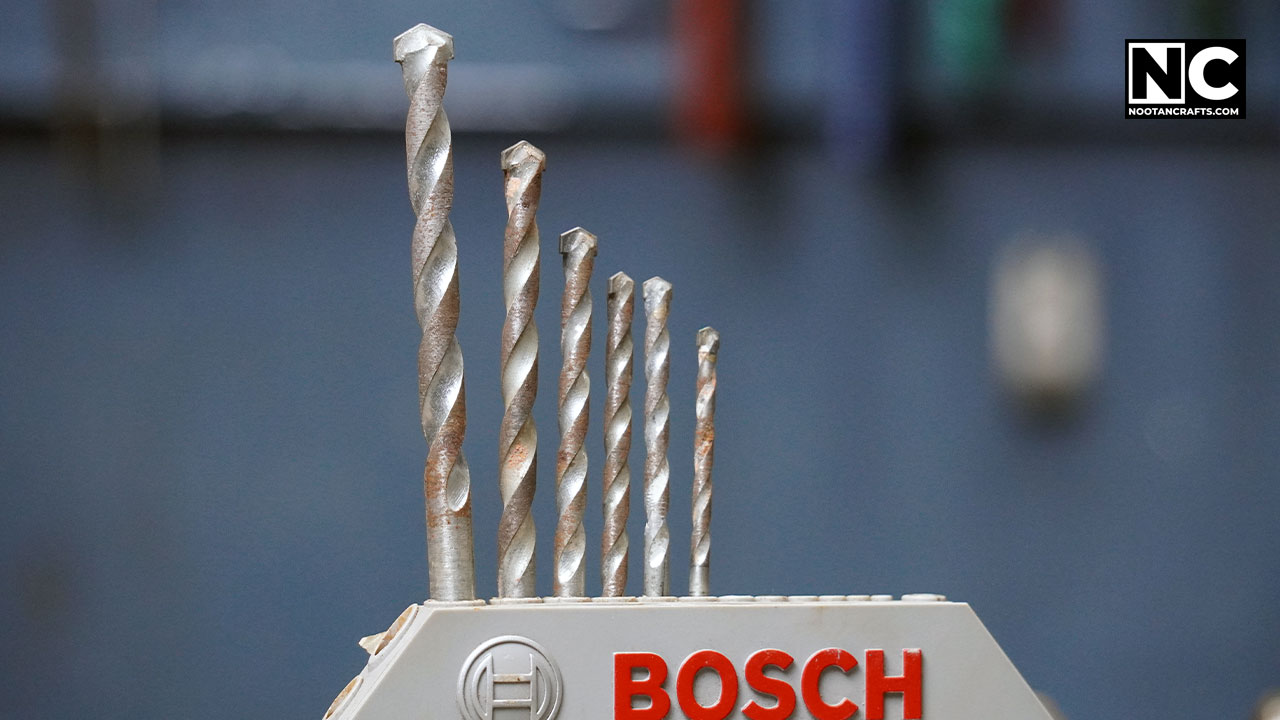

- Fit a masonry bit, and only a masonry bitA masonry bit has a blunt carbide tip that crushes and pulverizes material rather than cutting it. A wood or metal twist bit has a sharp cutting edge with nothing hard enough to survive concrete – it will overheat, blunt, and do nothing to the wall. I have ruined several bits finding this out.
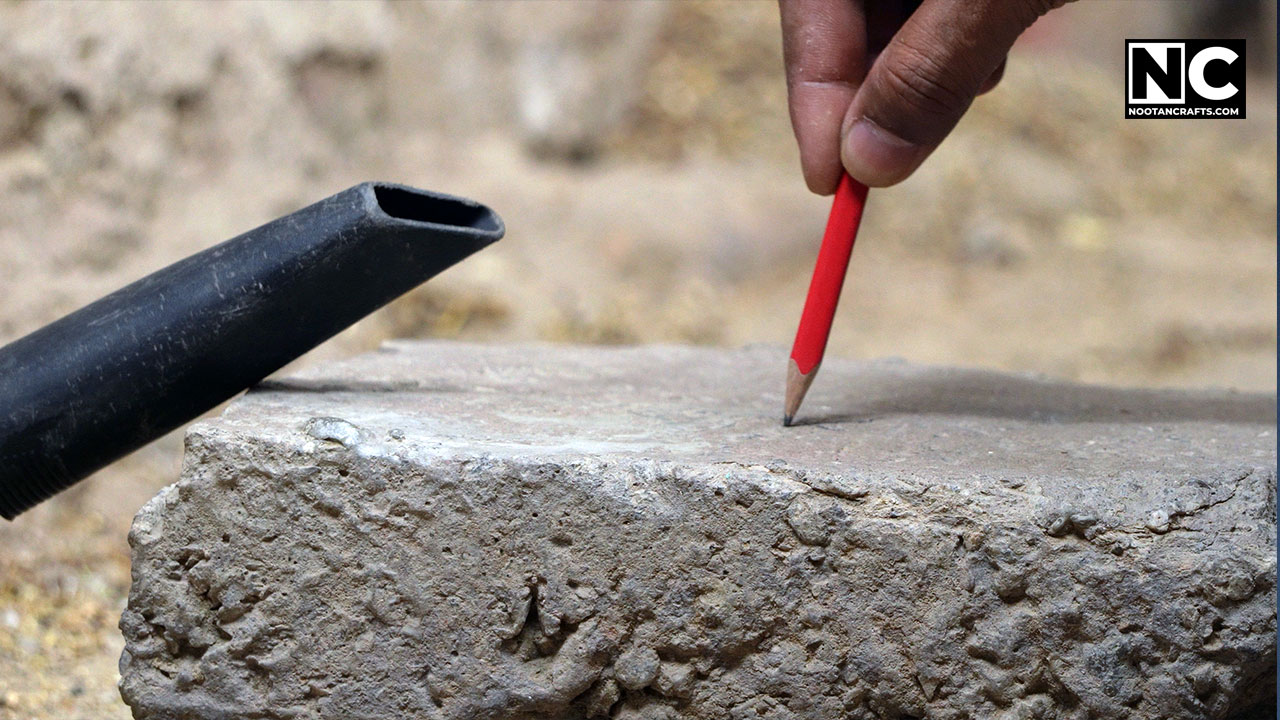
- Mark the spot, and check what’s behind itPencil or a punched dimple. Then run a detector over it, or work out where the cables and pipes must run from the nearest socket, switch or tap.
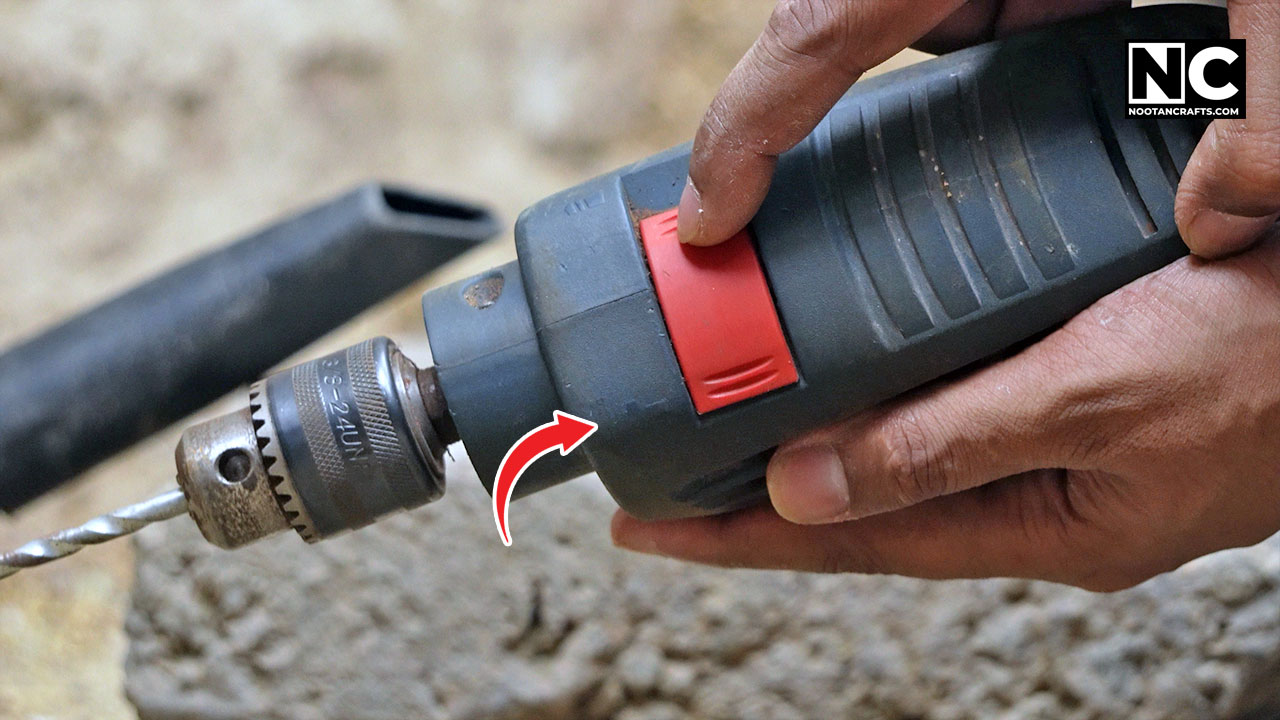
- Switch to impact modeThe switch is usually on top of the gear housing, marked with a hammer symbol. In drill mode alone the bit spins against the concrete and polishes it – no percussion, no progress, and a bit that overheats for nothing.
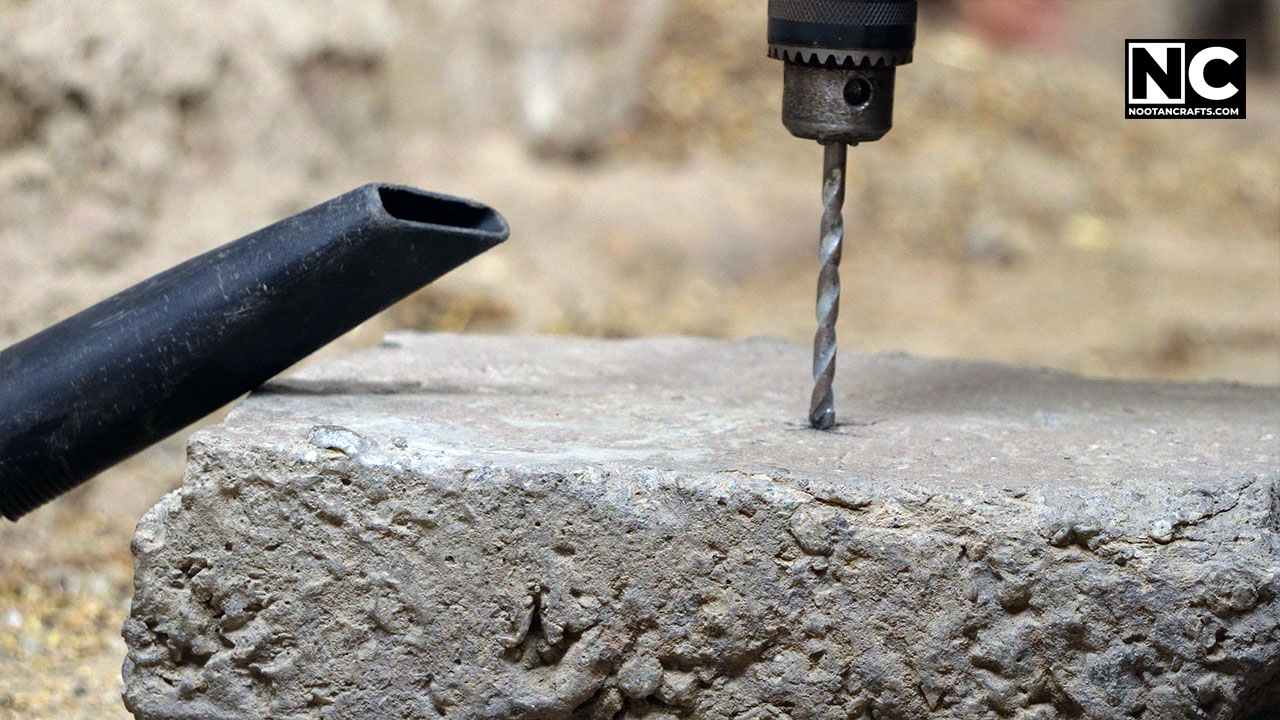
- Center the bit and hold it thereA masonry bit has no brad point to locate it, so it will wander across a smooth surface. Steady the tip on the mark with your free hand clear of the bit and start it before you commit any pressure.
- Start slow to cut the pilot indentA short burst at low speed breaks the surface and gives the bit a seat. Starting fast on a smooth wall means the tip skates and marks the surface where you did not want a hole.
- Put your body weight behind itThis is the substitute for the machine you don’t have. A rotary hammer supplies its own impact energy; on an impact drill, the percussion mechanism only works when the tool is pressed hard against the work. Lean into it – light pressure is why people conclude it can’t be done.
- Back out every few centimeters to clear the dustPulverized concrete packs into the hole and the bit then grinds against its own waste instead of fresh material. Withdraw the bit while it is still spinning, let the flutes clear, and go back in.
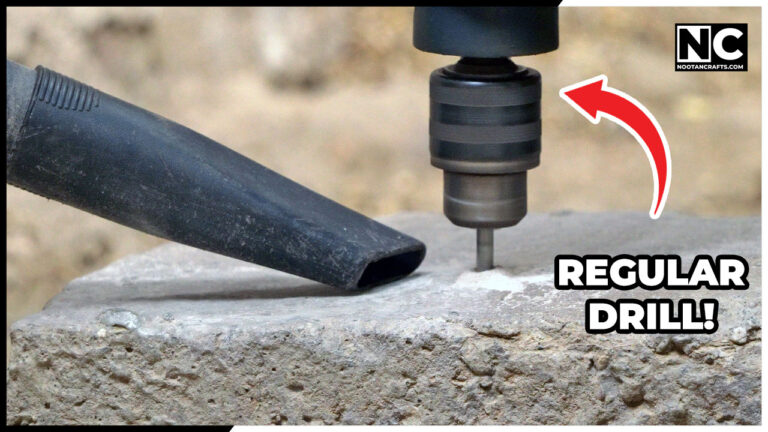
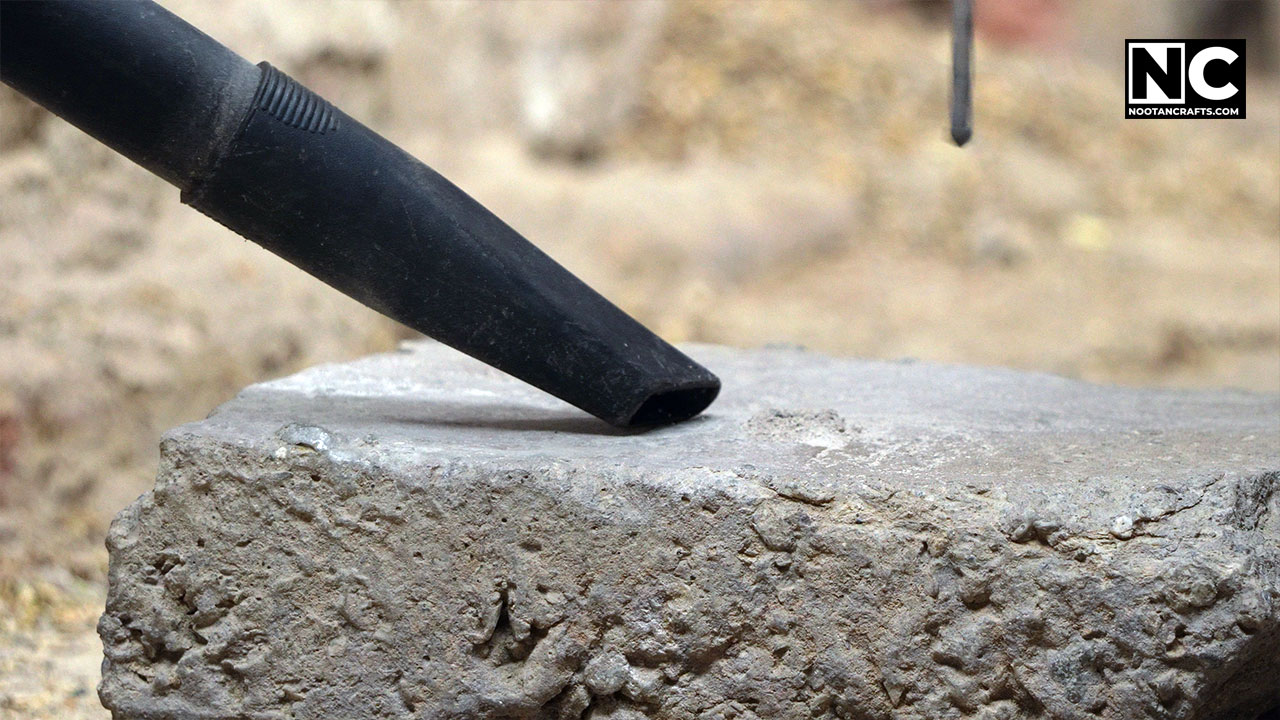
- Vacuum as you go, not just at the endNozzle held near the hole while you drill. This does two jobs at once: it keeps the hole cutting and it stops the silica dust reaching you.
- Clear the hole fully before fitting an anchorDust left in the bottom stops a plug seating and ruins the grip of a chemical anchor entirely. Vacuum it, then blow it out.
If Your Drill Has No Impact Mode At All
This is the case the title actually describes, and the one every other guide skips. Without percussion, the bit has no way to crush concrete — rotation alone just polishes it. You have three real options.
- Start the hole with a masonry nail and a hammerTap a masonry nail or a cold chisel into the spot to break through the hard surface layer and make a seat several millimeters deep. The dense skin on a slab is the hardest part; past it, plain rotation plus heavy pressure can make slow progress on softer concrete and block.
- Then drill, withdraw, tap, repeatDrill as far as it will go, back out, tap the nail in again to break up the material at the bottom, and drill out the debris. It is slow and it is how this was done before percussion drills were common. For one or two small holes it is fine.
- For anything more, hire the toolAn SDS rotary hammer hires for very little per day and turns an afternoon of this into ten minutes. If you have more than a couple of holes, or the concrete is structural rather than block, this is the answer rather than a compromise.
Do not try to substitute effort for percussion on structural concrete. Pushing harder on a rotating bit that isn’t cutting generates heat, not depth — it destroys the carbide tip and can burn out the drill’s motor. If ten minutes of honest pressure has produced almost nothing, the tool is wrong for the material and no technique fixes that.
Getting the Hole Right for an Anchor
Most concrete holes exist to take a fixing, and the fixing fails more often than the concrete does.
| Get this right | Why it matters |
|---|---|
| Hole diameter matches the plug exactly | Oversize by even one bit size and the plug spins instead of gripping |
| Depth about 6 mm deeper than the anchor | Leaves room for the dust you cannot fully remove, so the anchor seats fully |
| Hole drilled square to the surface | An angled hole loads the anchor sideways and it pulls out under load |
| Hole cleaned before fitting | Dust destroys the grip of expansion plugs and ruins chemical anchors completely |
| Fixing suits the material | A plug for aerated block is not a plug for dense concrete – check the packet |
Drill square by sighting along the bit from two directions before you commit, or by having someone check from the side. It’s the easiest of these to get wrong and the hardest to correct afterward.
Where This Goes Wrong
- Wrong bit. A twist bit in concrete is the single most common reason people conclude it cannot be done. Masonry bit, always.
- Impact mode left off. The switch is easy to overlook, and nothing works without it. Check before you blame the drill.
- Not enough pressure. An impact drill’s percussion engages only when you press the tool hard against the surface. Timid pressure produces heat and no hole.
- Never clearing the dust. The bit ends up grinding its own waste. Back out regularly.
- Drilling continuously until the bit is blue. Heat kills the carbide tip. Pause, let it cool, and never quench a hot bit in water — thermal shock cracks carbide.
- Forcing through rebar. A masonry bit cannot cut steel. Move the hole.
- Skipping the mask. The dust that harms you is the part you cannot see, and the damage is permanent.
Why a Rotary Hammer Is So Much Faster
Concrete is not cut; it is crushed. A carbide tip pounded into the surface fractures the aggregate and cement matrix, and the flutes carry the debris out. The energy that does the work is impact energy, not rotation.
An impact drill makes that impact by pressing two ridged plates together as the shaft turns, so they ride over each other and vibrate the chuck forward. It only works while you press; the blows are small and fast, and your arms provide the energy. An SDS rotary hammer instead drives a piston that strikes the bit directly — far bigger blows, no pressure needed, and the machine supplies the energy rather than you.
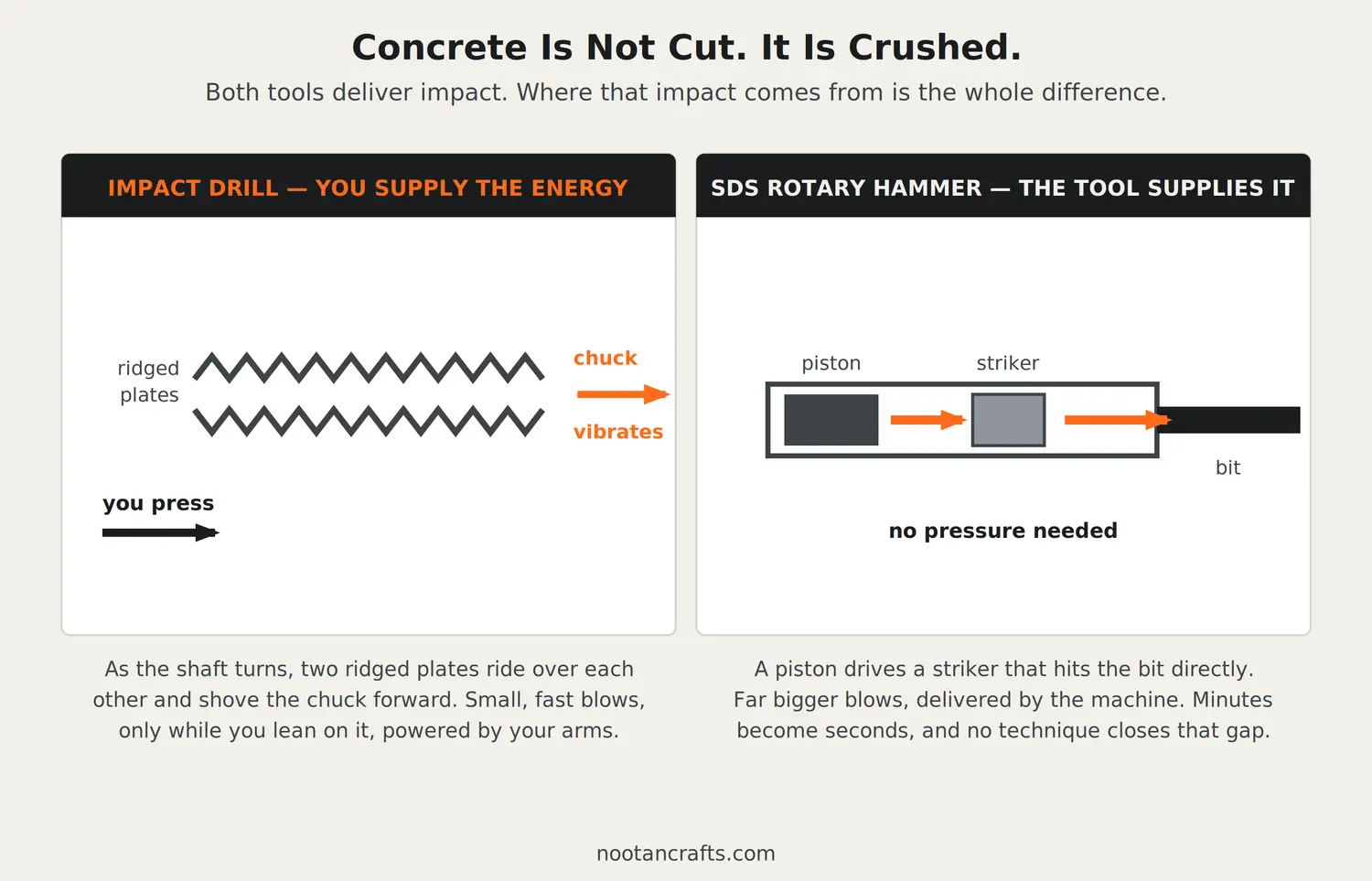
That is the whole difference, and it explains everything on this page: why you have to lean on an impact drill, why it takes minutes rather than seconds, and why no amount of technique closes the gap on dense concrete. If you’re weighing up which drill to own, the types of drill machines section covers where each one earns its place, and using a Bosch GSB-series drill covers the tool this guide was written on.
What I’d buy for this job


Last update on 2026-10-25 / Affiliate links / Images from Amazon Product Advertising API
Concrete Drilling Questions People Actually Ask
Can you drill into concrete with a regular drill?
With a masonry bit and an impact mode, yes — slowly, with real pressure behind it. With a drill that has no impact mode at all, only by starting the hole with a masonry nail first, and only in softer concrete or block. For structural concrete without percussion, hire an SDS hammer.
What bit do I need for concrete?
A carbide-tipped masonry bit, sized to match your plug exactly. Wood and metal bits have sharp cutting edges that concrete destroys in seconds — they will overheat and blunt without making a hole.
How much pressure should I apply?
More than feels reasonable. On an impact drill the percussion mechanism only engages under firm pressure, so leaning your body weight into the tool is doing real mechanical work, not just pushing harder.
Why is my drill bit smoking and not going in?
Three likely causes, in order: it’s a twist bit rather than a masonry bit, impact mode is off, or the hole is packed with dust so the tip is grinding its own waste. If all three are right and it still won’t go, you’ve hit rebar or very dense aggregate.
How deep should the hole be for a wall plug?
About 6 mm deeper than the anchor, so dust in the bottom doesn’t stop it seating. Diameter must match the plug exactly — oversize and the plug turns in the hole instead of gripping.
What if I hit metal?
You’ve found rebar. Stop — a masonry bit cannot cut steel, and cutting reinforcement weakens the structure. Move the hole about 50 mm and start again.
Do I really need a dust mask for a couple of holes?
Yes. Concrete dust contains respirable crystalline silica, and the harmful fraction is too fine to see. A P2 or N95 mask and a vacuum at the hole take a few seconds to set up; the lung damage does not reverse.
Is it worth hiring a rotary hammer?
For more than a few holes, or for anything structural, almost always. A day’s hire costs little and turns a long, sweaty job into a short one — and it saves the masonry bits and the drill motor you would otherwise be cooking.
Lean On It, and Clear the Dust
Masonry bit, impact mode on, real weight behind the tool, and back the bit out regularly so it is always cutting fresh material. That’s the whole job. If ten minutes of that has barely marked the wall, the concrete has beaten the tool — hire the hammer rather than burning out a drill you like.